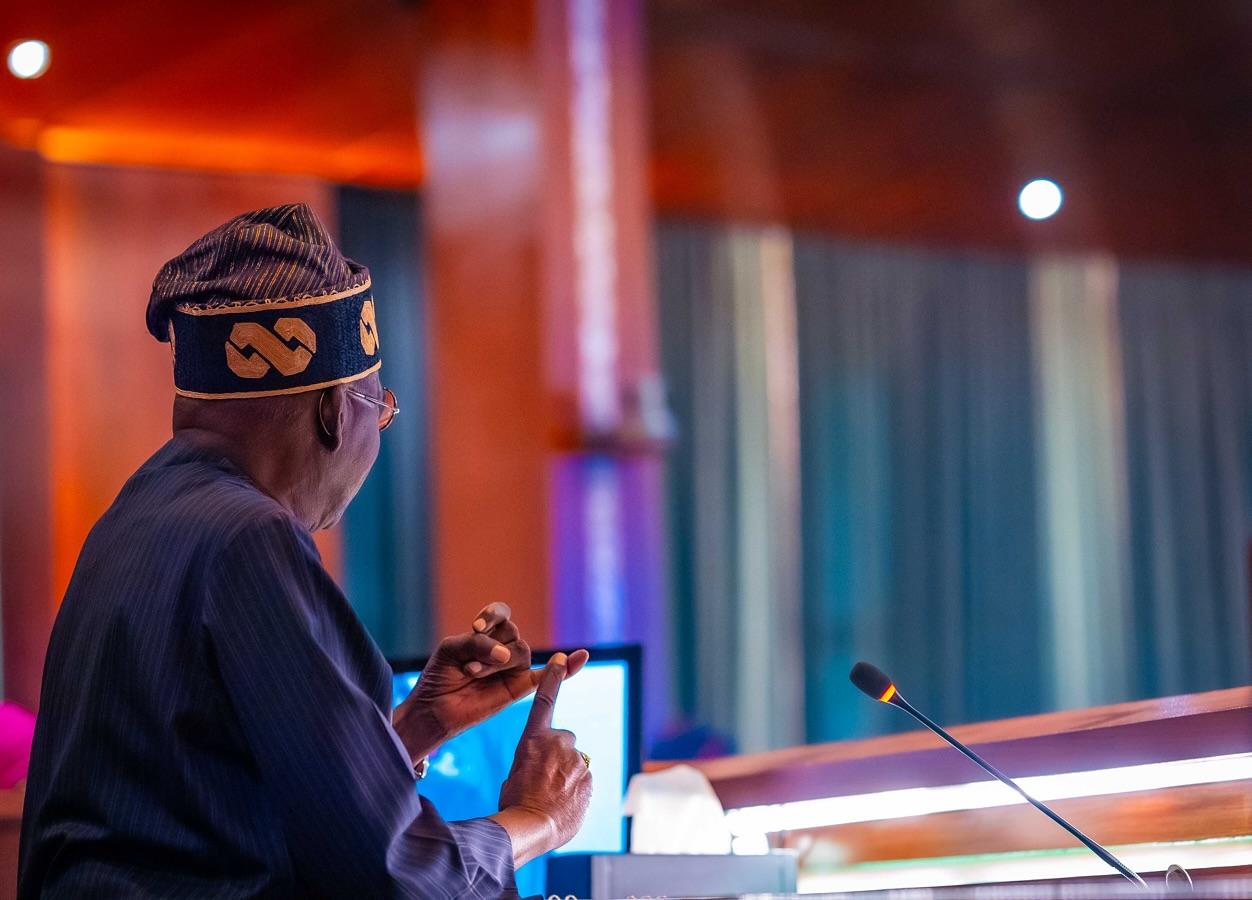
President Bola Tinubu has defended his administration’s economic policies, saying the structural reforms introduced since 2023 have boosted federation revenues and enabled states and local governments to allocate more resources to critical sectors, including healthcare.
- +Democracy Day: Tinubu says economic reforms are boosting healthcare funding
In his Democracy Day broadcast on Friday to mark June 12, Mr Tinubu acknowledged that the fiscal adjustments had imposed economic hardship on Nigerians.
In his Democracy Day broadcast on Friday to mark June 12, Mr Tinubu acknowledged that the fiscal adjustments had imposed economic hardship on Nigerians. Still, he insisted they were necessary to rescue public finances from collapse and redirect resources to national priorities.
“Since 2023, our reforms have restored stability and credibility to economic management. Federation revenues have risen, providing states and local governments with more resources for infrastructure, education, healthcare, and security,” he said.
The President also highlighted infrastructure interventions impacting the medical sector, noting that the Rural Electrification Agency (REA), with backing from the World Bank and the African Development Bank, has successfully deployed off-grid and mini-grid power to underserved communities, universities, markets, and hospitals.
However, while the administration points to improved fiscal space and infrastructure-linked interventions, Nigeria’s health sector continues to struggle with deep structural constraints that limit service delivery in practice.
Over the past three years, PREMIUM TIMES has documented widening gaps between government spending narratives and the realities in many public health facilities, particularly at the primary healthcare level.
One of the major pressures on the health sector has been the sustained emigration of healthcare workers, popularly known as “Japa,” which has significantly depleted the country’s medical workforce.
Reports by PREMIUM TIMES show that over 75,000 professional nurses and thousands of senior doctors emigrated within five years, leaving public hospitals critically understaffed and leaving the remaining workers overwhelmed.
By 2025, another report highlighted that achieving “brain gain” or attracting diaspora medical talent back home, remained nearly impossible due to poor local working conditions and frequent strikes.
The impact of the shortage has been most visible at the sub-national level, where some state governments have had to launch emergency recruitment drives to sustain basic service delivery. For instance, Delta State recently began recruiting over 700 health workers to keep facilities running.
Beyond workforce shortages, field investigations have continued to expose weaknesses in primary healthcare infrastructure across several states.
PREMIUM TIMES documented dozens of poorly equipped primary healthcare centres in rural communities, where pregnant women and newborns often faced life-threatening situations due to the absence of basic equipment, medicines and qualified personnel.
Investigations in states such as Bauchi also revealed persistent mismanagement of health funding at the local government level. Rather than rehabilitating dilapidated community clinics, resources were frequently diverted elsewhere, leaving many vulnerable residents without access to essential healthcare services.
Taken together, these challenges suggest that while increased federal revenues may have expanded fiscal space for states, significant systemic bottlenecks continue to hinder the translation of those resources into improved healthcare outcomes for many Nigerians.