…says state embarking on healthcare financing reforms to reverse medical brain dran
- +Lagos in defict of 33,000 medical doctors – Akin Abayomi
Lagos, Nigeria’s arguably most populous state, currently operates with 7,000 medical doctors, a far cry from over 33,000 needed to effectively run the state’s healthcare system.
Lagos, Nigeria’s arguably most populous state, currently operates with 7,000 medical doctors, a far cry from over 33,000 needed to effectively run the state’s healthcare system. In addtion to the doctors requred, 40,000 nurses would also be needed to bridge manpower gaps in the state’s health sector,
This huge shorfall, according to Akin Abayomi, Lagos State Commissioner for Health, is part of a broader global workforce crisis being experienced by many countries. According to him, Nigeria currently has about 40,000 doctors serving a population of over 200 million people, translating to a doctor-to-patient ratio of one doctor to about 5,000 persons, far below international recommendations.
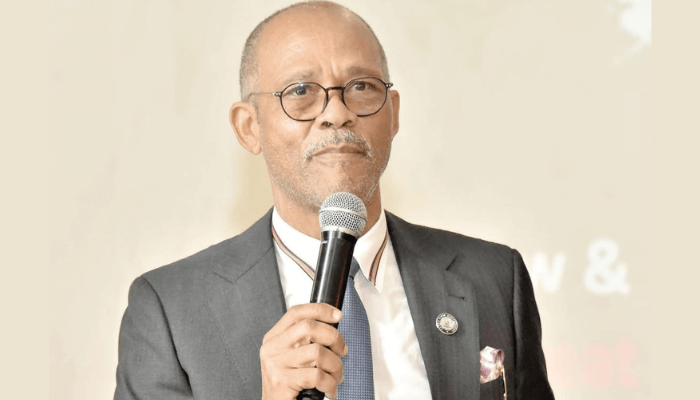
Abayomi made the dosclosures on Tuesday when he briefed journalists on efforts the state government has made in the last seven years of Governor Babajide Sanwo-Olu administration, saying, despite the shortfall, the state is becoming an attractive destination for healthcare professionals due to ongoing reforms and investments in the sector.
The reforms being implemented, he noted, were aimed at building a resilient healthcare system capable of meeting the demands of Lagos’ rapidly growing population while positioning the state as a healthcare hub for West Africa.
“Nigeria currently has about 40,000 doctors at a ratio of one doctor to 5,000 people. The country needs about 300,000 additional doctors, while Lagos requires 40,000 doctors. Currently, Lagos has 7,000. The gap for Lagos is over 30,000 doctors and 40,000 nurses,” Abayomi said. He explained that the administration was repositioning the health sector to effectively respond to emerging challenges such as pandemics, flooding, urban population growth and other public health emergencies.
“We are making sure that the health sector is robust enough to manage everything that comes its way,” he said, even as he projected Lagos could emerge as a leading medical tourism destination in Africa by 2052, driven by ongoing reforms, mandatory health insurance and the state’s long-term Universal Health Coverage agenda.
Abayomi said the state currently operates 34 secondary and tertiary public health facilities, 325 Primary Healthcare Centres, about 3,500 private health facilities, as well as over 10,000 community pharmacies and Patent and Proprietary Medicine Vendors within the informal healthcare sector. He added that Lagos is presently ranked among the leading African cities in healthcare delivery and is targeting a place among the continent’s top three healthcare destinations.
According to him, cities currently ahead of Lagos include Cape Town, Pretoria, Nairobi, Johannesburg, Durban, Algiers, Tunis, Cairo and Casablanca.
Highlighting the pressure on existing medical personnel, the commissioner stated that doctors in Lagos were overstretched due to the huge population burden.
“For every doctor we have in Lagos, they are doing the job of ten,” he said.
To address the persistent brain drain in the health sector, Abayomi disclosed that the state government had commenced a series of healthcare financing reforms aimed at improving the welfare, remuneration and living conditions of healthcare workers, while also creating opportunities for Nigerian doctors in the diaspora to return home.
He revealed that accommodation facilities for medical personnel were being expanded across public hospitals in the state.
According to him, a 72-room accommodation complex for house officers has been completed at the Lagos State University Teaching Hospital, while construction and renovation works are ongoing at other major health institutions.
“We recently completed an accommodation complex for 72 house officers at LASUTH, while work at Odan is ongoing. Staff quarters at Gbagada, Ojo and LASUTH are nearing completion. Going forward, all new medical facilities will have staff quarters in close proximity,” he stated.
Abayomi further disclosed that LASUTH currently has about 120 medical specialists, while general hospitals across the state collectively have about 250 specialists. He stressed that infrastructure development remained central to the administration’s healthcare agenda, adding that the government had developed a comprehensive medical blueprint focused on sustainable and renewable healthcare facility designs.