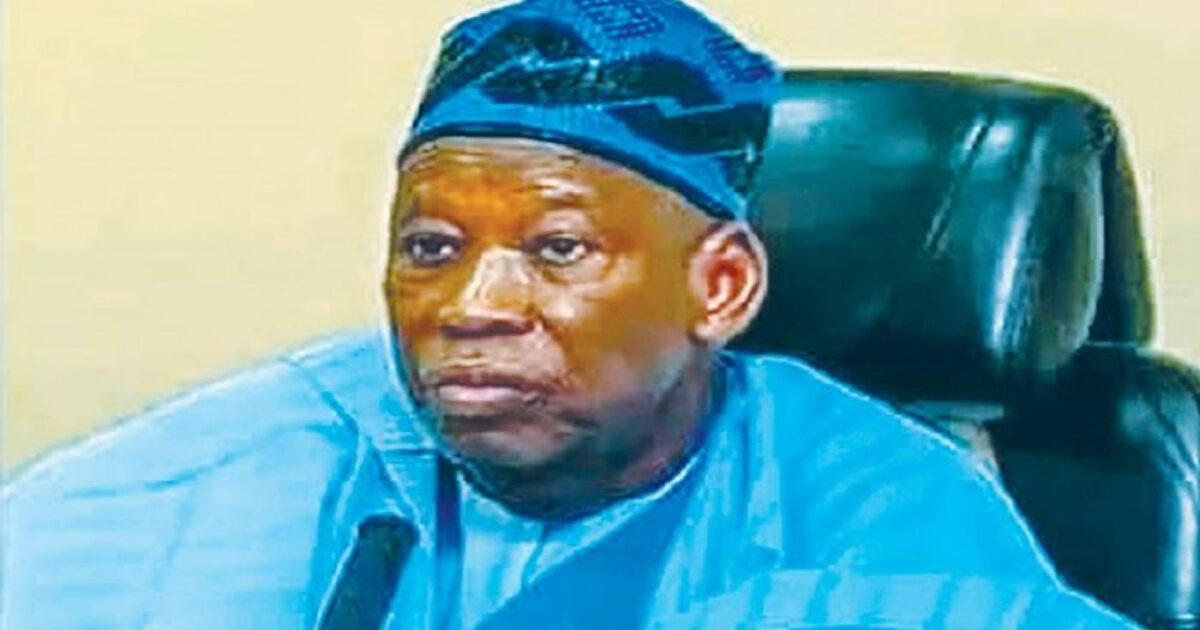
Former Governor of Kano State and immediate past National Chairman of the All Progressives Congress, Abdullahi Ganduje, has attributed the rising number of beggars in Northern Nigeria to what he described as “long-standing neglect” of persons with disabilities in the region.
- +Neglect of PWDs fuelling beggars in North – Ganduje
Ganduje made the remark on Friday in Abuja at the 10th anniversary documentary premiere of Let’s Talk Humanity, an organisation focused on improving access to education for the deaf and blind.
Ganduje made the remark on Friday in Abuja at the 10th anniversary documentary premiere of Let’s Talk Humanity, an organisation focused on improving access to education for the deaf and blind.
The event brought together stakeholders in disability education, government officials, and beneficiaries of Tudun Maliki Special School, marking a decade of advocacy for inclusive learning.
He lamented what he described as systemic marginalisation of PWDs in the North, saying the situation has contributed to the visibility of beggars across major cities.
“In the north, persons with disabilities are people relegated to the background. Seeing is believing, no doubt. That is why we have an array of beggars across the northern parts of this country day and night. Some sleep under bridges and a few by the roadside. This is a sorry sight,” he said.
Ganduje, however, said the initiative showcased at the event demonstrated the potential for change if adopted by governments and relevant stakeholders.
“But looking at what we have here this afternoon, you can see that there is a silent revolution ongoing. If what we are seeing could be adopted by our relevant governors and authorities, there is no doubt there will be a big positive change in our society,” he added.
He noted that exclusion had affected the confidence and aspirations of many PWDs, but said targeted interventions could restore dignity and productivity among them.
“Yes, they are relegated because they are physically challenged. This has affected their psyche and motivation. They cannot even think of themselves as human beings like others. However, by unveiling these kinds of programmes, we are teaching them to be like any normal human being in our society,” Ganduje said.
He called on government institutions and development partners to intensify support for disability inclusion, stressing that proper empowerment could transform PWDs into self-reliant citizens.
“Finally, I urge those in government and development partners to help make a great change, especially among persons with disabilities. Although many of these physically challenged persons can’t stop begging, they can be developed to the extent of making them become employers of labour,” he said.
Ganduje also commended the founder of the organisation, Fatima Ganduje Abiola-Ajumobi, describing her humanitarian work as consistent with her long-standing commitment to social impact.
Also speaking, the Minister of Humanitarian Affairs and Disaster Management, Bernard Doro, called for inclusive design in technology and public infrastructure to ensure accessibility for persons with disabilities.
“When we develop assistive devices or technology in general, this has to be done with people living with disabilities in mind. You don’t wait until after development before adapting it,” he said.
He added that accessibility should be embedded in innovation from the outset, especially in digital systems.
“We must move towards a future where accessibility is by design… technology should empower individuals to navigate the world on their own terms,” the minister said.
In her remarks, Abiola-Ajumobi said the organisation had empowered over 1,000 beneficiaries in the past 10 years and reiterated its commitment to expanding its impact.
She said the anniversary reflected years of trust and collaboration with stakeholders in special education.
Looking ahead, she said the organisation aimed to establish a national resource centre for persons with sensory impairments to access global learning opportunities.
Chairman of the Nigerians in Diaspora Commission, Abike Dabiri-Erewa, also praised the initiative, urging state governments to replicate similar programmes nationwide to improve inclusion and social welfare.