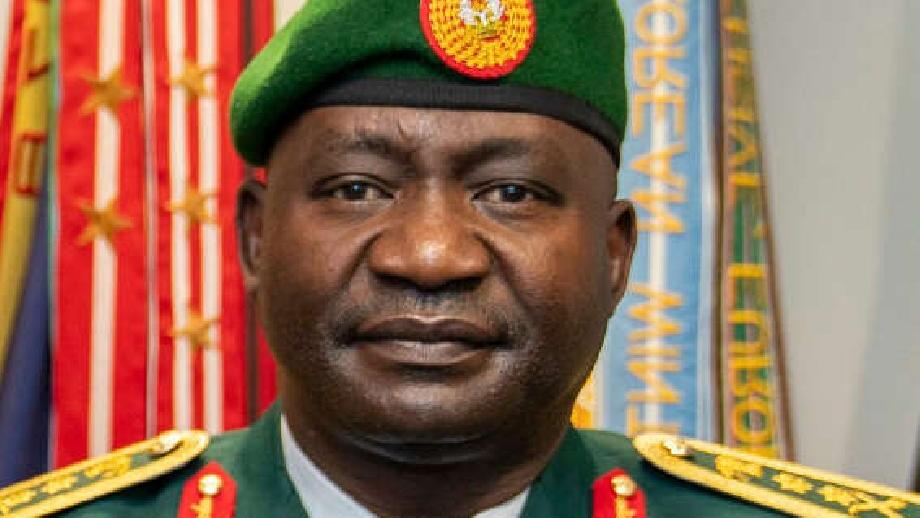
Nigeria and Türkiye have agreed to establish a major military training facility in Nigeria, as part of a defence partnership aimed at strengthening the country’s security architecture.
- +Türkiye to establish military training facility in Nigeria
The agreement was reached during bilateral talks between Nigeria’s Minister of Defence, Christopher Musa, and his Turkish counterpart on the sidelines of the Antalya Diplomacy Forum 2026.
The agreement was reached during bilateral talks between Nigeria’s Minister of Defence, Christopher Musa, and his Turkish counterpart on the sidelines of the Antalya Diplomacy Forum 2026.
According to a statement on Sunday by the Ministry of Defence Chief Information, Queeneth Iheoma-Hart, the planned training centre will serve as a long-term hub for capacity development, with Nigeria already identifying a suitable coastal location for the permanent facility.
She said a temporary site is also expected to be provided to kick-start operations.
Also, under the arrangement, Nigerian armed forces personnel will undergo specialised training in areas such as Special Forces operations, counterterrorism, intelligence integration, counter-drone and counter-IED operations, as well as United Nations pre-deployment exercises.
The statement read, “The Minister of Defence, General Christopher Gwabin Musa (retd.), led a high-level Nigerian delegation to productive bilateral talks with the Turkish Minister of Defence at the Antalya Diplomacy Forum 2026.
“The delegation included the Chief of the Air Staff, the Chargé d’Affaires of the Nigerian Embassy, the Defence Adviser and senior officials from the Ministry of Defence and the Nigerian Embassy in Türkiye.
“Training and capacity development: Türkiye proposed structured, scalable training programmes for Nigerian armed forces in areas including Special Forces operations, counterterrorism, intelligence integration, counter-drone and counter-IED operations, and UN pre-deployment training.
“Immediate deployment of an initial cohort to Türkiye was agreed, alongside Turkish language instruction and participation in field training exercises.
“Both parties agreed to establish a major military training facility in Nigeria as a long-term centre of excellence; Nigeria will provide a temporary training site and has identified a suitable coastal location for permanent infrastructure.”
Beyond training, the statement said the partnership included provisions for technology transfer, defence industry collaboration, and co-development of military capabilities.
According to the statement, both sides also pledged cooperation in surveillance systems, unmanned aerial platforms, and satellite-enabled monitoring to address evolving security threats.
The agreement further covers enhanced border management, intelligence sharing, and coordinated responses to non-state actors, as well as support for Nigeria’s disarmament and reintegration programmes for former combatants.
“Agreement to begin immediate technical engagements to define and implement integrated border management, enhanced intelligence sharing and coordinated responses to technologically sophisticated non-state threats.
“Türkiye offered to share best practices in reintegration programmes to support Nigeria’s management of surrendered combatants and long-term community reintegration,” the statement said.
In the area of air power, the deal includes commitments to strengthen maintenance systems, logistics, and training to improve operational readiness of the Nigerian Air Force, with potential acquisition of helicopters and unmanned systems under consideration.
Naval cooperation is also a key component, with plans for Nigerian officials to engage Turkish counterparts on maritime training and the possible acquisition of naval platforms to boost maritime security.
Speaking on the development, Musa described the outcomes of the meeting as “a significant step forward” in Nigeria–Türkiye defence relations.
“We are committed to delivering tangible, measurable results that strengthen our national security and advance the Renewed Hope Agenda,” he said, expressing optimism about the timely implementation of the agreements.
The agreement with Türkiye is coming at a time when the United States troops are in the country providing support in training, intelligence gathering and equipment assistance.
Speaking on the development, a security expert, Col Ahmed Usman (retd), cautioned that military success will depend not only on tactical upgrades but also on the welfare of troops on the frontlines.
Usman, in a statement by the Office of the Special Adviser to the Sokoto State Governor on Security Matters, described the development as a welcome step, but not a complete solution.
He stressed that while specialised training was critical in tackling insurgency and banditry, the human element of warfare must not be overlooked.
“A well-motivated force is a more effective force,” the statement said, calling for urgent improvements in remuneration, insurance, psychological support, and living conditions for security personnel operating in high-risk environments.
The government warned that without addressing these welfare gaps, gains from advanced training and modern tactics could be undermined by low morale and operational fatigue among troops.
While acknowledging the importance of international partnerships in building elite military capacity, the Sokoto State Government emphasised that Nigeria’s security challenges, ranging from insurgency to banditry, required a comprehensive approach.
The statement reaffirmed its support for federal efforts to restore peace but maintained that lasting success would come only when investments in firepower were matched with equal commitment to the well-being of those tasked with defending the nation.