Every dividend season, a familiar pattern emerges in the Nigerian stock market: prices climb, conversations spark, and investors who were once on the sidelines suddenly rush back in.
- +Why More Nigerians Are Buying Dividend-Paying Stocks on i-invest
Shareholders of some of the companies listed on the Nigerian Exchange (NGX) are set to receive a combined dividend payout of N3.2 trillion for the 2025 financial year, according to a recent analysis by BusinessDay.
Shareholders of some of the companies listed on the Nigerian Exchange (NGX) are set to receive a combined dividend payout of N3.2 trillion for the 2025 financial year, according to a recent analysis by BusinessDay. This represents a 131.8 per cent increase over the N1.36 trillion paid in the 2024 financial year.
Dividend-paying stocks have a perennial appeal for Nigerian investors because they offer something tangible: consistent cash returns in a market that can often feel unpredictable. However, the real challenge is not simply identifying which companies pay out.
The true test is timing: knowing exactly when to enter, how long to hold, and when an opportunity has already been “priced in.” This is where many retail investors still stumble.
You might know a bank is declaring dividends, or that an oil stock is benefiting from global price movements, but without real visibility into the market, you are often reacting late. By the time you act, the price has already adjusted.
This gap between information and execution is where platforms like i-invest are starting to stand out.
Instead of just giving investors access to stocks, i-invest is increasingly being used as a way to stay closer to what the market is actually doing in real time.
For example, during dividend cycles, price movements can be subtle but important. A stock may begin to trend upward ahead of its qualification date or adjust quickly after.
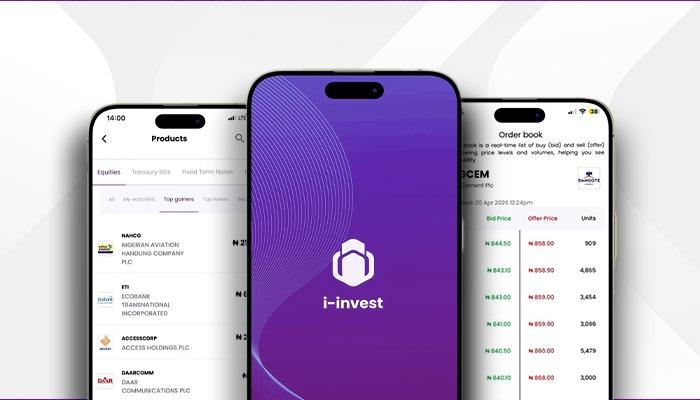
With access to a live order book, investors can see this activity as it happens — where buying pressure is building, how orders are being matched, and where momentum might be shifting.
It moves the experience from guesswork to something more observable.
Then there is the question of what to watch.
Markets do not move in isolation; when oil prices rise, oil stocks often follow. When sentiment shifts around banking stocks, it rarely affects just one company.
This is where a feature like Stockwatch on i-invest becomes more than just a convenience.
It allows investors to track specific stocks or entire sectors, making it easier to connect broader market trends to actual opportunities. Instead of checking prices occasionally, you are following movement as it unfolds.
And when you are ready to act, execution is no longer another hurdle.
With a ₦100 minimum entry point and no need to go through traditional brokerage layers, investors can take positions quickly, whether they are testing a strategy or building gradually across multiple dividend-paying stocks.
All of this points to a subtle but important shift.
And increasingly, that is what is shaping the platforms investors choose.
Investors looking to take a more active approach to dividend investing can explore i-invest to get started.