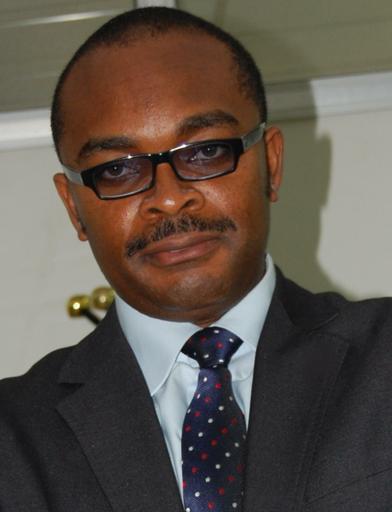
The northern gaze on Nuhu Ribadu: Security, politics, and the weight of expectation, By Crispin Oduobuk
- +“Let us speak the truth,” he repeated. “Let us call a spade a spade.”
When Nuhu Ribadu stood at the podium of the Ladi Kwali Hall in January 2006, he was still the celebrated chairman of the Economic and Financial Crimes Commission. His voice carried the moral urgency of a man who genuinely believed Nigeria could still be rescued through the disciplined application of law.
When Nuhu Ribadu stood at the podium of the Ladi Kwali Hall in January 2006, he was still the celebrated chairman of the Economic and Financial Crimes Commission.
“Let us speak the truth,” he repeated. “Let us call a spade a spade.”
The audience at the Third Annual Trust Dialogue responded with enthusiasm. Here was a public official who appeared to understand that corruption was not merely a moral defect but a structural affliction. Something primitive. Corrosive. And quite capable of eating through the foundation of a country while the elites argued over symbolism.
“For your information,” he declared at one point, “nothing will ever happen to this country.”
Your correspondent interviewed Ribadu on at least two occasions during those EFCC years, always in the company of my senior colleague, Hajiya Zainab Suleiman, then Editor of Weekly Trust. What struck me in those encounters was not merely his command of detail.
Nigerian public life occasionally produces intelligent men. It sometimes produces energetic men too. What is rarer is encountering someone who carries a visibly restless sincerity about the Nigerian project itself. Ribadu spoke about corruption almost as though it were a personal insult.
Yet if active media practice teaches anything, it is that sincerity alone cannot exempt a public official from scrutiny. Indeed, Ribadu himself spent years insisting that powerful people be judged by outcomes rather than sentiment.
He taught an entire generation of journalists, including this writer, the value of calling a spade a spade. Consistency demands applying the same principle to him.
Nearly two decades later, Ribadu now serves as National Security Adviser to President Bola Tinubu. The question preoccupying much of the northern media, and the political elite that consumes it, is whether the reformist energy of the EFCC years has translated into a coherent security vision.
Or whether the man who once pursued the powerful has himself become constrained by the political realities he once challenged.
Let me address directly a simplification in some discussions of Nigerian media: the notion that the Trust newspaper group has adopted an unduly hostile posture towards Ribadu.
Having served on its Editorial Board, I can attest that the group does not operate with a predetermined slant on public figures. Its culture, imperfectly realised, as all human institutional cultures are, is to platform strong submissions regardless of whether they flatter or discomfort the establishment. I do not believe there is a singular house position on Ribadu. What exists instead is a vigorous and deeply northern conversation about what he represents. And in the North, insecurity is never merely a policy discussion. It is personal. It is existential.
The debate is not whether Ribadu is competent. Nobody can genuinely doubt his competence in the broader sense. The debate is whether a northern Muslim serving under a southern president can successfully redeem a security architecture that has failed northern communities for many years.
And if results remain uneven, is that unevenness attributable to the specific capacities of the individual, to politics, or to the structure itself?
Early in Ribadu’s tenure as NSA, beginning in mid-2023, several Trust publications leaned into what might be called the technocratic redeemer narrative. A widely circulated Daily Trust article by Yakubu Dati, titled “NSA Nuhu Ribadu: Silently Eclipsing Insecurity” (April 2024), praised his intelligence-led coordination style, his managerial instincts, and his non-military perspective.
The underlying argument was straightforward. Modern insecurity, banditry, kidnapping, terrorism financing, and weapons trafficking cannot be solved through brute force alone. They require systems thinking. Administrative discipline. Intelligence coordination. And financial disruption.
That framing served an important political purpose. It created a buffer for Ribadu against critics who questioned his lack of military background. It borrowed moral credibility from his anti-corruption years. It offered the North a psychologically important narrative: one of its own sons sat at the centre of national security management, even under a southern presidency.
But hope is a difficult thing to sustain in an environment where people still cannot safely reach their farms.
By early 2025, the tone of commentary had become more questioning. Persistent killings and abductions across parts of Benue, Oyo, and the North-West complicated claims of decisive progress. Columnists began demanding clearer metrics. What exactly had improved? Where were the measurable structural reforms? How does one explain success to the villager who still sleeps with one ear open?
These were legitimate questions.
The appointment in May 2026 of retired Major General Adeyinka Famadewa as Special Adviser on Homeland Security introduced another layer to the debate. Some northern commentary interpreted the move as evidence that Ribadu had fallen out of favour.
In an opinion piece published by Daily Trust in early June 2026, Iliyasu Gadu described the situation as “poetic irony”: a former anti-corruption crusader who positioned himself too politically as NSA now facing a perceived demotion or loss of influence.
That interpretation is politically seductive but analytically weak.
A more serious reading is that the Tinubu administration is gradually expanding the architecture of security coordination. Ribadu remains NSA with broad strategic authority. Famadewa’s role appears more operational and domestically focused.
In complex systems, division of labour is not evidence of collapse. It is often evidence that the work itself has become too large for one office.
Trust publications, to their credit, have also platformed counter-views. In his “Line of Sight” column for Daily Trust, published also in early June 2026, Abubakar Adam Ibrahim argued that reports of Ribadu’s demise are “greatly exaggerated” and that the NSA remains central to Tinubu’s thinking.
The tendency to interpret every bureaucratic adjustment as palace intrigue says more about Nigeria’s hyper-political culture than about Ribadu’s actual standing. Too much of Nigerian political analysis resembles court gossip wearing a flowing babanriga.
Ribadu’s own public communication has not always helped matters. His controversial remark describing bandits and terrorists in the North-West as “our brothers” became an avoidable public relations disaster. The context was dialogue and deradicalisation. The reaction was understandable outrage.