eHealth Africa opens procurement pipeline to women-owned businesses across 11 states
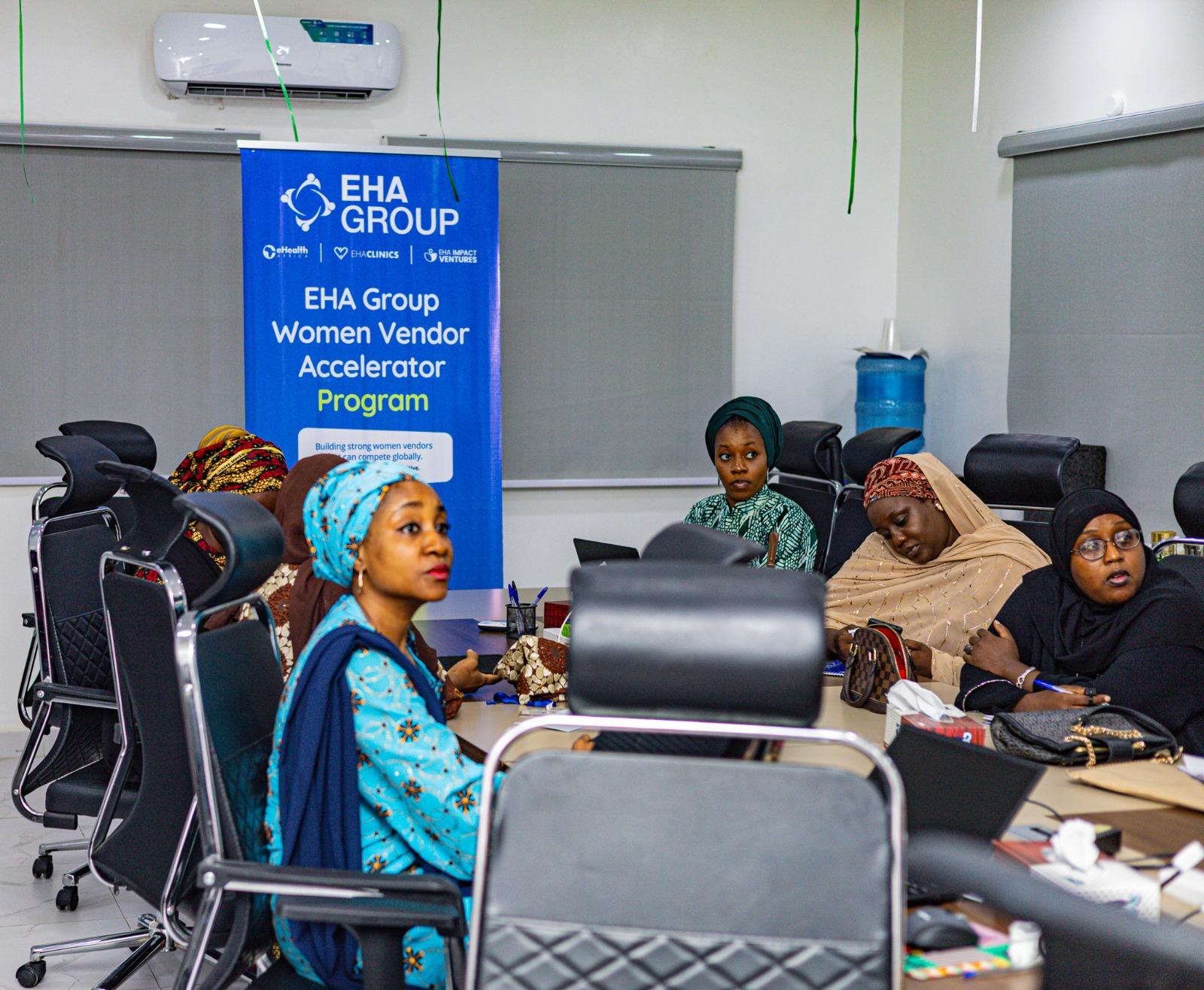
eHealth Africa (eHA) has launched a new effort to help women-owned businesses compete for institutional contracts, training 213 entrepreneurs from 11 Nigerian states on how to meet procurement standards and win larger business opportunities.
eHealth Africa (eHA) has launched a new effort to help women-owned businesses compete for institutional contracts, training 213 entrepreneurs from 11 Nigerian states on how to meet procurement standards and win larger business opportunities.
The initiative, known as the Women Vendor Accelerator Programme, was organised by eHealth Africa in partnership with EHA Impact Ventures (EIV). Rather than focusing on grants or small business funding alone, the programme is designed to prepare women entrepreneurs to participate in formal procurement systems used by corporations, development organisations and large institutions.
The one-day hybrid training attracted participants from Kano, Abuja, Borno, Yobe, Kaduna, Katsina, Zamfara, Sokoto, Kebbi, Bauchi and Niger states.
During the programme, participants received practical training on vendor registration, procurement procedures, ethical business practices, business formalisation and strategies for securing institutional contracts. They also interacted directly with procurement professionals, gaining first-hand knowledge of what organisations expect from suppliers and how businesses can improve their chances of being selected.
The initiative addresses a long-standing challenge facing many women-owned businesses across Africa. Although women play a significant role in entrepreneurship, many struggle to access institutional contracts because they lack knowledge of procurement processes, have limited professional networks or do not meet compliance requirements demanded by large organisations.
Speaking during the training, Ben Igbinosa, eHealth Africa’s director of finance and administration, said supporting women entrepreneurs requires more than policy statements.
According to him, empowering women-owned businesses demands deliberate investment in building their capacity to compete fairly within procurement systems.
He added that eHealth Africa is committed to creating more opportunities for qualified women-owned businesses to participate in its procurement processes and supply chain.
Also speaking, Ramatu Abdullah, senior coordinator for executive project support at EHA Impact Ventures, said the programme is part of a wider effort to strengthen women-led businesses beyond access to finance.
She explained that participants would benefit from mentorship, business networks, market opportunities and financing support aimed at helping them become competitive suppliers.
One of the participants, Sumayyah Muhammad, founder of Skin Whispers NG, said the training gave her practical knowledge on how to position her business for larger procurement opportunities.
According to the organisers, the accelerator programme was created following a directive from the eHealth Africa Group Board to increase the participation of women-owned businesses within the organisation’s supplier network.
Participants were introduced to procurement opportunities available across eHealth Africa, EHA Clinics and EHA Impact Ventures, giving them a clearer understanding of the standards required to do business with the organisations.
The organisers said this marks only the first phase of the programme. In the coming months, participants will receive additional support through vendor matching, guidance on meeting procurement requirements and access to financing opportunities facilitated by EHA Impact Ventures.
The programme reflects a growing shift among development organisations from simply supporting entrepreneurship to helping small businesses become sustainable suppliers capable of competing for high-value institutional contracts.
For women entrepreneurs, the initiative could provide a pathway to more stable business growth by opening access to procurement opportunities that have traditionally been difficult to secure.
eHealth Africa has worked across 26 African countries for more than 15 years, supporting governments and development partners through digital health, data-driven programmes and technology solutions aimed at strengthening healthcare systems.