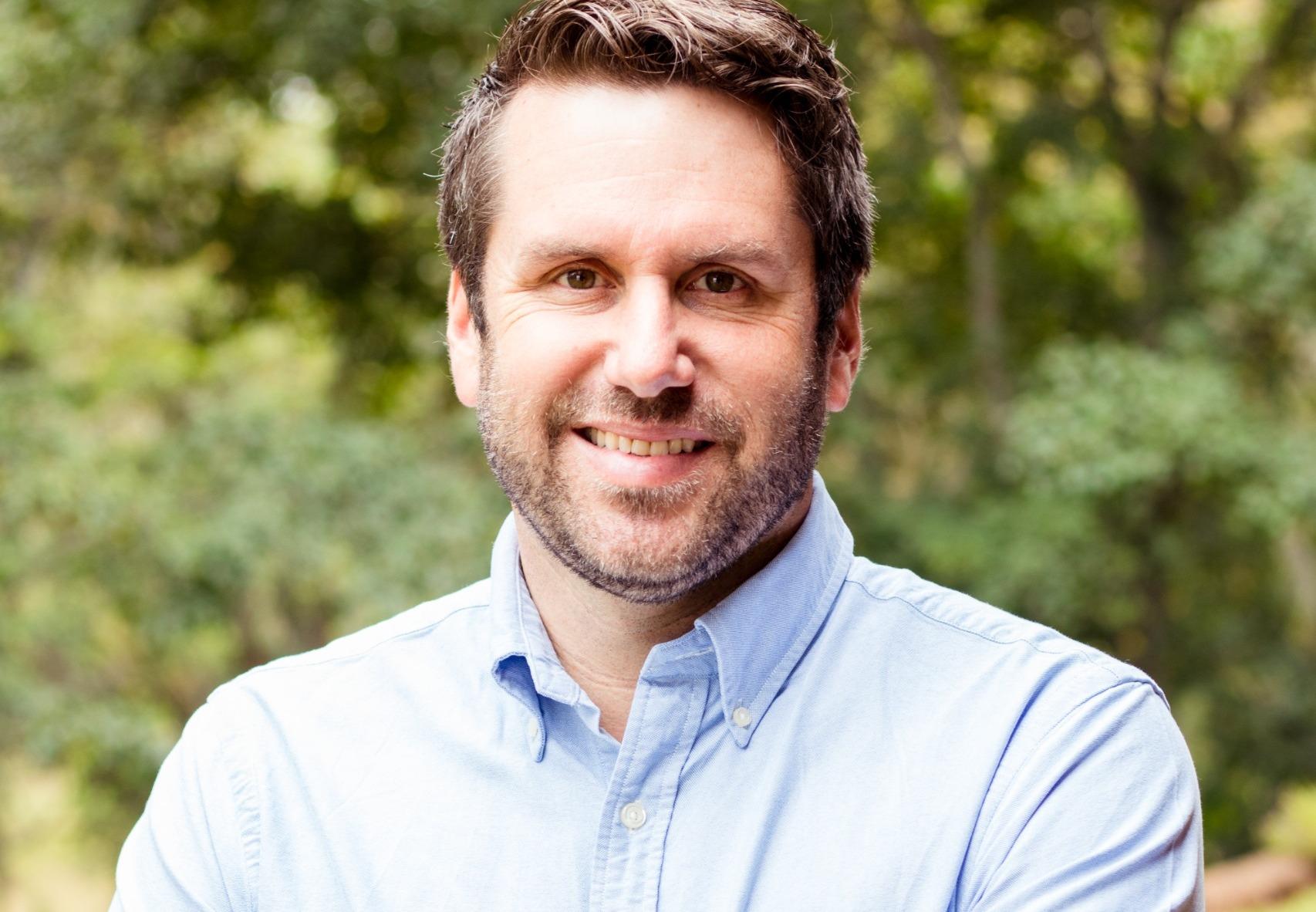
Ted Pantone on building Turaco, surviving Covid, and aiming for a billion people
- +Coffee or tea, and how particular are you about it?
- +What’s the last thing you read that stayed with you?
Ted Pantone is not a man who rushes his thoughts. The co-founder and chief executive of Turaco, a Kenyan insurance startup, speaks in measured bursts, pausing long enough to suggest he is weighing the question and the implications of the answer.
Ted Pantone is not a man who rushes his thoughts.
We meet in the gardens outside Turaco’s offices at Amani Gardens in Nairobi, where the setting makes the city feel distant. Mid-morning sunlight filters through the trees as Pantone takes his first cup of coffee of the day, taken late, almost as an afterthought.
Ted speaks without rushing, occasionally stopping mid-thought to sharpen his words. The company was built on an observation that runs against industry orthodoxy: low-income households may not buy traditional insurance, but they think constantly about risk.
He speaks about growth in clear, almost matter-of-fact terms: five million people insured today, a path to 100 million by 2030, and eventually a billion. “We want to double the number of insured people on the planet,” he says. It sounds audacious, but he presents it less as a stretch goal and more as the logical extension of a model that already works.
Beyond the business, his routines are steady. Mornings begin with family. He reads the Bible daily and spends time tracking developments in artificial intelligence, two influences that, in his view, shape both discipline and direction.
In this conversation, Pantone reflects on building through uncertainty, the moments that nearly broke the company, and why he believes the biggest mistake in African insurance is not a lack of demand, but a failure of imagination.
This interview has been edited for length and clarity.
What’s a normal morning for you? Are you up early, or does the day drag you out of bed?
Depends on the season. [Chuckles] Some seasons require a lot more than others. My default is to wake up with my family and get my kids off to school and get them started on a good day, and then look after my business in a good way as well. After that, there are some seasons where I’m staying up very late for investor calls in the US, and I will sometimes drag myself more to get out of bed. But I like to be up early.
Coffee or tea, and how particular are you about it?
For coffee, I’m not that particular. I like a bitter drink, but this [holding a cup] is my first cup of coffee, and it’s like 10 o’clock, so it’s not necessary to get me going.
What’s the last thing you read that stayed with you?
I read the Bible every day, which is probably the most important book in my life. Last week I read James 1, where it talks about “consider it pure joy, my brothers, when you face trials of many kinds, because testing your faith develops perseverance, and perseverance must finish its work in you.” That’s the most impactful thing I’ve read very recently.
I read a lot about AI as well, and listen to a lot about AI. From a business standpoint, some stuff I’ve heard on This Week in Startups or something like that is the most relevant stuff I’ve actually used. That’s two different answers to that question.
You’ve spent years building in African markets where insurance is often an afterthought. Was there a moment early on when you realised: this is either going to work at scale, or fail spectacularly?
It was realising that while the perception of insurance is an afterthought, risk is not an afterthought for people. I talked to my friends. My first home in Kenya was in Busia, and I still have friends back there—people who live on very little in the village, who are farmers—and you talk about the things they think about, and they think a lot about the risks in their lives and how to plan for them. I don’t think risk is an afterthought.
When we first launched our partnership with One Acre Fund—one of our first big partnerships—we were selling to farmers in Western Kenya. More than half of the farmers we called opted in for our insurance product. That was the moment I said, This is going to work. It’s still tricky to make the business work, but the demand is there. Risk is not an afterthought for people in Africa, and there’s a clear opportunity to meet that demand with supply.
What are some of the lessons you picked up earlier that have stuck with you till today?
Many lessons. As a founder, trusting your gut is the biggest one. The times I haven’t—when I’ve been a little more wishy-washy and looking to other people to guide me more than my own instincts—I’ve made worse decisions or let culture shift in ways that didn’t work with what I knew we had to build.
At the same time, be willing to be wrong and admit that you’re wrong and pivot. You have to balance both. At each season and stage of our business, I’ve needed both of those founder skills: being able to trust my instinct and also admit that I’m wrong and make a pivot in very small ways or in big ways.
There’s a quiet arrogance founders must have, the belief that they can see something others don’t. What did you see about insurance in Africa that incumbents missed?
I think if you ask most incumbents, “Do low-income earners across the continent want to buy insurance?” most people in the insurance industry would say no. They’d say this is not a reasonable market—there’s not enough demand, there’s no way to get products to them efficiently.
That’s the core assumption we’re proving wrong at Turaco: there is demand, and there is a way to distribute products efficiently to those people.
The insurance industry is so slow and so behind and so backward. About ten years ago, I had my first real interaction with insurance in Africa. I don’t have an insurance background. I joined a company to help them figure out how to make their business model work better. I came to Kenya for a conference, and the topic was digitisation of the insurance industry. It took me a while to figure out that they were talking about using computers. That was the big innovation: “Guys, we’re going to start using computers. We’re not going to use paper anymore.” I thought, Oh no, this whole industry is backward, slow. It’s ripe for disruption. Those are two things to point out.
Turaco sits at the intersection of fintech and insurance, two industries that don’t always move at the same speed. Which side has been harder to convince: the regulators, the partners, or your own team?
Our model is that we work with fintechs, banks, microfinance institutions, and telecommunications companies to sell insurance to their customers. They all get it. They all move fast. So that’s relatively easy—some move slower than others, but generally the demand is there, and they’re the avenue to connect to that demand.
The regulators are actually pretty fast, too, surprisingly. Every regulator we work with wants to see us succeed and wants to see us insure mass market consumers.