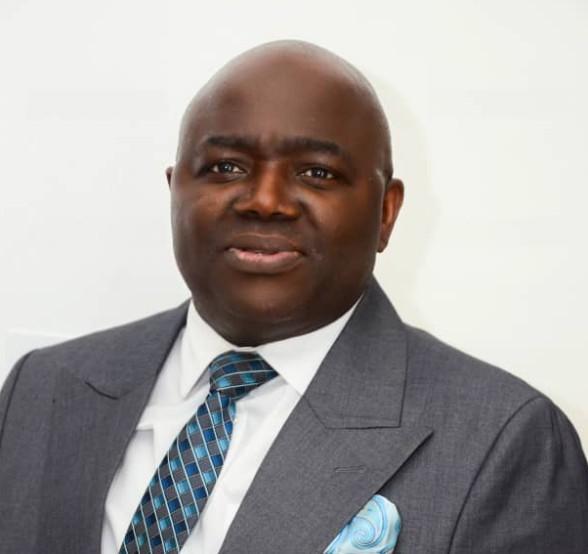
Olubusayo Adeniyi is the chief executive officer of Cedrus Group Africa, a diversified financial services group with interests spanning trusteeship, investment banking, asset management, SME financing, and microfinance banking. Prior to founding and leading Cedrus Group Africa, Olubusayo served as managing director/CEO of EAC Trustees Limited, a subsidiary of Emerging Africa Capital Group, where he played a pivotal role in establishing the business, defining its strategic direction, and strengthening its governance, risk management, and operational framework. In this interview, Olubusayo discusses how public and private sectors can collaborate to creatively support infrastructure financing in the country. Modestus Anaesoronye the excerpts…
- +Nigeria must unlock private capital to bridge infrastructure gap – Adeniyi
You bring over two decades of top management financial services experience to Cedrus Group Africa.
You bring over two decades of top management financial services experience to Cedrus Group Africa. What inspired your move to Cedrus?
Having spent nearly three decades building and leading businesses across Nigeria’s financial services industry, I have had the privilege of witnessing the evolution of our capital markets, trust industry, investment management sector, and broader financial ecosystem.
Those experiences shaped my conviction that Africa requires more indigenous institutions capable of combining commercial success with developmental impact. Cedrus was founded on the belief that financial institutions should do more than facilitate transactions; they should serve as catalysts for wealth creation, capital mobilization, enterprise development, and economic transformation.
From inception, our objective was not simply to build a successful business but to build an enduring institution anchored on strong governance, innovation, professionalism, and long-term value creation. We wanted to create a platform capable of supporting businesses, preserving wealth, advancing financial inclusion, and connecting capital to opportunities that drive sustainable growth.
Today, that vision remains at the heart of everything we do as we continue to build a financial services group that creates meaningful impact for clients, stakeholders, and society at large.
Recently, Cedrus Group Africa facilitated a memorandum of understanding (MoU) between the African Export-Import Bank (Afreximbank) and the Midstream and Downstream Gas Infrastructure Fund (MDGIF). Can you give us an insight into the details of the MOU?
The partnership between Afreximbank and the Midstream and Downstream Gas Infrastructure Fund is significant because it aligns with one of the most critical imperatives for Africa’s economic future: the development of strategic energy infrastructure.
The MoU establishes a framework for collaboration aimed at mobilising capital and technical expertise to support gas infrastructure projects across the value chain. The broader objective is to strengthen energy security, accelerate industrialization, enhance domestic utilization of gas resources, and support sustainable economic growth.
Nigeria possesses some of the largest gas reserves globally, yet the challenge has always been translating this potential into tangible economic value. Achieving that objective requires substantial investment, strong institutional partnerships, and innovative financing structures.
Cedrus was privileged to facilitate the engagement between both institutions. More importantly, the transaction reflects our broader commitment to connecting strategic stakeholders and creating partnerships capable of delivering long-term developmental impact. It is an example of how the private sector can work alongside development finance institutions to unlock opportunities that are critical to Africa’s future competitiveness.
Building on that, how can the private and public sectors in the country collaborate more to help deepen infrastructural financing in Nigeria?
Infrastructure remains one of Nigeria’s most significant development challenges, but it is also one of our greatest opportunities for economic transformation. The scale of investment required far exceeds what government resources alone can provide, making public-private collaboration imperative.
The public sector must continue to create an enabling environment through policy consistency, regulatory certainty, contract sanctity, and well-structured risk-sharing frameworks that encourage long-term investment. Investors are naturally attracted to markets where there is clarity, stability, and confidence in the operating environment.
On the other hand, the private sector brings capital, innovation, technical expertise, and execution capabilities that are critical to delivering infrastructure efficiently and sustainably. There is also significant untapped potential in mobilizing long-term domestic capital from pension funds, infrastructure funds, development finance institutions, and the capital markets.
Ultimately, infrastructure financing should not be viewed merely as a funding challenge but as a strategic economic growth imperative. The countries that have achieved rapid development are those that successfully aligned public priorities with private capital. Nigeria has the opportunity to do the same, and the impact on productivity, competitiveness, job creation, and national prosperity would be transformative.
How can trust services be used to preserve and protect wealth for future generations in this modern era?
One of the most important conversations taking place globally today is not simply about how wealth is created but how it is preserved across generations.
History has shown that many families successfully create wealth in one generation but struggle to sustain it beyond the second or third generation. In most cases, the challenge is not the absence of wealth but the absence of structures, governance, and succession planning.
Trust services provide a proven framework for addressing these challenges. They enable founders to establish clear governance structures around their assets, ensure continuity of vision, and provide long-term protection for beneficiaries.
In today’s environment, trusts are no longer viewed solely as estate planning tools. They have evolved into strategic wealth management instruments used for succession planning, business continuity, family governance, education funding, philanthropy, investment management, and intergenerational wealth transfer.
Perhaps most importantly, trust structures help ensure that wealth remains purposeful. They allow founders to preserve not only financial assets but also values, principles, and legacies that can positively influence future generations.
As wealth creation continues to accelerate across Africa, the importance of structured wealth preservation solutions will only become more pronounced.
Cedrus Group Africa is five years old. Can you share some of the notable milestones or achievements that stand out in the company’s history?