At first light in Obajana, Kogi State, the ground trembles slightly as trucks roll out in long, deliberate convoys.
- +Concrete nation: How cement is powering Nigeria’s Go Local industrial future
- +The raw material advantage – buried in plain sight
- +From cement to roads: a structural demand shift
- +Have a lifespan of 20–30 years, compared to 10–15 for asphalt
- +Require less frequent maintenance
- +Perform better under heavy traffic and high temperatures
- +Proximity reduces logistics costs
- +Infrastructure deficits across the region sustain demand
- +Then, scale into regional markets
- +Profitability – and the policy dilemma
- +What cement gets right – and what it teaches
- +Processing locally (limestone into clinker and cement)
- +Building distribution networks
- +Aligning policy with private capital
- +This is the Go Local model in practice. And it is replicable. The next frontier
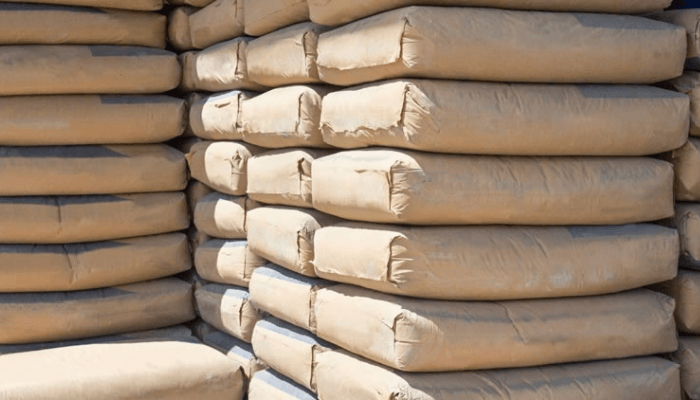
Each one is loaded with cement – grey powder that will become roads, bridges, homes, and, increasingly, the backbone of Nigeria’s industrial ambition.
Each one is loaded with cement – grey powder that will become roads, bridges, homes, and, increasingly, the backbone of Nigeria’s industrial ambition.
For the drivers, it is routine. For the engineers, it is output. But for the Nigerian economy, it is something more significant: proof that a country long defined by raw exports can, under the right conditions, build a complete value chain at home.
Nigeria’s cement story did not begin this way. In the late 1990s, the country produced less than 2 million metric tonnes annually, relying on imports for over 70% of its consumption.
It was an economy paying to import what it had the raw materials to produce. Then came a deliberate shift – policy-backed, private sector-led, and anchored on one idea: backward integration.
Today, Nigeria has installed cement capacity of about 62.8 million metric tonnes per annum, with actual demand hovering around 28–30 million tonnes. That gap – between what the country can produce and what it consumes – is not inefficiency.
It is strategic surplus. It means Nigeria is no longer just self-sufficient. It is export-capable.
The raw material advantage – buried in plain sight
Cement begins with limestone. And Nigeria is, by geological standards, exceptionally fortunate.
The country holds an estimated 2.3 trillion metric tonnes of limestone resources, with at least 568 million tonnes of proven reserves spread across states like Kogi, Ogun, Edo, Sokoto and Benue.
In Obajana, Okpella, Ewekoro and Gboko, cement plants sit almost directly on top of these deposits – an intentional design that reduces transport costs and anchors industrial activity locally. Limestone is only the beginning.
Clay, gypsum, laterite – all essential inputs – are also locally available in commercial quantities. This is what economists call resource proximity advantage.
It means: Lower input costs, reduced foreign exchange exposure and stronger domestic value chains Few industries in Nigeria achieve this level of localisation.
From cement to roads: a structural demand shift
On a newly constructed road in Kogi, the choice of material tells a story.
For decades, Nigeria relied on bitumen-based asphalt – much of it imported. But cement roads are gaining traction, not because they are cheaper upfront, but because they last longer.
Have a lifespan of 20–30 years, compared to 10–15 for asphalt
Require less frequent maintenance
Perform better under heavy traffic and high temperatures
For a country with over 193,000 km of roads, of which a large portion remains unpaved or deteriorating, the implications are significant. Each kilometre of concrete road locks in long-term demand for cement.
For producers, it is not just cyclical demand tied to construction cycles. It is structural. The market: domestic depth, regional ambition
Nigeria’s cement market is already substantial – valued at about $1.4 billion in 2025, with steady growth projected toward nearly $2 billion by 2029.
But the domestic market is only part of the story. With surplus capacity, producers are increasingly targeting regional exports.
West Africa presents a natural market:
Proximity reduces logistics costs
Infrastructure deficits across the region sustain demand
Trade frameworks like African Continental Free Trade Agreement (AfCFTA) lower barriers over time
Nigeria has already transitioned into a net exporter of cement within West Africa, reversing decades of import dependence.
This is how industrial sectors evolve:
Then, scale into regional markets
What makes cement strategically important is not just the product – but everything it activates. Around every cement plant, an ecosystem forms.
In Kogi, quarry workers extract limestone. In Ogun, engineers maintain kilns and processing lines. Across the country, thousands of trucks move cement daily, supporting logistics businesses that did not exist at this scale a decade ago.
The spillovers are significant:
Limestone extraction alone supports thousands of jobs and feeds multiple industrial uses beyond cement – including plastics, paint and chemicals.
Cement distribution requires fleets, depots and increasingly rail infrastructure – creating a logistics economy around it.
Cement plants are energy-intensive, driving investments in gas, alternative fuels and captive power systems.
Blocks, tiles, precast concrete and real estate development all expand alongside cement supply.
Maintenance, fabrication and engineering services grow around these plants, building technical capacity.
In economic terms, cement is not just an industry. It is a platform sector.
Profitability – and the policy dilemma
Despite its local advantages, the industry is not without controversy. Prices remain relatively high, reflecting a mix of: Energy costs, logistics inefficiencies and market concentration.
Three major players dominate the sector, with one accounting for more than half of national supply. For policymakers, this creates a balancing act: Protect local industry, encourage competition and ensure affordability.
Too much openness risks flooding the market with imports, undermining domestic production. Too little competition risks inefficiency and high prices. This tension is not unique to Nigeria. It is a common feature of industrialising economies.
What cement gets right – and what it teaches
Nigeria’s cement sector is often cited as one of the country’s most successful industrial transformations. Private sector investment exceeding $6 billion has turned it from an import-dependent sector into a regional production hub.
But the deeper lesson is structural. Success did not come from raw materials alone.
Processing locally (limestone into clinker and cement)
Building distribution networks
Aligning policy with private capital
This is the Go Local model in practice. And it is replicable. The next frontier
The future of Nigeria’s cement industry will likely be shaped by three forces:
Turning surplus capacity into sustained foreign exchange earnings.
Through energy diversification and logistics improvements.
Global demand for lower-carbon cement will require innovation in production processes. Already, producers are investing in alternative fuels and efficiency technologies to remain competitive.
As the trucks leave Obajana, the dust settles briefly before the next convoy arrives. Each trip represents more than cement.
It represents: Limestone turned into value, jobs created across supply chains, infrastructure For decades, Nigeria exported crude oil and imported refined products.
Cement tells a different story. It shows what happens when a country chooses to process what it has – and build industries around it.