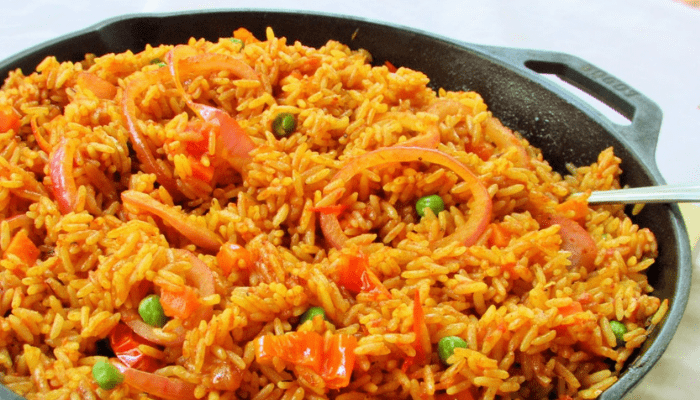
A Nigerian worker earning the national minimum wage of N70,000 can only afford to cook just two pots of jollof rice for a family of five before their entire monthly salary is exhausted. With the cost of a single pot soaring to N30,435, nearly 44 percent of a month’s labour is swallowed by a single family meal, forcing families to reconsider what and how they eat.
- +Jollof index: At N30,435, minimum wage earners can only cook two pots
- +Global triggers with local consequences
- +Fuel, transport and the inflation spiral
- +A nation divided by food costs
The latest SBM Intelligence Jollof Index, titled ‘From Hormuz To The Pot’, revealed a 19.4 percent increase from N25,486 between October 2025 and March 2026, reflecting the tightening squeeze on the national minimum wage.
The latest SBM Intelligence Jollof Index, titled ‘From Hormuz To The Pot’, revealed a 19.4 percent increase from N25,486 between October 2025 and March 2026, reflecting the tightening squeeze on the national minimum wage.
Global triggers with local consequences
At the heart of the surge is a global trigger with local consequences. Following the escalation of conflict in the Middle East in late February, crude oil prices spiked sharply, pushing domestic petrol prices above N1,300 per litre and diesel beyond N1,500. The result has been a rapid pass-through into transport costs, food prices, and overall inflation.
“The Strait of Hormuz might as well lie at the end of every Nigerian street,” SBM Intelligence noted, describing how global energy disruptions now translate almost instantly into local market prices.
Fuel, transport and the inflation spiral
As pump prices rose, the cost of moving goods surged, with transport fares doubling or tripling in some corridors. The cost of hauling food items across regions climbed by more than 50% in key routes.
Moving a tonne of grain from Kano to Lagos now costs up to N70,000, up from N45,000. Every ingredient in the jollof basket — rice, oil, pepper, and proteins — becomes more expensive to transport, store, and sell.
This has fed directly into inflation. Headline inflation rose to 15.38 percent in March, while month-on-month inflation more than doubled to 4.18 percent. Rural areas, heavily dependent on road transport, recorded the sharpest increases.
“Every single ingredient in the jollof basket became more expensive to move, store, and sell,” the report stated, highlighting the central role of logistics in the current food crisis.
Behind the data are households recalibrating daily life. In Lagos, a mother described how rising fuel costs have reshaped everything from her shopping habits to her family’s diet.
“I don’t bother with meat anymore,” she said. “The protein I use now is smoked dry fish. Meat is too expensive.” She now buys food in small quantities to avoid transport costs and has switched from cooking gas to charcoal for main meals.
A nation divided by food costs
The surge in jollof costs varies sharply across states, reflecting differences in logistics, infrastructure, and exposure to supply shocks.
The Federal Capital Territory, Abuja remains the most expensive location. The cost of a pot of jollof in Wuse II rose to N36,750 in March, driven by heavy reliance on food transported over long and insecure road corridors. Lagos recorded the sharpest monthly increase, with prices jumping by over 23 percent in March alone.
In the South-South, Port Harcourt saw the steepest six-month increase at 55.1percent to N31,650. Northern markets tell a different story; in Kano, prices rose by 53.8 percent to N29,670. Meanwhile, in the Southeast, markets such as Awka and Onitsha recorded the only month-on-month declines in March 2026, falling to N24,250.
SBM disclosed that an Onitsha wholesale food trader said she had stopped restocking entirely. “I am selling what I have. When it finishes, I will close the shop for a while.” This is inventory collapse in slow motion.