The Nigerian Correctional Service has reappointed the National Parole Board and all 36 State Parole Boards for a second term of three years.
- +NCoS reappoints parole boards, urges transparency in prisoners’ reintegration
The board assesses eligible inmates for supervised release into the community, based on merit, demonstrated reform, good conduct, and genuine readiness for reintegration.
The board assesses eligible inmates for supervised release into the community, based on merit, demonstrated reform, good conduct, and genuine readiness for reintegration.
The National Parole Board, first inaugurated on August 25, 2022, draws its membership from the judiciary, relevant federal ministries, the Nigeria Police Force, mental health professionals, the National Directorate of Employment, and civil societies.
The reappointment, which takes effect from Monday, June 15, 2026, comes just four days after the NCoS recorded what the Controller-General described as a historic moment — the first-ever official release of parolees under the Nigerian Correctional Service Act 2019, held at Umuahia, Abia State, on June 11.
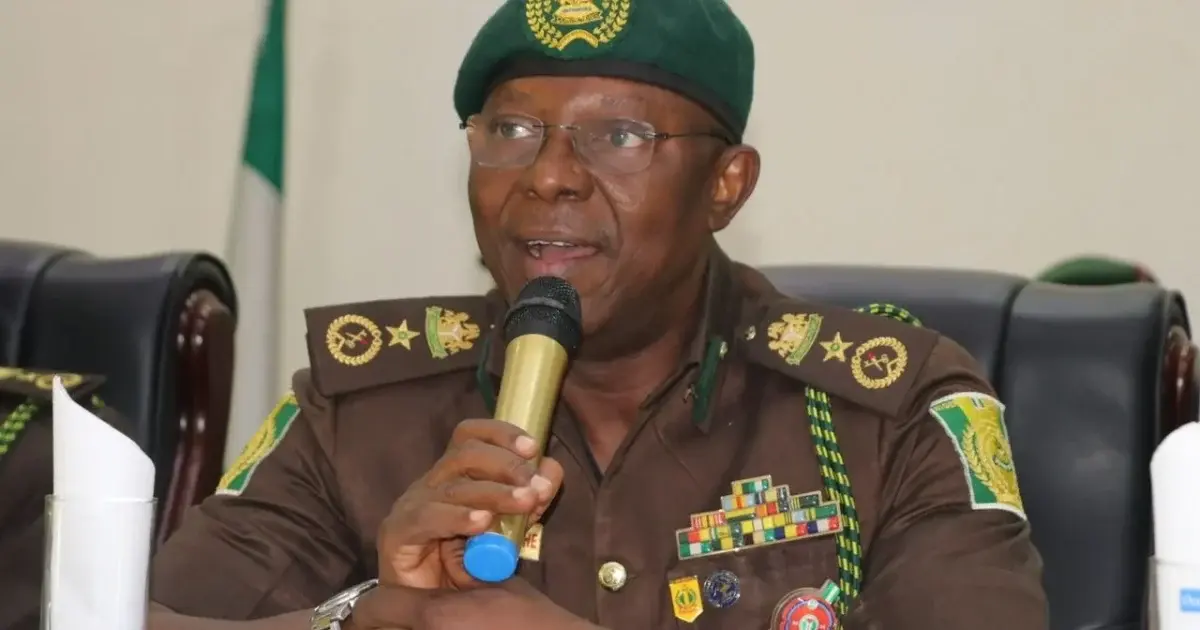
Speaking, the Controller-General of Corrections, Sylvester Nwakuche, charged members to discharge their duties with utmost integrity, impartiality, and transparency in the management of prisoner rehabilitation and reintegration.
Represented by the DCG Human Resources, Ado Saleh, the CG described the occasion as a significant milestone in the country’s correctional reform journey.
Nwakuche said the Board’s mandate includes coordinating parole administration across the federation, monitoring the effectiveness of the parole process, and receiving and considering appeals and complaints from offenders, victims, and affected persons.
Acknowledging the work of the outgoing board, he said their contributions over the past three years had been assessed and found worthy of continuation.
“Your contributions over the past three years have been duly noted, assessed, and found worthy of continuation. It is on this basis, and on this basis alone, that I have exercised the power vested in me by the NCOS Act 2019 to reappoint the National Parole Board and affirm the continuation of the State Parole Boards for a further term of three years,” he said.
Charging the reappointed members, Nwakuche warned that a new term carried higher expectations and greater responsibilities, and that their decisions would have far-reaching implications for public safety and citizens’ confidence in the justice system.
“I charge you to coordinate the parole process with increased rigour and consistency, ensuring that no eligible offender is denied the opportunity of rehabilitation on account of administrative lapses or geographical inequalities across the Federation,” he said.
He further directed members to ensure that every case was considered objectively and without prejudice, guided solely by the facts presented, the welfare of society, the interests of victims, and the genuine prospects of rehabilitation.
“I charge you to discharge your duties at all times with utmost integrity, impartiality, transparency, professionalism, and strict adherence to the provisions of the law — without fear, without favour, and without compromise,” Nwakuche said.
The Controller-General also stressed the broader value of the parole system to society, noting that every successfully reintegrated offender represented both a reduction in recidivism and a potential contributor to the nation’s economy.
“A society that invests in the rehabilitation of offenders is a society that is investing in its own future,” he said.
He called on all relevant government agencies and ministries to extend full cooperation and institutional support to the Boards at both the national and state levels.