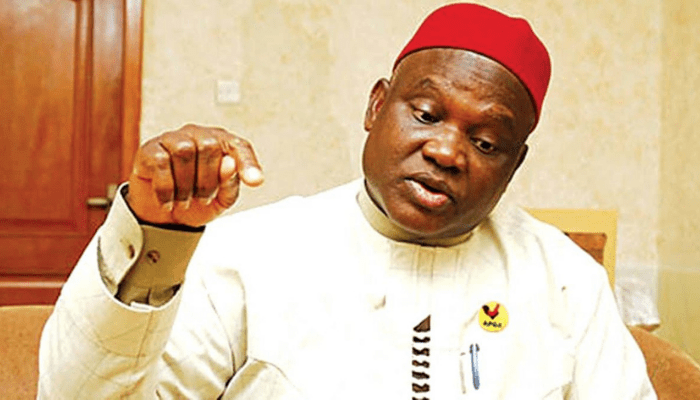
INEC’s ambiguity on court rulings creates room for political manipulation – Okorie
Chekwas Okorie, founder of the Igbo Agenda Dialogue (IAD) and former national chairman of the All Progressives Grand Alliance (APGA), speaks candidly on critical national issues, including the recent concerns raised by the Nigerian Army over the reluctance of Igbo youths to enlist.
Chekwas Okorie, founder of the Igbo Agenda Dialogue (IAD) and former national chairman of the All Progressives Grand Alliance (APGA), speaks candidly on critical national issues, including the recent concerns raised by the Nigerian Army over the reluctance of Igbo youths to enlist. In this exclusive interview, Okorie examines the historical and socio-political factors driving this trend, the role of marginalisation, and the work IAD is doing to re-engage young Igbos in national service. He also shares his views on electoral fairness, opposition party crises, and the implications of the 2027 election, offering insight into the challenges and opportunities facing the Igbo community in contemporary Nigeria. INIOBONG IWOK brings the excerpts:
The military recently complained that Igbo youths are shunning enlistment. What do you think is driving this trend, and what is IAD doing about it?
It is very unfortunate that propaganda suggesting Igbo people are no longer fully Nigerians has affected the younger generation. Many have lost interest even in opportunities like military recruitment. In the past, joining the armed forces was highly sought-after and considered a mark of pride. Igbo youths, being highly educated, always had a strong presence. But now, many are discouraged, partly because of past experiences.
At one point, it was almost impossible for qualified Igbo candidates to be recruited into the armed forces. Bribes were often demanded, and even the most qualified were sometimes screened out. This frustration has discouraged many from pursuing such opportunities. Another factor is the perception—fueled on social media—that the army might be recruiting young Igbos to the frontlines to fight terrorism, which some interpret as a death sentence. Coupled with marginalisation and past injustices, these issues have created reluctance among Igbo youths to enlist.
Some have questioned why the army is actively seeking Igbo recruits, while other government agencies don’t issue similar calls. What’s your view?
That is a valid question. If Igbo youths are being encouraged to join the army, why aren’t they also invited to take their quotas in Customs, Immigration, the Central Bank, NNPC, FIRS, and other government agencies? Recruitment in many agencies is often opaque. This selective push raises questions about integration. Igbo Agenda Dialogue is focused on changing this narrative by educating our people on their civic responsibilities, encouraging political participation, and reclaiming their rightful place in national institutions. Historically, many core Igbo positions have been denied to our people. For instance, it is only recently, under the Bola Tinubu administration, that a core Igbo person became Minister of Works—a role central to post-war reconstruction. Through IAD, we aim to highlight marginalisation and empower Igbo citizens to take charge of their destiny.
“A government that has the advantage of having 32 or 31 governors out of 36, and they also have the overwhelming control of the National Assembly, ought not to be showing signs of panic and trepidation in election issues.”
“So many Igbos believe they are not fully accepted in the project called Nigeria, and it is left for the government to change this narrative.”
What is your view on INEC’s handling of the ADC issue, before the Supreme Court judgement?
INEC failed to fulfill its proper role. When a court pronouncement is ambiguous, the right approach is to seek clarification. But in Nigeria, court rulings often remain unclear, leaving room for political manipulation. This has created anxiety in the polity. I caution the Supreme Court to be mindful of the country’s restive state. Decisions that appear to muzzle opposition parties could push citizens toward self-help, which risks chaos. Historically, the Supreme Court has helped douse political tension, such as during the Ondo State crisis between Omoboriowo and Ajasin.
Do you see any involvement of the federal government in the crises affecting opposition parties?
It is evident that some in the presidency, including aides with access to resources, have a stake in opposition conflicts. A government controlling 31 or 32 of 36 states and an overwhelming majority in the National Assembly should not appear panicked or manipulative regarding election issues. Yet, public statements by officials defending or undermining opposition parties suggest such involvement.
Ahead of the 2027 election, some question whether the presidency should remain in the South, while others see the potential Peter Obi/Kwankwaso ticket as formidable. Your thoughts?
I am not in that party; so, I leave candidate decisions to them. Multi-party democracy provides Nigerians with options, and parties must consider public sentiment when choosing candidates. Ultimately, voters will decide which candidates align with their aspirations. The beauty of our system is that citizens can support or reject decisions, ensuring accountability.