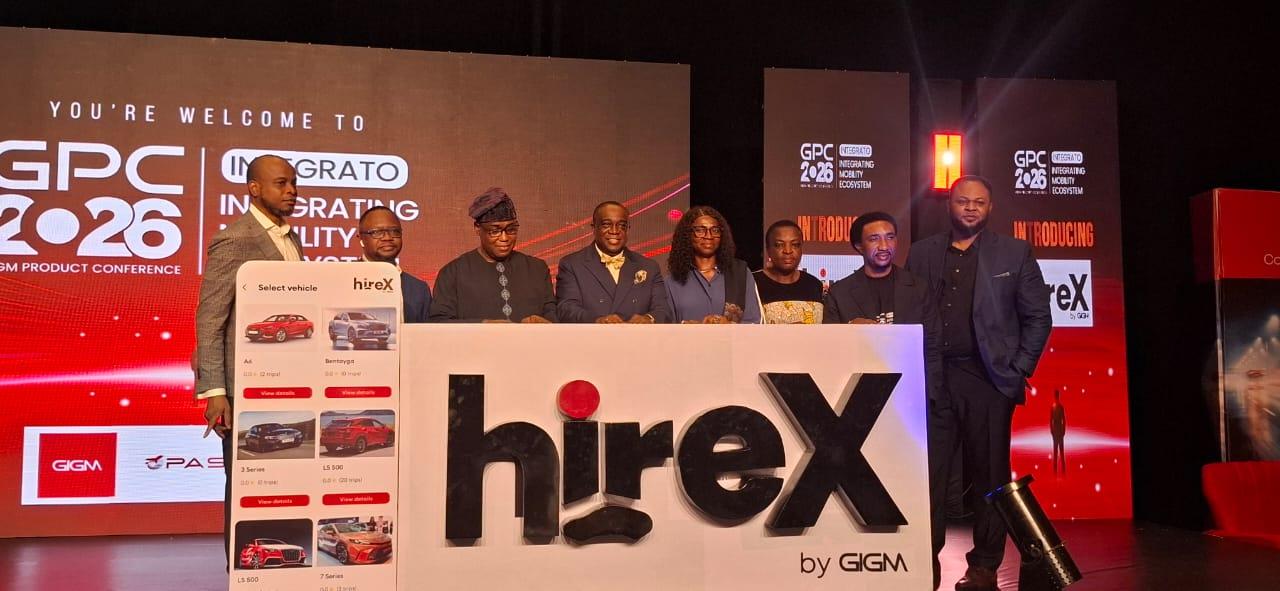
GIG Mobility has launched a new integrated digital platform, marking a major shift from being a traditional bus transport operator to a technology-driven global mobility ecosystem.
- +GIG Mobility goes digital-first, launches unified travel platform
- +From transport to experience economy
- +EV push and infrastructure challenge
- +Tourism, policy, and ecosystem play
- +Competitive landscape and outlook
The company made the announcement at its 2026 Product Conference in Lagos, where it unveiled a unified platform designed to bring together multiple travel and mobility services into a single user experience.
The company made the announcement at its 2026 Product Conference in Lagos, where it unveiled a unified platform designed to bring together multiple travel and mobility services into a single user experience.
Enahoro Okhae, the chief executive officer, GIG Mobility, said the move reflects changing customer expectations and the company’s long-term strategy to compete in a fast-evolving digital travel market.
“We are no longer just a company that moves people from Lagos to Benin. We are now a global mobility organisation,” Okhae said.
At the centre of the transformation is a platform that combines intercity bus bookings, airline tickets, vehicle hire, tour packages, and soon hotel reservations and travel insurance. The goal, according to the company, is to eliminate the fragmentation that currently defines Nigeria’s travel ecosystem.
The new platform signals GIG Mobility’s ambition to operate like a super-app for travel, similar to global models where users can plan, book, and manage entire journeys within one interface.
This approach is becoming critical as digital consumers demand convenience, speed, and personalised services.
Okhae explained that the shift was driven by direct customer feedback.
“It became difficult to keep telling people we are just a bus company. The demand was clear, in that, people wanted more, and we had to evolve,” he said.
One of the key features of the platform is HireX, a vehicle-hire marketplace that allows users to access premium cars on demand without ownership.
“You don’t need to own a luxury car to use one. You can hire for a few hours, depending on your needs. It is about access, flexibility and service,” he said.
Another offering, ‘PASS by GIGM’, integrates airline bookings, visa processing support, and curated travel experiences into one digital flow, positioning the company deeper within the travel and tourism value chain.
From transport to experience economy
The company said the platform represents a broader shift from selling transportation to selling experiences, a trend seen globally as mobility companies expand into lifestyle and tourism services.
“We have moved from selling transportation to selling experiences,” Okhae said.
This transition reflects a wider digital transformation in the mobility sector, where companies are leveraging technology, data, and partnerships to capture more value across the travel journey.
EV push and infrastructure challenge
Beyond digital expansion, the company also revealed plans to deploy electric vehicles (EVs) for passenger transport, signalling an entry into sustainable mobility.
Okhae said the initiative will be supported by a nationwide charging infrastructure, although he acknowledged the scale of the project.
“It is a big project. We are already engaging financial institutions and building a plan that spans across Nigeria,” he said.
The EV push comes at a time when Nigeria is beginning to explore cleaner transport options, but challenges such as power supply, infrastructure gaps, and financing remain significant barriers.
If executed successfully, GIG Mobility could become one of the early movers in Nigeria’s emerging EV transport space.
Tourism, policy, and ecosystem play
The Lagos State Government also highlighted the importance of integrated mobility systems to economic growth, particularly in tourism.
Toke Benson-Awoyinka, the commissioner for Tourism, Arts and Culture, who was represented by Quadri Adebowale said efficient movement of people is critical to unlocking value across sectors.
“Mobility is not just about moving from one point to another. It connects people to experiences, business, culture, nightlife, food, fashion and enterprise,” he said.
He warned that inefficient and fragmented transport systems could slow down tourism growth and reduce productivity, even in cities with strong digital adoption.
The state government is promoting collaboration through initiatives such as its Ethno-Mobility framework, aimed at aligning policy with innovation in the sector.
Competitive landscape and outlook
GIG Mobility’s expansion comes as competition intensifies in Nigeria’s mobility and travel-tech space, with startups and traditional players racing to build integrated platforms.
The company’s strategy places it at the intersection of transport, fintech-enabled bookings, tourism, and logistics, sectors that are increasingly converging through technology.
The success of the platform will depend on execution, partnerships, and the ability to scale reliably across Nigeria and beyond.
For now, the company is betting that convenience, integration, and digital-first services will define the future of travel.
“At GIGM, we do nothing without technology. It is the foundation of everything we do and what keeps us ahead,” Okhae said.
The Product Conference, will now be held annually to showcase innovations and track its progress in building what it describes as a fully connected global mobility ecosystem, the company added.