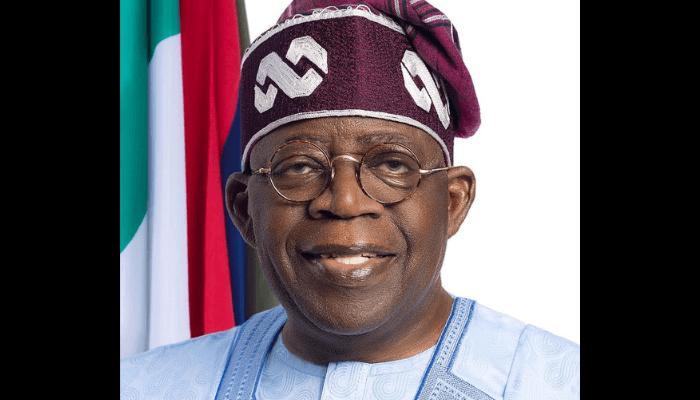
President Bola Tinubu, on Thursday, inaugurated what is considered the largest school complex in Lagos in furtherance of academic excellence.
- +Tinubu commissions Lagos’ largest schools complex
Known as “Tolu Schools Complex, Ajegunle, the premises consists of 36 different primary and secondary schools, including 19 football pitches, in Ajeromi-Ifelodun LGA of the state.
Known as “Tolu Schools Complex, Ajegunle, the premises consists of 36 different primary and secondary schools, including 19 football pitches, in Ajeromi-Ifelodun LGA of the state.
The breakdown includes five primary schools, 15 junior secondary schools, and 16 senior secondary schools, designed to provide a complete educational ladder from foundation to the threshold of higher learning.
Other facilities within the complex are central laboratory and ICT building, dedicated Physics, Chemistry and Biology laboratories, each able to accommodate 200 students at a time, creating room for scale, experimentation and scientific learning. There is also a state-of-the-art ICT and robotics hub, where students will be able to receive scheduled specialist training and develop the digital fluency that this century demand
Tinubu, represented by Godswill Akpabio, president of the Nigerian Senate, also virtually commissioned the Abijo Food Hub, near Epe, in Ibeju-Lekki area of Lagos to mark the end of what was planned as his two-day official work in Lagos.
He had on Wednesday, also represented by Akpabio, inaugurated three projects: the Mende-Opebi Link Bridge, Lagos State electronic Geographical Information System (eGIS) Building and Lagos State Multi-Agency Building, all executed by the Governor Babajide Sanwo-Olu administration.
The president commended the Lagos State government, saying: “The remarkable scale and significance of the Tolu schools complex comprising tens of thousands of students within a single environment is truly exceptional.
“The successful regeneration of such a large and complex educational system is highly commendable. This reflects vision, planning, and a very clear commitment to improving the lives of our young citizens.”
He stressed the need for continued invest in education not only as a social service, but also as a driver of economic growth and national development.
He noted that the Federal Government was on its part committed to ensuring every child is given an opportunity to access quality education and practical skills that young Nigerians need to thrive in a modern economy.
“By strengthening human capital development, we are building a workforce capable of driving innovation, creating jobs, sustaining national growth. This is how we turn opportunities into progress and potentials into prosperity for all Nigeria,” Tinubu added.
Speaking also, Governor Sanwo-Olu commended Tinubu’s while he served as the governor of Lagos (1999-2007).
“Your presence here today, Mr. President, as you commission the fruits of a vision you helped plant, is a powerful reminder that leadership is a continuum, that good governance builds upon itself, and that when leaders at every level work together, the impossible becomes achievable.
“We have transformed the Tolu Schools Complex into the largest integrated educational community in West Africa – a “school city” that now comprises 36 schools: 5 primary schools, 15 junior secondary schools, and 16 senior secondary schools, providing a complete educational ladder from foundation to the threshold of higher learning.
“To tackle overcrowding and create a more conducive learning environment, we have delivered 12 new classroom blocks, each containing 18 classrooms. In addition, 24 existing school buildings have been comprehensively rehabilitated, restoring them into safe, habitable and inspiring spaces for teaching and learning.
“But we did not stop at classrooms, because education today must do more than prepare children to pass examinations. It must prepare them to thrive in a changing world. That is why we have built a four-storey vocational and skills acquisition centre with dedicated workshops — a facility deliberately designed to bridge the gap between academic instruction and practical competence. We want our young people to leave school not only with certificates, but with capability. Not only with ambition, but with employable and entrepreneurial skills.