Kigali || Nigeria’s government plans to slow the pace of painful economic reforms and instead focus on easing the country’s cost-of-living crisis, as part of a broader effort to bring relief to households nearly three years after President Bola Tinubu’s sweeping policy overhaul.
- +Oyedele sets sight on reform dividend for Nigeria’s poor
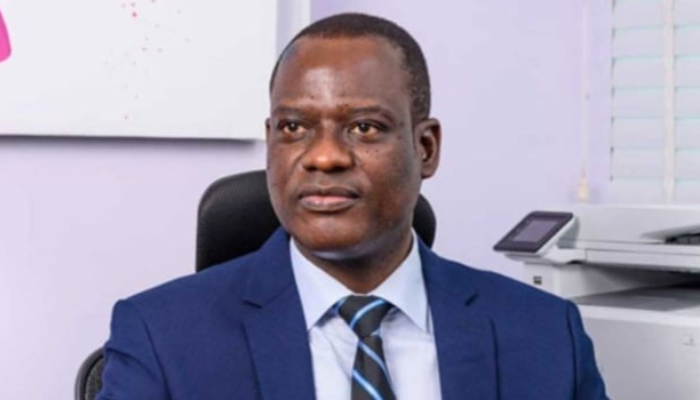
Taiwo Oyedele, the nation’s minister of finance and coordinating minister of the economy, said authorities are prioritising measures that can translate macroeconomic reforms into tangible relief for ordinary Nigerians rather than introducing another wave of disruptive policies.
Taiwo Oyedele, the nation’s minister of finance and coordinating minister of the economy, said authorities are prioritising measures that can translate macroeconomic reforms into tangible relief for ordinary Nigerians rather than introducing another wave of disruptive policies.
“There have been a number of reforms in the past three years, and you have to be mindful of reform fatigue,” Oyedele told BusinessDay in an exclusive interview on the sidelines of the Africa CEO Forum, Thursday.
“Until that has been done sufficiently well, trying to introduce another big reform will be the wrong priority,” he said.
Tinubu’s administration embarked on some of the country’s boldest reforms in decades shortly after taking office in 2023, including the removal of petrol subsidies and the liberalisation of the naira exchange rate.
While policymakers and investors have praised the reforms for improving fiscal stability and attracting foreign capital, the measures have also triggered sharp increases in food, transport and energy prices.
Oyedele acknowledged the hardship facing households, saying many Nigerians were more concerned about feeding their families and paying school fees than macroeconomic indicators.
“To the person on the streets, they really don’t care about that,” he said, referring to the government’s reform gains. “They care about, can I put food on the table? My kid wants to go to school. Can I afford the education?”
The government is now focusing on targeted interventions to cushion the impact of inflation, including suspending taxes on fuel products to prevent further increases in pump prices.
According to Oyedele, petrol prices in Nigeria remain between 30 and 50 percent lower than in neighbouring countries, partly because the government has refrained from imposing multiple taxes on fuel.
“It would be insensitive, and in fact, it could be counterproductive to impose those taxes on fuel products,” he said. “So those taxes have already been suspended.”
Authorities have also granted duty waivers for electric vehicles and are supporting compressed natural gas adoption as part of broader efforts to reduce transport costs and dependence on petrol.
Oyedele said the government had also stepped in to question steep increases in aviation fuel that rose 300 percent and diesel prices, arguing that some operators may be exploiting market volatility following the subsidy removal.
“This is not a time to make super profits,” he said, adding that regulators were being encouraged to ensure marketers moderate margins rather than artificially fixing prices.
The remarks suggest a subtle shift in the administration’s policy tone as public frustration mounts over persistent inflation, which remains one of the highest in decades despite signs of improving external balances and foreign reserves.
Oyedele defended the government’s reform agenda, arguing that conditions could have deteriorated much further without the changes implemented since 2023.
“If not for those reforms today, it could have been much worse,” he said.
He pointed to gains including increased tax registration, stronger foreign reserves and growing participation from the informal sector. Nigeria’s external reserves climbed close to $50 billion recently before declining due to international obligations, according to him.
The government is also leaning on intervention programmes such as student loans under the Nigerian Education Loan Fund and financing support for small businesses through the Bank of Industry to soften economic pressures.
Oyedele said authorities were increasingly engaging the private sector for feedback on areas where reforms were not delivering expected outcomes.
“We are co-executing those reforms with the private sector,” he said. “Your policies are well intended, but it doesn’t mean they give you the result that you want.”
He also disclosed that the government is exploring mechanisms to stabilise fuel prices through forward crude supply arrangements with local refiners, a move that could reduce exposure to global oil price volatility.
Under such a framework, Nigeria could lock in crude supply prices for several months to help refiners maintain more stable fuel prices domestically.
“These are things we are working on,” Oyedele said.