The Lagos State Government says it is transitioning Africa’s largest city economy towards a zero-waste and climate-resilient future through strategic partnerships, recycling initiatives, improved landfill operations and waste-to-energy projects.
- +Lagos intensifies push for circular economy, expands waste-to-energy projects
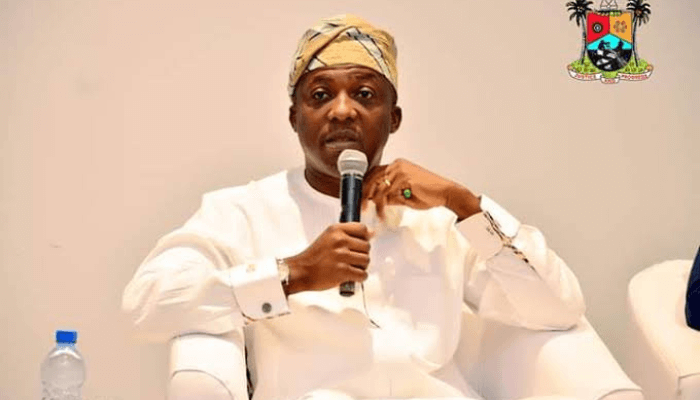
Tokunbo Wahab, Commissioner for the Environment and Water Resources, disclosed this on Sunday at the 2026 Ministerial Press Briefing marking the seventh year of the administration of Governor.
Tokunbo Wahab, Commissioner for the Environment and Water Resources, disclosed this on Sunday at the 2026 Ministerial Press Briefing marking the seventh year of the administration of Governor.
In line with the government’s push for waste-to-energy, Wahab revealed that the state commissioned the Ikosi Waste-to-Energy Biodigester Plant located within the Ketu Fruit Market. According to him, the facility converts organic waste into electricity, cooking gas and agricultural fertiliser. The plant, he explained, processes 0.5 tonnes of organic waste daily and generates 30kWH of electricity for lighting and cold storage, while delivering estimated annual emissions savings of about 9,000 tonnes of carbon dioxide equivalent (tCO2e).
According to him, the government recorded significant milestones across waste management, environmental sanitation, climate governance, drainage infrastructure, water supply, beautification and environmental enforcement over the past year.
A major highlight, he said, was the reintroduction of the monthly statewide environmental sanitation exercise aimed at restoring environmental consciousness and strengthening public participation in sanitation practices. “The exercise recorded massive participation from residents, local governments, private organisations and state officials, demonstrating renewed public commitment to environmental cleanliness,” Wahab stated.
He said enforcement activities were also intensified through relevant agencies, leading to the arrest and prosecution of environmental offenders, removal of illegal traders and squatters, as well as the issuance of environmental abatement notices across the state.
He disclosed that 5,715 persons were arrested for highway crossing offences, while 3,886 others were apprehended for offences including street trading, environmental pollution and cart-pushing. In addition, 102 persons were arrested for open defecation, while 931 offenders were apprehended for waste management violations.
The commissioner added that the state had improved landfill operational efficiency and reduced waste truck turnaround time. Following a performance evaluation exercise, the operating licences of five underperforming Private Sector Participant (PSP) operators were withdrawn.
He further stated that healthcare waste management was strengthened through the deployment of 35 new PSP operators to health facilities across the three senatorial districts. According to him, 3,920 health facilities have now been registered statewide, with between 80,000kg and 105,000kg of medical waste treated monthly.
“We have enhanced waste-to-wealth initiatives through the signing of 12 new partnerships on environmental sustainability and intensified monitoring and enforcement against indiscriminate waste disposal and environmental violations,” he said.
Wahab also said the government sustained its ban on Styrofoam and single-use plastics, noting that 137,530.94kg of PET plastics were removed from the environment within the review period, alongside increased plastic recycling and resource recovery efforts.
On climate governance, the commissioner stated that Lagos retained its position as Nigeria’s top-performing state in climate governance for the second consecutive year. He noted that the state successfully hosted the 2025 Lagos International Climate Change Summit, which focused on financing Africa’s coastal resilience and blue economy opportunities. According to him, the ministry also installed more than 100 air quality monitoring sensors across the state and introduced cleaner fish-processing technology in Makoko to reduce smoke emissions and improve public health outcomes.
In the area of urban greening and beautification, Wahab disclosed that 16,966 trees were planted across the five divisions of the state, while new recreational parks were developed and existing ones upgraded. He said flood control and drainage infrastructure remained a major priority, with extensive dredging, drainage clearing and channel construction projects executed across the state.
The commissioner stated that the ministry maintained and cleaned 18 primary drainage channels covering 76 kilometres, alongside secondary channels spanning 178 kilometres. Illegal structures obstructing drainage alignments were also removed.
He added that the Emergency Flood Abatement Gang responded to flood-prone areas and black spots covering approximately 210 kilometres, reinforcing government efforts to improve stormwater management and reduce flooding in vulnerable communities.
On water infrastructure, Wahab disclosed that the rehabilitated one million gallons-per-day (MGD) Akilo Mini Waterworks had been commissioned, while work continued on the Adiyan Phase II Water Treatment Plant and expansion of potable water infrastructure across the state.
He maintained that the achievements recorded across sanitation, climate action, flood control, waste management and water infrastructure demonstrate the Sanwo-Olu administration’s commitment to sustainable environmental reforms and improving residents’ quality of life.