Maiden International Education targets Africa’s education leadership, pushes tech skills, govt collaboration
- +Maiden International Education staff
Maiden International Education (MIE) has called for stronger collaboration among governments, private organizations, development partners and other stakeholders to reposition education, expand skills acquisition and prepare Nigerian youths for opportunities in the global economy.
Maiden International Education (MIE) has called for stronger collaboration among governments, private organizations, development partners and other stakeholders to reposition education, expand skills acquisition and prepare Nigerian youths for opportunities in the global economy.
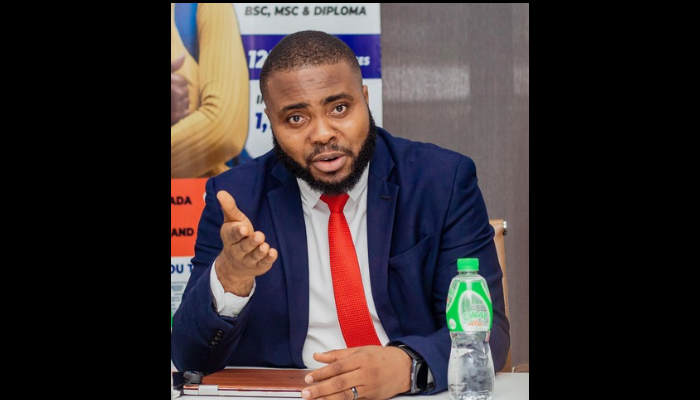
Speaking during a press conference to herald the institutes 10th anniversary celebration in Port Harcourt yesterday, Greatman Badom, the Managing Director, said the organisation’s decade-long journey demonstrates that strategic investment in education, language acquisition, and international collaboration can become powerful tools for economic development and youth empowerment.
The institute, founded in 2016 on the philosophy of service, marked its 10th anniversary under the theme, “A Decade of Building Bridges,” reflecting what it described as a decade of connecting people, cultures, educational institutions and global opportunities through language education and international partnerships.
According to him, MIE started as a small team determined to expose Nigerians to tuition-free higher education opportunities in Germany before evolving into one of Port Harcourt’s foremost multilingual language institutions with international education pathways spanning several countries.
He noted that despite early challenges, including public skepticism, inadequate office facilities, internal organizational crises and the disruptions caused by the COVID-19 pandemic, the institute remained resilient and continued to expand its operations.
Maiden International Education staff
Reflecting on its milestones over the past decade, Badom said the organisation successfully conducted its first international examinations in 2017, sent its pioneer students to Germany, established a full-fledged multilingual language school, and became the first multilingual language institution in Port Harcourt.
He also said the group introduced hourly remuneration for language instructors, expanded into indigenous Nigerian language preservation, and trained more than 3,500 learners through its schools and institutional partnerships.
He added that the institute also pioneered collaborations that brought UNESCO youth programmes to Port Harcourt, organised poetry competitions promoting educational excellence, represented the state in Spain under UNESCO programmes, expanded partnerships to universities across Germany, Canada, the United Kingdom, the United States, Australia, Ireland, Spain and China, while facilitating access to over 125,000 academic programmes across some 1,700 universities globally.
The MIE boss said the institute further strengthened international engagement by facilitating the visit of officials from the Canadian Deputy High Commission to Port Harcourt, describing it as a major breakthrough that opened discussions on education, investment and international collaboration in the state.
Looking ahead, Badom disclosed that MIE intends to integrate technology into its programmes to significantly increase access to language education across Nigeria and Africa.
He explained that digital learning platforms would enable the institute to reach many more learners beyond the 3,500 already trained over the last decade, insisting that technology would become central to delivering quality language education and international learning opportunities to wider populations.
According to him, the future of education can no longer rely solely on conventional university certificates, stressing that practical skills capable of creating sustainable livelihoods must become a national priority.
He described language proficiency as a strategic 21st century skill with applications across diplomacy, education, security, business, technology, healthcare, tourism, ministry, international trade and professional services, noting that multilingual professionals enjoy wider global opportunities than those limited to a single language.
Badom therefore urged governments at all levels to move beyond traditional empowerment programmes by investing in future oriented skills capable of improving employability and entrepreneurship among young Nigerians.
He said government alone cannot provide employment for the country’s rapidly growing youth population, arguing that sustainable development requires deliberate investment in specialised skills, particularly foreign language education and international competencies that can position young people for global opportunities.
He called on federal, state and local governments to collaborate with institutions such as MIE in introducing structured language programmes into public schools, providing scholarships, supporting educational innovation and creating policies that encourage global competitiveness among students.
The education advocate also appealed to private sector organizations, multinational companies, international agencies, philanthropists and development partners to support language education initiatives through sponsorships, scholarships, infrastructure support and strategic partnerships.
He maintained that collaboration remains one of the institutes core pillars, alongside service and consistency, insisting that no institution can achieve meaningful impact in isolation.
As part of activities marking the anniversary, the institute announced plans to donate educational materials, including marker boards, books and school supplies, to public schools in partnership with the Evergreen Foundation while also launching a 10th Anniversary Scholarship Programme aimed at expanding access to language education for young Nigerians.
Projecting into the future, Badom said MIE’s long term vision is to become Africa’s leading brand in everything education, driven by innovation, technology integration, international partnerships and practical skills development.
He said the next decade would focus on expanding digital education platforms, increasing access to scholarship opportunities, strengthening partnerships across Africa and beyond, preserving indigenous Nigerian languages from extinction and producing globally competitive young Africans equipped with both academic knowledge and employable skills.
“Our vision is not simply to teach languages or send students abroad. We are building bridges across nations, creating opportunities, preserving our indigenous languages, promoting international collaboration and preparing young Africans to compete confidently in the global knowledge economy,” he said.