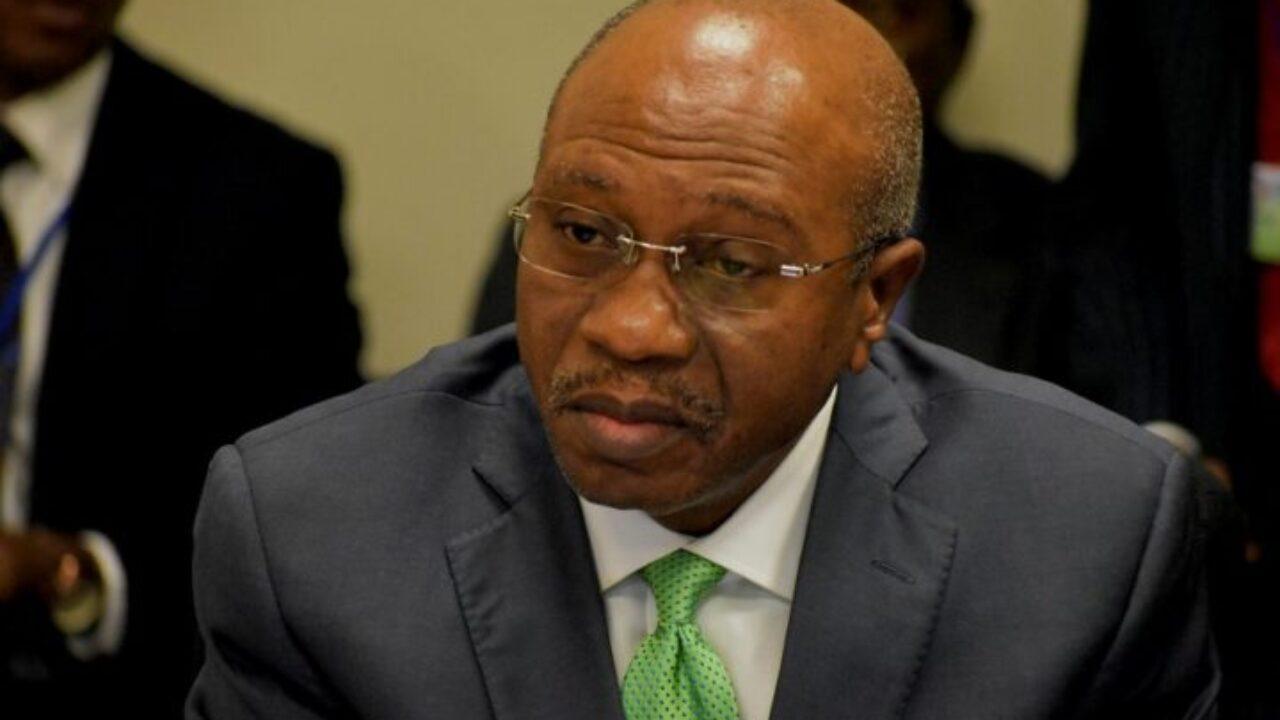
Court admits key evidence against Emefiele’s co-defendant in joint gratification trial
The Lagos State Special Offences Court in Ikeja has admitted key extra-judicial statements made by Henry Omoile, a co-defendant in the joint trial he is facing alongside former Central Bank of Nigeria (CBN) governor, Godwin Emefiele.
The Lagos State Special Offences Court in Ikeja has admitted key extra-judicial statements made by Henry Omoile, a co-defendant in the joint trial he is facing alongside former Central Bank of Nigeria (CBN) governor, Godwin Emefiele.
In a ruling delivered on Monday by Judge Rahman Oshodi following a trial-within-trial. the court held that statements made by Mr Omoile on 26 February 2024 were voluntary and therefore admissible as evidence.
However, Mr Oshodi rejected another set of statements dated 27 February 2024, ruling that they did not comply with the law because they were neither made in the presence of a legal practitioner nor recorded on video.
“I have carefully considered the evidence presented during the mini-trial. The environment was active, and there is no evidence that the second defendant was physically harmed,” the judge said.
“I am satisfied that the prosecution has proven beyond a reasonable doubt that the statement was made voluntarily.”
The admitted statements, marked as Exhibits 1–3, were tendered by the Economic and Financial Crimes Commission (EFCC), which is prosecuting both defendants.
Mr Omoile had opposed the admissibility, alleging that they were obtained under oppression and inducement, prompting the court to conduct a trial-within-trial to determine their voluntariness.
In the joint trial, Mr Omoile is facing three counts of unlawful acceptance of gifts as an agent, while Mr Emefiele faces 19 counts, including alleged gratification and corrupt demands during his tenure as CBN governor. Both men have pleaded not guilty.
At Monday’s proceedings, C.C. Okezie appeared for the prosecution, while Labi Lawal, who is a Senior Advocate of Nigeria (SAN), represented both defendants.
Following the ruling, the court adjourned the case until 26 and 30 June, and 6the and 8 July for continuation of trial.
The admissibility of the statements became a focal issue after the defence challenged the conditions under which they were obtained taken in the custody of EFCC.
Arguing for the second defendant, Adeyinka Kotoye, also a SAN, said the central question before the court was whether the statements were made voluntarily, contending that the process breached provisions of the Administration of Criminal Justice Law and the Administration of Criminal Justice Act.
“In situations where voluntariness is contested, video recording of the interrogation is essential. It is the most reliable way to establish compliance with due process,” he stated.
Mr Kotoye also questioned the role of the lawyer said to have been present during the recording of the statement and argued that the prosecution failed to provide independent evidence to support the alleged confession.
Lawyer to the first defendant, Olalekan Ojo, another SAN, urged the court to reject the statements, saying any doubt about voluntariness must be resolved in favour of the accused.
But the Director of Public Prosecutions of the Federation, Rotimi Oyedepo, a SAN, urged the court to admit the statements, insisting they were obtained in line with the law.
“Though the statement was not video-recorded, it was made in the presence of the second defendant’s counsel,” he said.
He added that the content of the statement showed no sign of coercion, noting that Mr Omoile did not implicate Mr Emefiele and denied wrongdoing.
“The statement was taken in the presence of several individuals, and the defendant was duly cautioned and voluntarily signed the cautionary form,” Mr Oyedepo stated.