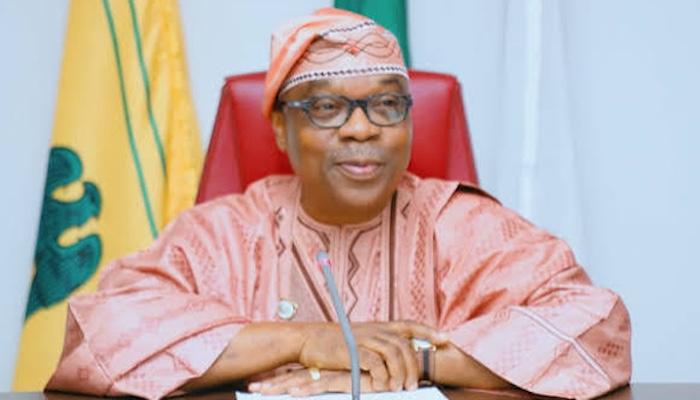
Federal Government says ongoing foreign policy reforms will restore Nigeria’s diplomatic influence and strengthen its global relevance.
- +FG Vows To Restore Nigeria’s Global Influence Through Foreign Policy Reforms
The Federal Government has reaffirmed its determination to reposition Nigeria’s foreign policy architecture through sweeping reforms aimed at restoring the country’s once-commanding voice in international affairs, particularly its influential diplomatic posture during the 1960s, 1970s and 1980s.
The Federal Government has reaffirmed its determination to reposition Nigeria’s foreign policy architecture through sweeping reforms aimed at restoring the country’s once-commanding voice in international affairs, particularly its influential diplomatic posture during the 1960s, 1970s and 1980s.
Speaking in Abuja at the public presentation of Shadows of Power, a book authored by Rear Admiral Sola Oluwagbire (Rtd), the Minister of State for Foreign Affairs, Ambassador Sola Enikanolaiye, said Nigeria’s global visibility is being deliberately rebuilt through structured institutional reforms and a renewed strategic outlook. He noted that although “our visibility may have dimmed a little, we are committed to bringing it back,” stressing that the current administration is focused on restoring credibility, relevance and influence on the global stage.
The Special Guest of Honour explained that the government is reorienting diplomatic practice around a “Nigerian first” doctrine, under which “every foreign policy action we take must speak to Nigeria.” According to him, this approach places national interest, citizen welfare and strategic autonomy at the centre of all external engagements.
Ambassador Enikanolaiye added that Nigeria’s foreign policy is now anchored on four key pillars—demography, development, democracy and diaspora engagement—with particular emphasis on ensuring that international relations translate into tangible benefits for citizens.
“Nigeria’s foreign policy exertions must bring benefits directly to Nigerians,” he said, adding that sustainable international relevance cannot be separated from domestic stability, economic strength and national security. He further explained that strategic autonomy does not imply isolation, but rather “alignment to our national interest,” affirming Nigeria’s continued openness to partnerships with global actors including the United States, China, Russia, Turkey and BRICS member states.
On institutional restructuring, the Minister disclosed ongoing efforts to strengthen the Ministry of Foreign Affairs through enhanced record management systems, predictable diplomatic postings, and compulsory training and examinations as prerequisites for career advancement. He stressed that “every officer must undertake prescribed training, write an exam, and pass before they can be presented for promotion,” noting that the reforms are designed to align diplomatic service standards with the discipline and professionalism found in the military.
He also referenced long-standing defence cooperation with international partners, including United States military assistance dating back to 2000, describing such relationships as part of a broader effort to reinvigorate Nigeria’s diplomatic and security engagements in response to evolving global challenges.
At the event, former President Olusegun Obasanjo, who chaired the occasion, said the book provides practical insights into building the foundations for Nigeria’s emergence as a global power. He was represented by former Chief of Army Staff (COAS), General Martin Luther Agwai (Rtd), who commended the author for contributing to national development through scholarly work after retirement, describing the effort as a valuable intervention in education and nation-building.
Similarly, former Chief of Naval Staff, Vice Admiral Awwal Zubairu Gambo (Rtd), said Nigeria’s pathway to superpower status lies in sustained industrialisation and strategic national focus. He observed that “there is no small country and no big country where global politics stands today,” urging stakeholders to remain committed to long-term development goals. He further noted that despite the relative youth of Nigeria’s democracy, progress remains achievable, stressing that “our way to becoming a superpower is industrialisation,” while pledging to ensure wider circulation of the book to strengthen policy understanding and institutional learning.
In an interview, the author, Rear Admiral Sola Oluwagbire (Rtd), explained that his research stemmed from an examination of how neutral global powers influence Nigeria’s national security trajectory and how such dynamics continue to shape its strategic environment. He said this analysis formed the foundation of the book’s central argument.
Responding to questions on whether the book could position Nigeria to match global powers in tackling insecurity, he said, “With this book, no. But this book is a step in that direction,” adding that it is intended to encourage “better thinking, national consciousness and informed discussions” on security and global influence.