Nigeria must invest in infrastructure for oil windfall to trickle down to everybody’
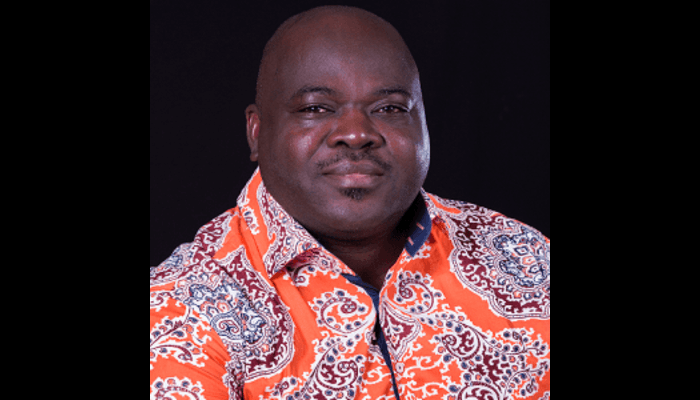
OLUMIDE EMMANUEL, CEO, Common Sense Group, is a multi-talented Nigerian with diverse interests and deep knowledge of the country’s economy, where he has strong footprints as an author and entrepreneur.
OLUMIDE EMMANUEL, CEO, Common Sense Group, is a multi-talented Nigerian with diverse interests and deep knowledge of the country’s economy, where he has strong footprints as an author and entrepreneur. He is also a wealth creation coach and a global mentor fondly called ‘Common Sense Guru. In this interview with select journalists, he takes a close look at the economy, highlighting the impact of the federal government’s economic reforms—the subsidy removal, new tax regime, the oil windfall resulting from the Middle East conflict, among other issues. CHUKA UROKO, Property Editor, was there and brings Excerpts:
Developments in and around this place show the hand of God in your ministry. There is progress, which confirms God’s presence here. These make one wish such could happen in Nigeria as a whole. What do you think?
Yeah, you know, many times we say in the church that if you think that things are bad, God is why they are not worse. Most of the time, we are affected by the negativity around us. Sometimes we do not see the goodness that is also in the midst of challenges. I believe that no matter what happens, Nigeria will get better.
It seems things are already getting better for Nigeria because the 2026 budget was benchmarked on an oil price of $64.85 per barrel, but today a barrel sells for over $100. What is possible for Nigeria with that windfall?
Well, we have more money available to us as a result of that. The question then will be, how do we utilise the money? If you look at what has happened in the last few years, especially with the removal of the petrol subsidy, you realise that our governors actually have more money available to them than they have ever had in the history of the states. Some governors are getting up to four times what they used to get, some three times. So there is a lot of money available to them since the subsidy removal.
But how do we spend the money? I think one of the things we need to begin to do, which I think the president also said, is to hold the governors and the local government chairmen accountable instead of looking up to the president for everything.
With all the money that they have, the governors, unfortunately, are not doing what they’re supposed to do. I remember when there was a problem between then President Olusegun Obasanjo administration and the Lagos State government. That was when the federal government withheld Lagos allocation. The current president was the Lagos governor at the time. He wanted to establish an independent power plant, but the president said no, explaining that power was on the exclusive list.
But now all those things are gone. Every state can generate its own power now. The question now is, why are states not generating power now that they have the money and the freedom? This is because many of the governors are not really visionary and forward-thinking. So, what I think we should be doing is ensuring that the windfall that we get is managed and utilized well.
Is Nigeria’s problem that of revenue generation or management of what is generated?
I don’t think our country has a revenue problem, even though people try to claim that. I don’t really think we have a revenue problem. I think we have a management and multiplication problem. This is because when it comes to wealth creation, either for individuals, families, or organisations, you need to make the money first. But if you make the money and you don’t manage it well, improper management of what you make will make you look like someone who is not making any money, which is part of our major issues. And then you need to multiply the money.
So, our challenge is not really revenue, because we have so much money. I’ve never believed that Nigeria is poor because if you look at the level of corruption that is going on, you realise that if all the money that people have stolen had been deployed for development, it would have made an impact on the lives of the people.
Nigeria is making more money now due to the Strait of Hormuz closure, arising from the Iran-US-Israel war. Yet, the citizens are suffering. Why?
We need to understand both macro and microeconomics. The challenge is that, a lot of times, people don’t understand how economics work. To feel the impact of the positive changes happening in the country, as individuals and families, a lot has to happen before that becomes a reality. Let me explain.
If, for instance, inflation has dropped, if you were buying a crate of egg for N2,000, and the price moves from N2,000 to N4,000 and to N6,000, that means the price is increasing by N2,000. When we now say inflation has reduced, it does not mean the price of the crate is decreasing. It means that instead of increasing from N6,000 to N8,000, it is increasing from N6,000 to N7,000. That means it’s getting better, which will not affect you. It means that instead of your problem getting worse, your ‘worse’ is reducing, but you are still in the ‘worse.’ That is what is affecting people.
Where would you suggest that Nigeria should put all the money it is making from oil?
All the refineries should work. Modular refineries should work. All the money we have as a country, we should put it into infrastructure that will now trickle down to make life easy for people. There should be power. There should be good transportation.
There should be good road. There should be security. When all these things are there, that’s when it will trickle down. Now you are paying for power you don’t see. And lack of power is making you spend money on other things like diesel or solar.
Why do we have food problem? It is because roads are bad. The person who is going to bring the food from the bush to the city will go through the bad road. He will go through 72 checkpoints. By the time he gets to Lagos, if it’s tomato, many of them may have spoiled.
In developed nations, they don’t carry food by truck. Trucks are what we call the last-mile journey. They carry food by train. But where is the rail in Nigeria to bring the food from the north to the south? Where are the trains? These are the infrastructure deficits that are affecting everything. The money the sellers are using to buy the food is not much, but by the time they add the transportation and the logistics costs, it becomes much.
With the price of diesel now inching close to N2,000 per litre, how do you cope with powering your organization?
Right now, we are spending N15 million a month, and so we are in debt. Now, as I’m talking to you, I’m feeling uncomfortable because that is not part of our budget for the year. We didn’t plan that. N15 million times 12 gives you almost N200 million. We can’t afford that, which is why we are now looking for solar.