Nigeria’s telecom regulator has stepped up pressure on operators to commit over $1 billion in network infrastructure, compensate subscribers for poor service, and comply with stricter quality-of-service (QoS) rules, signalling a tougher regulatory stance as the industry struggles to keep up with surging data demand.
- +NCC demands $1bn investments, consumer payback, tightens QoS enforcement
- +$1bn investment push to fix networks
- +Stricter QoS enforcement backed by data
- +Rising data demand offsets gains
- +5G rollout faces structural constraints
- +Industry consolidation gains momentum
- +Cybersecurity and regulatory balance
Aminu Maida, the executive vice chairman of the Nigerian Communications Commission (NCC), said on Thursday that operators must go beyond existing spending plans, while revealing that one major telecom company already committed over $1 billion in fresh investments this year.
Aminu Maida, the executive vice chairman of the Nigerian Communications Commission (NCC), said on Thursday that operators must go beyond existing spending plans, while revealing that one major telecom company already committed over $1 billion in fresh investments this year.
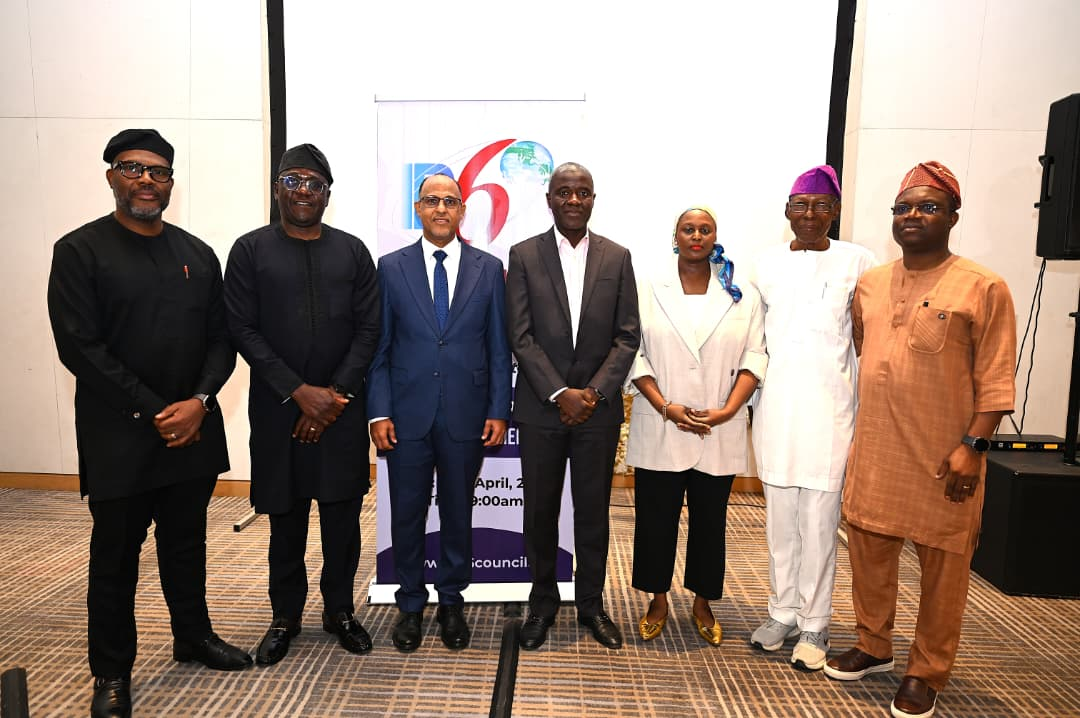
Speaking at a breakfast meeting with journalists in Lagos, Maida said the new measures are aimed at reversing years of underinvestment, improving network performance, and ensuring consumers receive tangible value for money.
“We are seeing improvements, but we need sustained investment and stronger enforcement to get to where we want to be,” he said.
At the centre of the new regulatory push is a directive requiring telecom operators to compensate subscribers for poor network performance. The NCC confirmed that consumers will begin receiving airtime credits as compensation tied to specific service failures.
Maida clarified that the payments are not refunds but regulatory compensation linked to operators’ inability to meet QoS benchmarks.
“This is about giving back value to subscribers who have experienced poor service,” he said.
The compensation will be based on performance data recorded between November 2025 and January 2026, with subscribers receiving notifications explaining the reason and amount credited.
In a shift from previous practice, the NCC has adopted a more granular monitoring system that measures service quality at the local government level instead of state-wide averages. The move is designed to better reflect real user experience and hold operators more accountable in specific locations.
Industry analysts say the approach could set a new benchmark for consumer protection in Nigeria’s telecom sector, where complaints over dropped calls, slow internet speeds, and network congestion have persisted for years.
$1bn investment push to fix networks
The NCC is also demanding a significant increase in infrastructure investment, warning that network performance cannot improve without sustained capital spending.
Maida said operators have collectively committed to about 12,000 network upgrades in 2026, a sharp rise from just over 300 upgrades recorded last year.
So far, about 2,800 upgrades have already been completed, including new base stations, capacity expansion, and the migration of older 2G and 3G sites to 4G and 5G technologies.
He noted that one major operator alone is investing more than $1 billion this year, highlighting renewed confidence in the sector following policy adjustments aimed at stabilising the operating environment.
“These investments are not optional. They are necessary to meet growing demand and improve quality of service,” he said.
To ensure compliance, the NCC said operators will be required to make investments above their existing 2026 plans, with independent auditors engaged to verify that funds are properly deployed.
Stricter QoS enforcement backed by data
The regulator’s tougher stance is backed by enhanced monitoring systems that track key performance indicators such as data speed, latency, and network availability.
Maida said recent reports show improvements in average data speeds, largely driven by infrastructure upgrades and increased spectrum availability. However, he acknowledged that challenges remain, particularly in managing latency and congestion.
The NCC’s new QoS framework ties enforcement directly to measurable outcomes, with penalties and compensation triggered when operators fail to meet set thresholds.
Officials say this marks a shift from advisory regulation to enforcement-driven oversight.
To support network improvements, the NCC has expanded spectrum access for operators through trading and reallocation.
Maida said about 100 MHz of underutilised spectrum has been redistributed, enabling operators to increase capacity and improve service delivery.
He described spectrum as the highway of telecom services, noting that wider and more efficient spectrum allocation allows networks to carry more traffic and deliver faster speeds.
Lower frequency bands, he explained, are used to extend coverage in rural areas, while higher bands improve capacity in urban centres.
Recent gains in data performance, particularly in the first quarter, were largely attributed to these spectrum interventions.
Rising data demand offsets gains
Despite ongoing upgrades, Maida warned that improvements in network quality are often offset by rising data consumption, as users increase their usage once service improves.
“As soon as networks get better, people consume more data. That demand quickly fills up the new capacity,” he said.
He cited the growing popularity of video streaming and social media platforms as key drivers of data demand, noting that these applications are designed to encourage continuous usage.
The trend, he said, underscores the need for continuous investment rather than one-off upgrades.
Looking ahead, the NCC said expanding fibre optic infrastructure will be critical to delivering sustainable and affordable internet services.
Maida argued that mobile networks alone cannot support unlimited data consumption due to high operating costs, including the reliance on diesel-powered base stations.
“Mobile is for mobility. If we want affordable, unlimited access, we need fibre,” he said.
He pointed to global trends where most data usage occurs on fibre-backed Wi-Fi networks in homes, offices, and public spaces.
5G rollout faces structural constraints
On next-generation networks, Maida said Nigeria’s 5G rollout remains at an early stage and is progressing more slowly than 4G due to several constraints.
These include limited availability of compatible devices, high infrastructure costs, and the global maturity level of the technology.
“Even globally, 5G is still evolving. It will take time before it reaches the level of 4G,” he said.
Industry consolidation gains momentum
The NCC also signalled support for ongoing consolidation in the telecom sector, confirming that it is reviewing merger applications involving key players such as Spectranet.
Maida said consolidation is expected as smaller operators seek scale and efficiency to compete with larger firms.
“This is a sign that the industry is maturing,” he said, adding that more mergers are likely in the coming years.
Cybersecurity and regulatory balance
The regulator is also tightening cybersecurity oversight, working with operators and national security agencies to address emerging threats. A new cyber resilience framework is expected to guide industry practices.