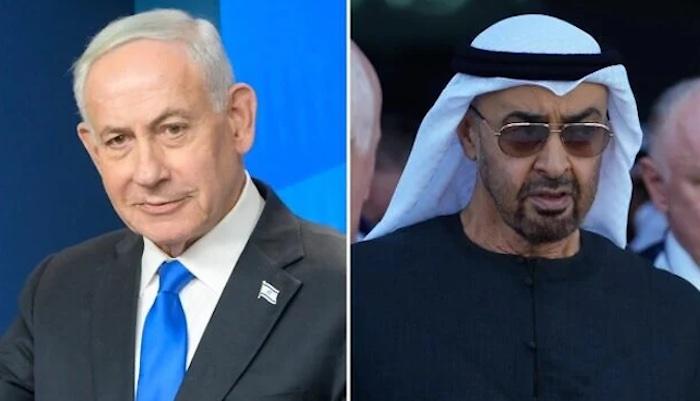
UAE Denies Netanyahu’s Claim Of Secret Visit, Reaffirms Transparency In Israel Relations
The UAE denied Netanyahu’s claim of a secret visit, calling reports of undisclosed arrangements entirely unfounded.
The UAE denied Netanyahu’s claim of a secret visit, calling reports of undisclosed arrangements entirely unfounded.
The United Arab Emirates has strongly denied a claim by Israeli Prime Minister Benjamin Netanyahu’s office that he made a secret visit to the country and held a private meeting with President Sheikh Mohammed bin Zayed Al Nahyan, describing such assertions as “entirely unfounded.”
In a statement on Wednesday, the UAE’s Ministry of Foreign Affairs rejected the suggestion that any undisclosed diplomatic engagement had taken place.
“Any claims regarding unannounced visits or undisclosed arrangements are entirely unfounded unless officially announced by the relevant authorities in the UAE,” the ministry said, adding that Emirati relations with Israel “are public” and “not based on non-transparent or unofficial arrangements.”
The clarification followed a statement from Netanyahu’s office earlier suggesting that he had travelled to the UAE during the recent war with Iran and met Sheikh Mohammed bin Zayed. According to the Israeli Prime Minister’s Office, the alleged meeting produced what it described as an “historic breakthrough” in relations between the two countries.
A source familiar with the matter claimed that Netanyahu and Sheikh Mohammed met in the oasis city of Al-Ain, near the Oman border, on 26 March, and that the discussions lasted several hours. The same source also said that Mossad chief Dedi Barnea had made at least two visits to the UAE during the conflict with Iran to coordinate military-related actions. That reported intelligence visit was previously first disclosed by the Wall Street Journal.
The diplomatic row comes against the backdrop of deepening but sensitive ties between the UAE and Israel following the normalisation agreement under the 2020 Abraham Accords. Despite public cooperation, relations remain politically delicate, particularly during periods of regional conflict.
The UAE, especially after coming under attack during the Iran war, has further strengthened its strategic partnerships with both the United States and Israel. It views its relationship with Israel as a tool for regional influence and a direct diplomatic channel to Washington.
During the conflict, Israel reportedly sent Iron Dome missile defence batteries, along with personnel to operate them, to the UAE, according to comments attributed to U.S. Ambassador to Israel Mike Huckabee.
The UAE remains a major regional business and financial hub and one of Washington’s key allies. It has pursued an assertive foreign policy in recent years, expanding its influence across the Middle East and parts of Africa.
Iranian strikes on Gulf states in retaliation for US.-Israeli actions reportedly affected the UAE more than some of its neighbours, hitting civilian infrastructure and energy facilities.
Unlike several Gulf countries, the UAE maintains pipeline infrastructure that allows it to bypass the Strait of Hormuz for some oil exports, reducing its vulnerability to maritime disruption. However, analysts warn that prolonged instability risks undermining its position as a global economic centre known for security, connectivity, and ease of doing business.