On any given day, over 8 million people commute across Lagos in search of their daily bread. As one of the world’s mega-cities, this isn’t surprising at all.
- +MAX CEO bets on EVs as transport costs drain Nigerians’ pockets
What is shocking, however, is how expensive these commutes have become to the average commuter.
What is shocking, however, is how expensive these commutes have become to the average commuter.
Amid inflationary pressures and biting hardship fueled by President Tinubu’s reforms, a growing number of Nigerians can barely afford to transport themselves to work anymore.
Transportation has gone from being a routine expense to a major economic burden on Nigerian households.
The situation has worsened since the U.S. war on Iran began and the subsequent Iranian blockade of the Strait of Hormuz, which triggered a global energy crisis.
Earlier in April, around the same time petrol prices suddenly skyrocketed across the country, this writer experienced the transport challenge that ensued firsthand on a busy Monday morning while on his way to Lekki.
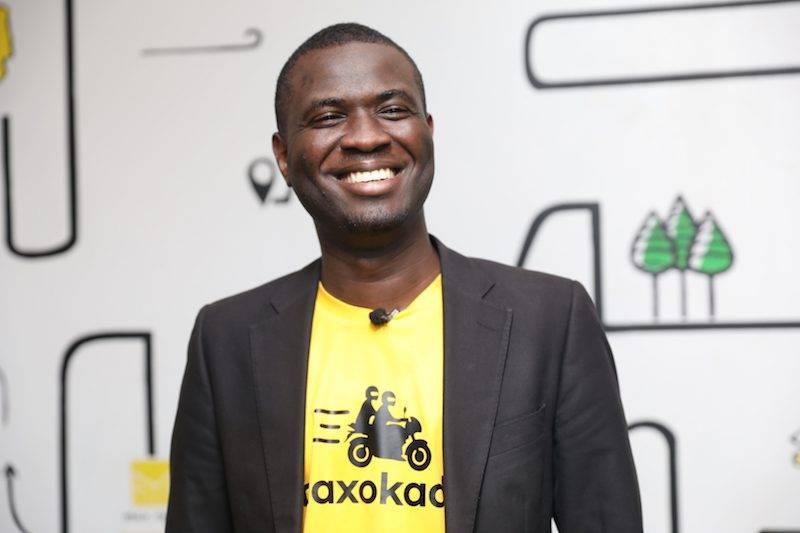
He was going to interview the CEO of MAX Drive, Adetayo Bamiduro, about the development on behalf of Nairametrics. Along major roads, he saw many people trekking under the sun. These were mostly young Nigerians, a lot of them clearly dressed for work but unable to afford transportation. So, they trekked.
According to the latest Transport Fare Watch report by the National Bureau of Statistics (NBS), transportation consumes between 30% to 55% of the average Nigerian’s monthly income, depending on which part of the country they reside in and individual earning power.
People who earn less are disproportionately affected. The fact that there are hardly any affordable public transit options available exacerbates the problem. Everyone pays the same amount to commercial bus drivers, whether you’re a security guard at a bank or a Senior Banking Officer at the same bank.
Unfortunately, there is a strong possibility that transportation costs in Nigeria will keep rising in the coming months, as hostility between the U.S and Iran and tension around the Strait of Hormuz persist.
For Nigerian commuters, logistics operators, and small business owners, this could have a ripple effect affecting financial stability, how efficiently goods can be circulated, and ultimately the overall productivity of the economy.
Currently, Nigeria’s energy infrastructure relies heavily on fossil fuels. While other advanced countries like China are increasingly transitioning to cleaner and more renewable energy sources, Nigeria, like most African countries, is in fact doubling down on its investments in oil facilities.
This huge reliance is exactly why global energy shocks have such a negative impact on the country’s transportation sector. But the MAX CEO believes strongly that this problem can be solved by deepening the adoption of electric vehicles in the country.
On its own, MAX is already doing a lot in this regard. Interestingly, the company was not originally conceived as an electric vehicle company. Like many African startups founded during Africa’s tech boom of the 2010s, MAX was established by Bamiduo and his business partner Chinedu Azodoh (currently serving as Company President and CGO) to solve a very specific logistical problem. They focused on last-mile deliveries, helping businesses move goods more efficiently through Nigeria’s congested urban centres.
However, as the business expanded, the founders soon discovered that logistics was merely a symptom of a much deeper structural challenge in the Nigerian transport/logistics sector. As a matter of fact, the transportation ecosystem itself was broken.
For one, there were not enough quality vehicles, and the drivers were struggling to access financing. Insurance penetration was low. Vehicle maintenance was inconsistent. And most crucially, transport operators were very vulnerable to constant fuel price shocks.
Bamiduro and his partner soon realised that coordinating transportation was one thing, even as fixing transportation was something entirely different.
That realisation fundamentally changed the company’s direction. So, they decided that rather than remain a logistics platform, MAX should build what Bamiduro describes as “the financial and technological infrastructure underpinning Nigeria’s mobility sector.”
Today, the company finances vehicles, manages fleets, develops battery-swapping systems, deploys charging infrastructure and increasingly focuses on electric mobility solutions.
The CEO admitted that it is a significantly more difficult business model than simply running a technology platform.
That analogy is particularly relevant in Nigeria, where infrastructure deficits remain one of the biggest constraints on economic growth. According to the African Development Bank, Africa faces an annual infrastructure financing gap estimated at between $130 billion and $170 billion.
Transportation infrastructure alone accounts for a significant portion of this deficit. And the consequences are visible everywhere, from deteriorating roads to congested highways to unreliable public transit systems and inefficient logistics networks.
In many ways, MAX’s electric vehicle strategy represents an attempt to build around those constraints rather than wait for them to disappear.
Global discussions on electric vehicles are often done through the lens of climate transition. In Nigeria, however, the argument takes on a more immediate economic dimension.
The question is not whether EVs are greener. Instead, it is whether they are cheaper, more stable, and ultimately more predictable in a market where fuel prices rarely sit still for long.
That is exactly the lens through which MAX is positioning its electric mobility push.
For Bamiduro, the real disruption in Nigeria’s transport economy is not technological but structural. The country’s dependence on imported refined fuel has left transportation costs exposed to global crude cycles, currency pressures and domestic policy shifts.
He further explained that this contrast is central to MAX’s EV strategy. While fossil fuel costs have moved in sharp, often in unpredictable jumps, the inputs that power electric mobility have followed a longer downward cost curve.
Checks by Nairametrics showed lithium-ion battery pack prices have fallen from over $1,000 per kilowatt-hour in 2010 to just a little above $100 in 2025, reflecting one of the fastest cost declines in modern energy systems. Similarly, solar photovoltaic costs have fallen by more than 80 per cent over the past decade, according to the International Renewable Energy Agency.
These are not merely abstract energy statistics, as far as MAX is concerned. Instead, these are the basis of a financial model. The company’s approach to electric motorcycles and tricycles relies heavily on rethinking what “fuel” actually means in a Nigerian context.