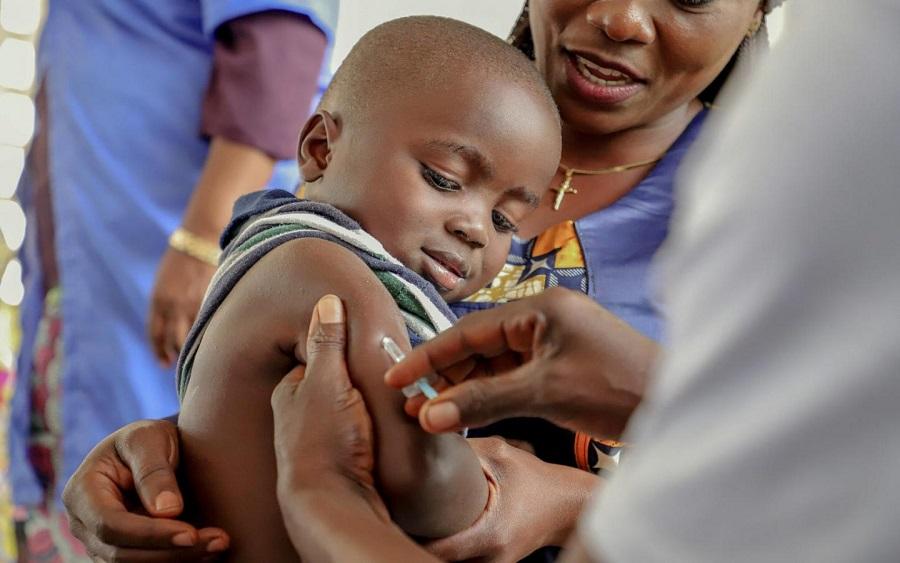
The Lagos State Primary Health Care Board says about 5% of the state’s health budget directly or indirectly supports immunisation efforts.
- +Lagos allocates 5% of health budget to immunisation, coverage hits 66%
This was disclosed by the Permanent Secretary, Ibrahim Mustafa, in an interview marking World Immunisation Week.
This was disclosed by the Permanent Secretary, Ibrahim Mustafa, in an interview marking World Immunisation Week.
He noted that Lagos has also achieved a routine immunisation coverage rate of 66%, reflecting ongoing investments in vaccine delivery and health systems.
Mustafa explained that immunisation in Lagos is funded through a mix of federal vaccine supply and state-level investment in logistics, cold chain systems, and service delivery.
Despite the challenges, he noted that Lagos remains one of Nigeria’s better-performing states due to its relatively strong health system, which continues to attract residents from across the country.
Mustafa said the state had also made significant progress in expanding newer vaccines, particularly the Human Papillomavirus (HPV) vaccine, which protects against cervical cancer.
Introduced about two years ago for girls aged nine to 14, the programme initially faced strong resistance driven by misinformation and distrust.
To counter the hesitancy, he said, an extensive public engagement campaign involving religious and community leaders, media outreach and social media advocacy was inaugurated by the government.
The strategy, he disclosed, paid off, as no fewer than 1.5 million girls had now received the HPV vaccine, with acceptance rising sharply after initial resistance.
Nigeria has the highest number of zero-dose children globally, with about 2.1 million recorded in 2023, mostly concentrated in northern states.
A zero-dose child is one who has not received any routine vaccines, increasing vulnerability to preventable diseases and weakening herd immunity.
According to the World Health Organization, vaccines have saved more than 150 million lives over the past 50 years, making immunisation one of the most effective public health interventions.
World Immunisation Week, observed from April 24 to 30, promotes the importance of vaccines in protecting people of all ages, with this year’s theme: “For every generation, vaccines work.”