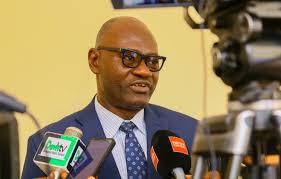
The Director-General of the Institute for Peace and Conflict Resolution, Dr Joseph Ochogwu, has called for the urgent adoption and implementation of Nigeria’s National Peace Policy, warning that the country’s worsening security challenges require a coordinated and institutionalised response.
- +IPCR boss seeks adoption of national peace policy
Speaking at the Second High-Level Expert Dialogue on the draft National Peace Policy on Friday in Abuja, Ochogwu said peace in Nigeria is “not a luxury but a foundational imperative,” stressing that the time had come to move beyond rhetoric to concrete action.
Speaking at the Second High-Level Expert Dialogue on the draft National Peace Policy on Friday in Abuja, Ochogwu said peace in Nigeria is “not a luxury but a foundational imperative,” stressing that the time had come to move beyond rhetoric to concrete action.
He emphasised that words must yield to architecture, noting that good intentions must be backed by robust systems, institutionalised coordination, and a clearly defined roadmap for implementation.
Ochogwu described Nigeria as being at a “defining crossroads,” citing persistent insecurity across regions, including insurgency in the North-East, farmer-herder clashes in the North-Central, separatist tensions in the South-East, and widespread banditry and kidnapping in the North-West.
According to him, the situation demands more than isolated interventions.
“What is urgently needed is an overarching framework that coordinates efforts across all tiers of government and ensures measurable, people-centred outcomes,” he stated.
He explained that the proposed National Peace Policy was designed to address gaps in Nigeria’s peacebuilding efforts, lamenting the absence of a unified framework to harmonise interventions by government agencies, civil society organisations, and development partners.
“Nigeria currently lacks a coherent, nationally owned policy that harmonises the multiplicity of conflict prevention, management, and peacebuilding interventions.
“The result has been duplication, resource wastage, institutional rivalry, and communities that fall through the gaps,” he said.
Ochogwu added that the policy would provide legitimacy for an integrated peacebuilding system, making interventions less “ad hoc” and more accountable within Nigeria’s governance structure.
He further noted that the framework would enable evidence-based decision-making and shift the country’s approach from reactive crisis management to preventive and strategic peacebuilding.
“It transforms peacebuilding from a reactive, crisis-driven enterprise into a strategic, preventive, and developmental pursuit,” he stated.
Highlighting the importance of coordination, he said peacebuilding must be mainstreamed across key sectors such as security, justice, education, and economic planning, rather than treated as a standalone initiative.
“Integration means ensuring that peacebuilding is mainstreamed across all sectors. Coordination requires a central architecture that maps who is doing what, where, and with what resources,” he explained.
He also underscored Nigeria’s alignment with global and regional peace frameworks, noting that the policy reflects commitments under the United Nations, African Union, and ECOWAS systems.
On implementation, Ochogwu warned that dialogue alone would not suffice, urging stakeholders to take ownership of the process.
“Dialogue without implementation is mere eloquence. We are here to generate the political will and inter-institutional consensus that will carry this policy from formulation to implementation,” he said.
He called on participants to act as “co-architects of Nigeria’s peace,” warning against bureaucratic delays and institutional rivalry.
“The time for a unified, integrated, and credible National Peace Policy is not tomorrow. The time is now,” he added.
Ochogwu further noted that the administration of President Bola Tinubu had created a fresh opportunity to actualise the long-delayed policy, stressing the need to avoid past setbacks.
Describing the current peacebuilding landscape as fragmented, he warned that uncoordinated efforts had weakened impact.
“As we speak today, it’s a bit chaotic in terms of the approach. People are working in silos. The National Peace Policy provides an opportunity to harmonise all these efforts,” he added.
He also explained that the policy was being updated to reflect emerging threats such as banditry and climate change, noting that earlier frameworks no longer captured current realities.
“Society is dynamic; a lot of the things that were captured in 2012 have gone. Now we’re talking about issues around banditry, climate change, and several other new dynamics,” he said.
He disclosed that stakeholders were co-developing an implementation framework to be presented to the Federal Executive Council for approval.
Beyond policy, the IPCR boss urged the political class to embrace issue-based politics ahead of future elections, warning against divisive rhetoric.
“We must stop divisive politics. Democracy is to serve the people and to promote peace, not to create division and, at the end of the day, promote violence,” he stated.
The draft National Peace Policy traces its origins to a 2012 initiative aimed at establishing a comprehensive framework for conflict prevention, management and peacebuilding in Nigeria.
However, the policy was not approved at the time, despite its broad objectives to address recurring inter-group conflicts, establish a National Peace Commission, and create sustainable “infrastructure for peace” involving both government institutions and civil society actors.
The renewed push for the policy comes amid growing security challenges and evolving conflict dynamics, which stakeholders say have outpaced the provisions of the original draft.
While the 2012 framework laid important groundwork, current realities have necessitated a review and update of the policy, which seeks not only to revive the stalled initiative but also to strengthen it into a more responsive and implementable national framework capable of addressing Nigeria’s complex, changing peace and security landscape.