Finally, it does appear that the Nigerian state has embraced the reality that you cannot sufficiently police a vast and multifarious federation like ours from Abuja. For over two decades, advocacies to decentralise our policing structure fell on deaf ears. Legislative efforts in this regard were cut short, often on the altars of interfering influences and executive tight grips on every legitimate instrument of coercion.
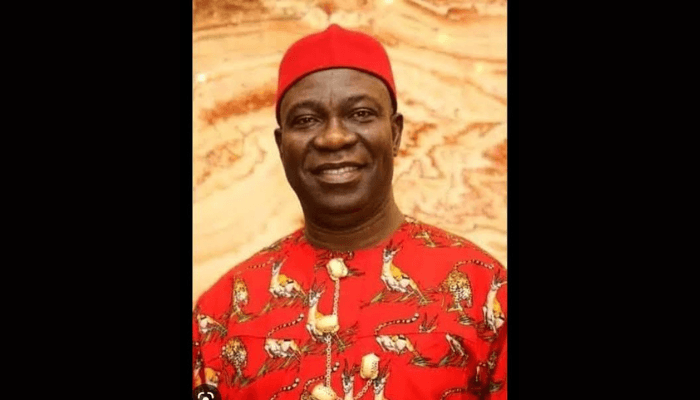
- +State Police: Ekweremadu’s foresight, Tinubu’s courage, Mbah’s example
There were also all manner of sentiments.
There were also all manner of sentiments. Some thought that state police would serve secessionist interests, while many genuinely saw it as a ready axe in the hands of the governors and to cut the opposition and voices of dissent to size.
But I think the real opposition to state police stemmed from the fact that most people were oblivious of the weight of the insecurity that was incubating over the past decades. I recall a conversation between former Deputy President of the Senate, Senator Ekweremadu, and a Senator from the North West zone (Kebbi State to be particular). Ekweremadu warned that the banditry, which was just starting in far North West states, could ultimately get to as far as Kaduna, North Central, and the Southern parts unless lawmakers supported the creation of state police to empower the federating units to take their fates in their own hands. That Senator laughed out loud. He said Ekweremadu did not understand the geography of the North, maintaining that even Sokoto Rivers and Rima River were sufficient buffers against such evil expansion. Today, we all know better.
Yet, it is heartwarming that despite the obstinate opposition to decentralised policing, there were a few voices like Ekweremadu, who refused to give up. From the 10th convocation lecture of the Federal University of Technology, Minna, which he delivered on Thursday, June 3, 2010 to a retinue of others such as the Sixth Annual Oputa Lecture on Governance in Africa, which he delivered at the Osgoode Hall Law School, York University, Toronto, Ontario, Canada, on April 11, 2012; the Nnamdi Azikiwe University Annual Lecture entitled “Policing and National Security: the Choices Before Us” he delivered on March 1, 2013; and his most recent lectures in 2020 as well as his various media outings, his bills and interventions at the floor of the Senate, he identified unitary policing, overconcentration of powers at the centre, and absence of fiscal federalism, which he christened “feeding bottle federalism,” as the banes of Nigerian federalism that must give way.
In fact, he was rather prophetic about the security challenges of today. Reacting to the gruesome massacre of innocent Nigerians in Barkin Ladi, Plateau State, back in 2018, Ekweremadu lamented that sad as the incident was, the saddest reality was that there was no guarantee that many more would not be killed. In his words, “There is no way you will have a big federation like Nigeria with all the diversities, and continue to operate a centralised policing system.”
However, there comes a time in the life of a people when they must look in the mirror and tell themselves the gospel truth. There comes a time when you must choose between their sentiments and the fear of probable misuse of state police and the present existential threats being hounded on the roads, in schools, and farms by bandits, terrorists, and all manner of violent criminals.
Nobody said this better than Senator Ita Enang. Appearing on Channels Television’s “Politics Today” sometime in 2025, he said: “Ekweremadu was very vehement that we should have state police. He sponsored and brought a bill. But I was one of those who vehemently opposed him and campaigned against it. I went out of my way to say that the way the governors exercise power over the electoral process, if you give them the control over security, they would kill everybody. But now, we should not care so much about what a governor does with it so long as he does one thing with it – use it to manage internal security of the state. State police is an idea, which time has come.”
Yet, that time would never have come without a truly federalist and courageous president like President Bola Tinubu, who is ever ready to bite the bullet and decide to loosen the presidency’s absolute grips on the nation’s security architecture. That is where President Bola Tinubu stands out from his processors. No one can take away from his ability to take tough decisions. We saw it in the removal of fuel subsidy. We saw it in the floating of the exchange rates. We saw it in how he signed the Electricity Act to enable the states to generate, transmit, and distribute electricity within their jurisdictions. We saw it in how he went to court to secure financial autonomy for the 774 local government areas. And we saw it in how he overhauled the national security architecture to bring in new service chiefs.
Today, President Tinubu has yet again shown statesmanship and candour in leadership by realising, unlike others before him, that it is of no use holding unto the entire security architecture to just feed the vanity of being in charge while criminal gangs are running riots across the country. It takes courage to do so. But it takes even greater courage to initiate an executive bill to the National Assembly to match words with action.
The gaps in the bills passed by the National Assembly notwithstanding, I also see that they have benefitted from the Ekweremadu’s pioneering works, which consciously and meticulously addressed the critical issues of structure, standardisation, control, armament, disciplining, co-existence with federal police, and, importantly, the fears of abuse by state governors. By the way, Ekweremadu’s state police bill drew from studies he and members of his team led by Prof. Offornze Amucheazi undertook on best practices around the world, especially federal climes like the US, Canada, and Brazil. Although the snippets we have seen from the versions passed may have some gaps, it is important Nigerians patiently wait for the harmonised version as well as the eventual consequential Act of the National Assembly that will provide more details on the powers, structure, control, etc. of the state police. This Act will come after successful alteration of the constitution to that effect. However we may look at it, the National Assembly deserves commendation and this fundamental progress must never be diminished by political expediency or differences.