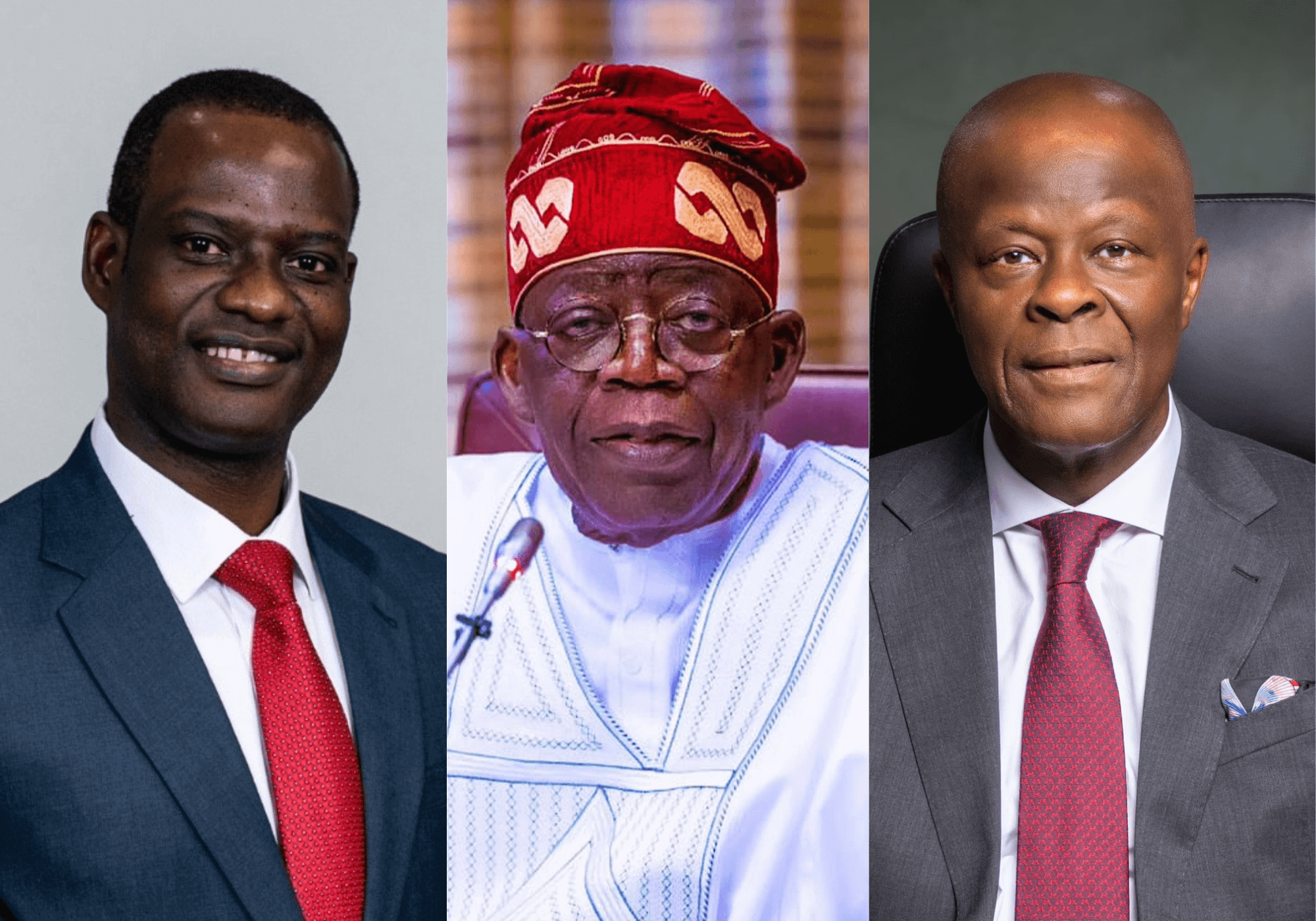
President Bola Tinubu’s decision to reconfigure his economic management team has triggered one of the most consequential shifts in Nigeria’s fiscal leadership since the start of his administration, replacing Wale Edun with tax expert Taiwo Oyedele as minister of finance and coordinating minister of the economy in a move that reflects both internal tensions and intensifying macroeconomic pressures.
- +Inside Tinubu’s cabinet reshuffle that elevated Oyedele as finance minister
The reshuffle, announced on Tuesday, also affected the housing ministry and comes at a politically sensitive moment as Africa’s largest economy continues to grapple with elevated inflation, currency instability and the social impact of wide-ranging reforms, including fuel subsidy removal and foreign exchange unification.
The reshuffle, announced on Tuesday, also affected the housing ministry and comes at a politically sensitive moment as Africa’s largest economy continues to grapple with elevated inflation, currency instability and the social impact of wide-ranging reforms, including fuel subsidy removal and foreign exchange unification.
While the presidency described the changes as part of efforts to strengthen cohesion and improve policy delivery under the Renewed Hope Agenda, multiple officials familiar with the matter told BusinessDay the decision followed months of internal friction within the economic team and growing concerns about coordination across key policy areas.
The leadership change elevates Oyedele—previously minister of state for finance and chairman of the presidential fiscal policy and tax reform committee—to one of the most powerful economic roles in government, placing him at the centre of fiscal strategy, revenue mobilisation and macroeconomic coordination.
Ahmed Musa Dangiwa was removed from his role as minister of housing and urban development, while Muttaqha Rabe Darma was named as ministerial nominee and designate for the ministry.
Edun’s removal marks the culmination of what insiders describe as prolonged coordination challenges within the finance ministry, where tensions between senior officials reportedly slowed decision-making and created friction across Nigeria’s economic governance structure.
Officials at the presidential villa said concerns had been building for months over working relationships within the ministry, particularly between Edun and ministers of state tasked with supporting fiscal policy execution.
“He didn’t flow well with the ministers of state working with him,” one senior government official said, pointing to Doris Uzoka-Anite, former Minister of State for Finance. “There was a lack of synergy, and it became a problem for coordination at a critical time.”
According to multiple sources, the breakdown in internal alignment extended beyond personalities and began to affect broader economic management, including coordination between the finance ministry and key agencies responsible for fiscal implementation.
“The President was uncomfortable with how things were playing out,” another official said. “There were issues around coordination and communication across the economic management structure.”
Officials said the situation was compounded by strained relationships within parts of the economic team, including between senior officials overseeing overlapping fiscal responsibilities. Over time, this created what insiders described as “operational friction” in policy execution.
“The feeling was that the arrangement was not working,” one source said. “And it needed to be fixed quickly.”
Oyedele’s elevation, according to officials, reflects a deliberate effort to streamline decision-making and improve coherence across fiscal institutions at a time when the administration is under pressure to accelerate reforms.
“The President is more comfortable with Oyedele given his experience and involvement in ongoing reforms,” another official said. Sources also revealed that alternative options were considered at different stages, including Nigeria Revenue Service chairman Zacch Adedeji, before Oyedele was ultimately selected due to his technical depth and familiarity with the administration’s tax reform agenda.
Edun, according to officials, was not formally informed of the decision before returning Tuesday morning from the just concluded IMF/World Bank spring meetings in Washington, where he had led the Nigerian delegation and featured prominently in talks.
In a statement signed shortly after his exit, Wale Edun thanked President Bola Tinubu for the opportunity to serve, while defending the administration’s economic reform programme and highlighting what he described as key macroeconomic gains achieved during his tenure. “I wish to thank His Excellency, President Bola Ahmed Tinubu, for the opportunity to serve our country from the outset of his administration,” Edun said.
He noted that his service spanned multiple roles, including head of the Presidential Transition Committee, Special Adviser on Monetary Policy, and later Minister of Finance and Coordinating Minister of the Economy.
Edun said the administration inherited a difficult macroeconomic environment and worked to stabilise key indicators through coordinated fiscal and monetary interventions.
He pointed to improvements in growth performance and a moderation in inflation over the period, crediting collaborative efforts across the Federal Executive Council, state governments and private sector partners.
“These outcomes were driven by a shared commitment to restoring public trust and enabling faster and inclusive growth,” he said.
Nigeria’s economic reforms under Tinubu—including fuel subsidy removal and foreign exchange liberalisation—have been widely credited by investors with improving long-term macroeconomic signals but have also contributed to elevated inflation and higher living costs for households.
Edun described the reforms as necessary structural adjustments aimed at repositioning the economy for sustainable growth. “While much remains to be done, the direction is clear and the foundations are firmly in place,” he said.
He added that he remained confident in the continuity of the reform agenda and expressed support for his successor and the administration’s broader economic objectives. “I remain fully committed to the service of our country and to supporting Mr President,” Edun said.
Oyedele steps into office facing a difficult economic landscape marked by elevated inflation, currency pressures and the lingering social fallout from reforms introduced under President Tinubu.
He inherits a fragile macroeconomic environment where cost-of-living pressures remain elevated despite recent policy adjustments aimed at stabilising public finances and attracting foreign investment.
As minister of finance and coordinating minister of the economy, he will be responsible for steering fiscal policy at a time when Nigeria is still grappling with the effects of fuel subsidy removal, foreign exchange reforms and subdued real income growth, alongside a challenging global environment.