Continuity Or Change? Issues That Can Swing The Pendulum In Ekiti’s Gov Election
- +Infrastructure And Public Services
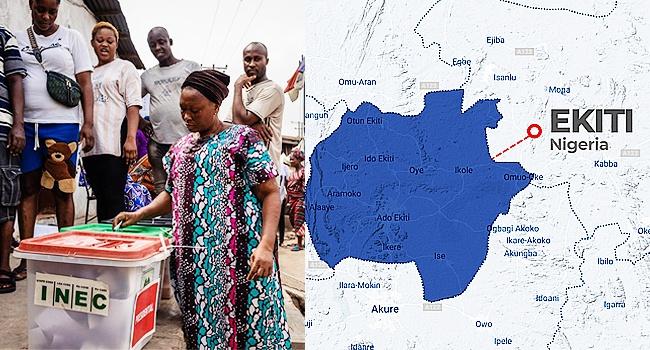
As Ekiti State heads into the June 20, 2026 governorship election, the debate is no longer just about political parties or personalities.
As Ekiti State heads into the June 20, 2026 governorship election, the debate is no longer just about political parties or personalities.
Across markets in Ado-Ekiti, farms in the rural communities, university campuses and town halls, conversations have increasingly centred on a handful of issues that could ultimately determine who occupies Government House for the next four years.
Will voters reward incumbent Governor Biodun Oyebanji with a second term? Will growing concerns about insecurity and economic hardship trigger a desire for change? Or will the long-running agitation for power rotation to Ekiti South reshape the state’s political landscape?
With more than one million registered voters spread across 16 local government areas, the election is shaping up as one of the most significant political contests in the state’s history.
Thirteen political parties have been cleared by the Independent National Electoral Commission (INEC). They include All Progressive Congress (APC), Accord Party, African Action Congress (AAC), African Democratic Congress (ADC), Action Democratic Party(ADP), Action Peoples Party (APP), Allied Peoples Movement (APM), Labour Party (LP), New Nigeria Peoples Party (NNPP), Peoples Democratic Party (PDP), Peoples Redemption Party (PRP), Young Progressives Party (YPP) and Zenith Labour Party (ZLP).
However, analysts broadly agree that the contest is likely to revolve around three major contenders — incumbent Governor Biodun Oyebanji of the APC, Dr. Wole Oluyede of the PDP and Dare Bejide of the ADC.
The incumbent governor is seeking a second term under the APC platform. A former Secretary to the State Government and long-time public administrator, Oyebanji has built a formidable political structure supported by major APC stakeholders across the state.
His strengths lie in the power of incumbency, strong support from APC leaders, extensive grassroots structure, backing of many political office holders, and ongoing infrastructure projects and social programmes, especially the state’s newly constructed flyover named after President Bola Tinubu.
Meanwhile, there’s public dissatisfaction over economic hardship, concerns about insecurity in parts of the state
The PDP candidate is a medical practitioner, entrepreneur and former governorship aspirant under APC. He emerged after a fiercely contested PDP nomination process and hopes to position himself as the major alternative to the ruling APC.
His strengths lie in strong support from some advocates of power shift to Ekiti South, professional background and private-sector experience and PDP’s historical presence in several communities.
Meanwhile, he’s battling with internal disputes within PDP, questions from critics regarding previous party defections, and limited access to resources compared to APC.
A former Nigerian High Commissioner to Canada and former Secretary to the State Government, Bejide is regarded as one of the most experienced administrators in the race.
His strengths lie in extensive government experience, growing support among voters seeking a third-force alternative, and benefits from anti-establishment sentiment. However, he is battling with ADC’s relatively weaker structure compared to APC and PDP, limited financial and political machinery, and difficulty penetrating some APC strongholds.
But beyond the candidates, six key issues appear set to dominate the minds of voters.
Perhaps no issue has generated as much concern as insecurity across Nigeria. Although Ekiti has traditionally enjoyed a reputation as one of Nigeria’s relatively peaceful states, recent incidents have unsettled many residents.
Communities bordering forests and interstate routes have reported growing fears over kidnappings and criminal activities. The abduction of 16 people in Ilejemeje Local Government Area has become a recurring reference point in political discussions.
For many voters, campaign promises will matter less than practical strategies for improving safety and restoring confidence in affected communities.
“Good roads are fine, but what use are they if people are too afraid to travel on them? We need fresh ideas, full stop.
“The current approach isn’t working for insecurity, and our youth are sitting at home without jobs. This election is a critical turning point; we desperately need leaders who have concrete plans to tackle the economy and make our towns safe again,” said Abebi Bello, a retired school principal.
If insecurity is one side of the conversation, the economy is the other. Like many Nigerians, Ekiti residents have been grappling with rising prices, declining purchasing power and increasing household costs.
Across the state, voters are asking a simple question: Which candidate has the most convincing plan to improve livelihoods?
The issue cuts across age groups and social classes, making it one of the most influential factors likely to shape voting behaviour.
For many young people, economic concerns are closely linked to another major issue — unemployment.
Young voters constitute a significant segment of the electorate, and many are demanding more than campaign slogans. Their concerns revolve around jobs, entrepreneurship opportunities, industrial development and support for innovation.
University graduate and entrepreneur David Williams expressed a sentiment shared by many young people.
“We are tired of the same old political promises. The reality on the ground is that unemployment is suffocating us.
“While there has been some visible development in governance, it hasn’t translated into jobs for the younger generation. We need a new perspective in the office; I’m talking about leaders who understand modern economic challenges and can actually create opportunities for us,” he said.
For candidates hoping to attract younger voters, job creation may prove just as important as political structures and endorsements.
Beyond policy issues, another powerful factor continues to influence political conversations — the demand for power rotation.
Groups from Ekiti South Senatorial District have intensified calls for the governorship seat to rotate to the region. Their argument is rooted in the belief that since the creation of Ekiti State in 1996, power has largely alternated between the North and Central senatorial districts.
This sentiment has strengthened support for candidates from Ekiti South, particularly the PDP’s Wole Oluyede and the ADC’s Dare Bejide.
However, supporters of Governor Oyebanji argue that competence, performance and continuity should take precedence over zoning considerations. The debate has created one of the election’s most intriguing political dynamics.
Infrastructure And Public Services