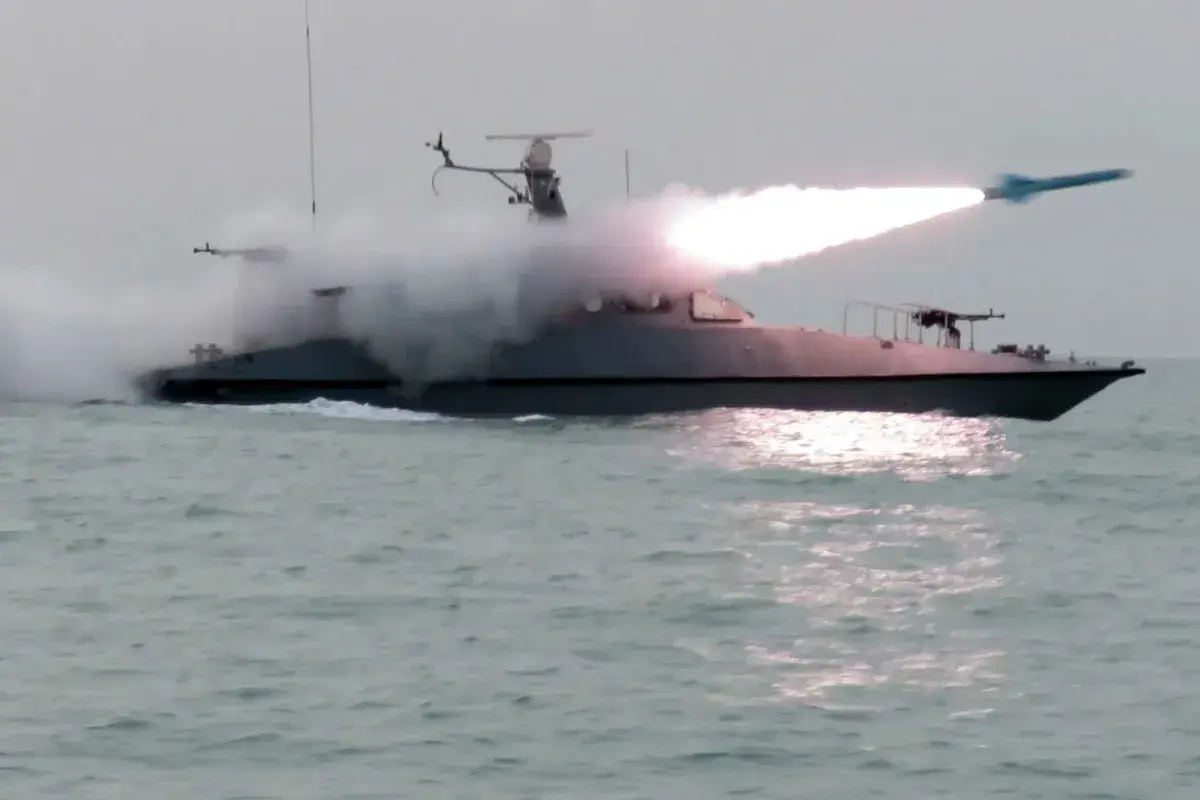
Iran warns of “bitter defeats” as vessels report gunfire in Hormuz, raising fears over disrupted global oil shipments.
- +Iran Signals Defiance As Vessels Report Gunfire While Crossing Strait Of Hormuz
Iran’s Supreme Leader warns of “new bitter defeats” for enemies as vessels report gunfire in the strategic waterway.
Iran’s Supreme Leader warns of “new bitter defeats” for enemies as vessels report gunfire in the strategic waterway.
At least two merchant vessels reported coming under gunfire while attempting to cross the Strait of Hormuz on Saturday, according to multiple maritime security sources, shortly after Iran announced it was tightening control over the crucial shipping route.
Shipping sources said some vessels also received radio warnings from Iran’s navy declaring the waterway closed and prohibiting transit.
The incident followed the first notable movement of ships in weeks, as a convoy of eight tankers had begun crossing the strait amid hopes of easing tensions.
However, Iran quickly reversed course, reimposing strict military oversight of the passage, which previously handled about a fifth of global oil trade. Tehran cited continued US actions, including what it described as violations and “piracy” linked to the ongoing blockade of Iranian ports.
In a defiant message, Iran’s Supreme Leader, Mojtaba Khamenei, warned that the country’s navy was prepared to inflict “new bitter defeats” on its adversaries, escalating rhetoric amid an already fragile ceasefire environment.
The renewed tensions have cast doubt on the stability of global energy supplies, as uncertainty grows over whether oil and gas shipments through the strait can resume normally. This comes as the US considers whether to extend a temporary ceasefire tied to broader negotiations.
Earlier, US President Donald Trump hinted at positive developments regarding Iran but cautioned that hostilities could resume if no long-term agreement is reached before the ceasefire expires midweek.
Iran had briefly reopened the strait following a US brokered ceasefire linked to parallel tensions involving Israel and Lebanon. But Iranian military officials said renewed US pressure forced them to restore tighter control over maritime traffic.
There has been no immediate response from Washington regarding the latest developments.
The ongoing conflict, which began in late February following a US-Israeli strike on Iran , has resulted in thousands of casualties and triggered wider regional instability, including spillover fighting in Lebanon. It has also driven volatility in global oil markets.
While diplomatic efforts continue, prospects for renewed US -Iran talks remain uncertain. Negotiations are expected to focus heavily on Iran’s nuclear programme, a central point of contention.
The US has pushed for long-term restrictions, while Iran maintains its programme is for civilian purposes and rejects external control over its nuclear materials.
Despite optimism in financial markets earlier in the week, the latest developments suggest that tensions remain far from resolved, with the risk of further disruption to global energy flows still high.