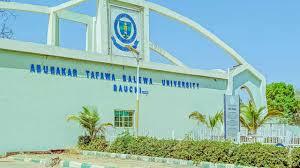
A Professor of Chemical Engineering at Abubakar Tafawa Balewa University, Bauchi, Umar Aroke, has urged Nigerians to reduce their dependence on plastic products and adopt responsible waste disposal practices to tackle environmental degradation and promote sustainable development.
- +ATBU don seeks cut in plastic use, advocates waste-to-wealth solutions
Aroke made the call while delivering the university’s 47th inaugural lecture titled, “Waste and Circular Economy: Exploring and Utilising the Value Chain for Wealth Creation and Sustainable Environment.”
Aroke made the call while delivering the university’s 47th inaugural lecture titled, “Waste and Circular Economy: Exploring and Utilising the Value Chain for Wealth Creation and Sustainable Environment.”
The professor expressed concern over the growing environmental challenges facing the country, attributing many of them to poor waste management practices and the indiscriminate disposal of plastic materials.
According to him, flooding, disease outbreaks and other environmental problems are largely driven by human activities and require collective action to address.
“Our environment is being degraded day in and day out. We are the ones generating the waste, and we are the ones who can reclaim the environment. We must find ways of making our environment conducive and sustainable for healthy living,” he said.
Aroke noted that governments at different levels expend enormous resources addressing the consequences of environmental pollution, stressing that prevention through proper waste management would be more effective and less costly.
He identified plastic waste as one of the most pressing environmental concerns, warning that indiscriminate disposal of plastics contributes significantly to blocked drainage systems, flooding and damage to infrastructure.
“Plastic materials are everywhere. When drains are blocked, roads become inaccessible, communities get flooded, and in some cases buildings collapse. If we take our environment seriously, many of these problems can be minimised,” he said.
The don also highlighted research efforts aimed at converting waste into useful products, revealing that his team had successfully transformed waste polystyrene into resin-based adhesives used in the production of particle boards made from sawdust and rice husks.
He described the innovation as a practical example of the circular economy concept, where waste materials are recycled into products with economic value.
“We discovered that instead of allowing polystyrene to remain in the environment for hundreds of years, it can be converted into useful products.
“The particle boards produced from the recycled materials are environmentally friendly and will eventually decompose without causing long-term environmental harm,” Aroke said.
He further called on Nigerians to embrace a culture of reuse and responsible consumption, rather than discarding items after a single use.
He cited the common practice of throwing away plastic water bottles immediately after use, saying such habits contribute unnecessarily to environmental pollution.
“Many people discard plastic bottles after using them once because they want to buy new ones. If you keep and reuse the bottle by refilling it, you save money and reduce environmental pollution,” he said.
Aroke also cautioned against the growing accumulation of obsolete electronic devices and other unused materials in homes, warning that such habits increase waste generation and place additional pressure on already strained waste management systems.
“We must be disciplined in what we consume and how we dispose of waste. There is no need to buy what we do not need or keep accumulating items that are no longer useful,” he added.
He urged Nigerians to support initiatives that promote recycling, resource recovery and sustainable environmental practices, noting that a functional circular economy could create jobs, generate wealth and help preserve the environment for future generations.