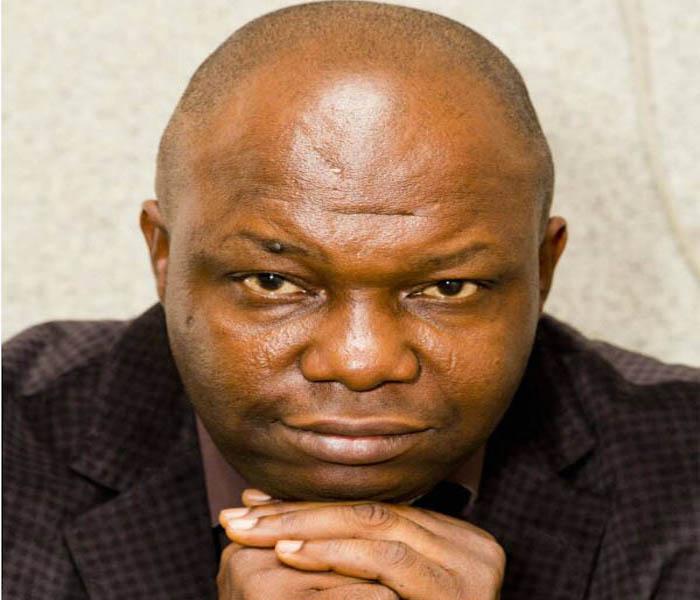
Former Secretary to the Government of the Federation (SGF), Babachir Lawal, grabbed the headlines recently. In a sensational repertoire, he alleged that Nigerian President Bola Tinubu is “an unhealthy man” who, at the drop of a hat, junkets to French hospices. Lawal was not done. In the headline-grabbing interview, among other allegations, he claimed that Tinubu sprouts out smoke like an old British classic car, the Morris Minor. “The only thing I know he likes much is cigarettes, Silk. He smokes. I don’t know whether he does it now. He likes that a lot. He can’t do without it,” Lawal alleged.
- +The president’s Silk cigarettes and all that, By Festus Adedayo
To many Nigerians, Lawal’s “Silk cigarette” revelation was novel.
To many Nigerians, Lawal’s “Silk cigarette” revelation was novel. However, raw tobacco smoking has been with us for over a century. Ancient elders smoked it as a sign of maturity and status, consumed through short clay pipes known in Yoruba as tábà, or through locally processed tobacco leaves called aàsà. The latter, a unisex passion, was pressed against the lips and its menthol allowed to gradually evaporate into the throat. With colonial incursion, the African public was introduced to refined tobacco in packaged cigarettes, coming in brands like Gold Leaf, SM and Benson & Hedges, among others.
But a Silk cigarette? Universally known as Silk Cut, it is a well-known British low-tar brand produced by the Gallaher Group (a subsidiary of Japan Tobacco). Launched in 1964, Silk Cut’s fame came from its reputation as a milder alternative to standard cigarettes like Marlboro or Benson & Hedges, due to its significantly lower tar levels.
With that interview, Lawal painted the vivid picture of a Tinubu fuelled by low-tar British tobacco, one who, upon waking, grabs a breakfast of banana, groundnuts, or ogi before engaging the gears of statecraft. For a Nigerian press thirsty for salacious stories, Lawal predictably provided ready carcasses for the hounds. The question we must however ask is: What exactly was Lawal’s motive?
That Babachir spoof appears to me as a political red-herring, bearing heavy similarity to Nyesom Wike’s recent branding of careless talk in Igbo argot as cho-cho-cho.
“Do you know something? Bola is not somebody that likes to enjoy food,” Lawal said further. “Bola would wake up in the morning and there is banana in his living room. He would eat banana and groundnut. That is his food. Sometimes in the morning they bring Ogi (pap) and moinmoin.” He went on to claim the President was frumpy, taking viral photographs in ordinary pajamas, and asked: “Why is he accused of amassing such excessive wealth? I don’t understand. He is not going to enjoy it. He doesn’t enjoy it. He doesn’t do proper dressing.”
As I watched the interview, my mind went to Ayinla Omowura, Yoruba’s enfant terrible of Apala music, who never suffered chatterboxes gladly. As telltales gossiped in their cho-cho-cho, Omowura’s lifestyle and acquisitions became source material for local parrots. A man from a challenged background who ran past the finish line of poverty into wealth and acclaim, Omowura acquired automobiles with the same gusto as Davido does today.
In a live performance, the Apala warlord deployed alliteration around the Islamic title Muqaddam against these parrots. Yoruba had corrupted Muqaddam to Muka-dam, literally meaning “one placed at the front” — a chief or village headman. Lifting out the “ka” in Muka-dam and playing on its rhyme with “ká” (parrot in Yoruba), Ayinla dubbed busybodies as “Baba Muka” and “Ìyá Muka“. He sang: “All of them, they have become Baba Múka and Ìyá Múka! At first, they parroted that I had bought a Volkswagen and a Danfo bus; another Toyota and two Peugeot cars, they told the world! They then said I bought two Mercedes-Benz cars that cruise the road… You may go die in the forest, for all I care!”
Babachir Lawal should, however, not die in the forest. Let him shuffle his seat closer for a discussion. What was he trying to achieve by morphing into a Baba Muka over Tinubu? My first frown against it is that, disparaging another on account of their health is a violation of human dignity; even Kantian ethics frowns at it. Theologians remind us that health and its reverse are God’s sole prerogative, and no man should give magisterial judgment on life’s afflictions. My only grouse is when African leaders make a fetish of their health, masking themselves as ancient kings insusceptible to life’s travails and death.
Now, come, let’s talk about cigarettes. I remember an ancient fable from Yoruba oral tradition, an ààló, about three crops: Tábà (Tobacco), Kọfí (Coffee), and Àgbàdo (Maize). Tábà was a beautiful, broad-leafed, and alluring being. She boasted that her soothing smoke brought relaxation to the elders’ clay pipes, ignoring the charge that she quietly stole the wind from their lungs. Kọfí gloated about his promise of nervous energy when consumed by farmers clearing the forest, admitting it left drinkers jittery and weary. But Àgbàdo, steady, unpretentious Maize, without ego, simply reminded both colleagues that it was he who formed the warmth of pap (èkọ), fed the village, and kept it alive through lean times. The moral of this tale is clear: sensory delights and quick fixes fade into smoke, but true sustenance endures.
What do cigarettes have to do with it? Recently, Mathias Mpuuga, former vice president of Uganda’s National Unity Platform (NUP), took a swipe at party president, Robert Kyagulanyi Ssentamu, commonly known as Bobi Wine, an activist, politician, singer, and actor opposing President Yoweri Museveni. Mpuuga remarked: “Tell those interested in leadership positions to stop going to bars, getting drunk, and smoking marijuana… If you want to be a leader, you must be sober 24 hours a day. The person we want to push away doesn’t go to bars, he’s always sober.” It was obvious that his attack was of Bobi Wine.
If Lawal shouted Eureka! at his find of Tinubu’s smoking habit, he needs to hear this: At the last G7 summit in Evian-les-Bains, France, some weeks ago, leaders of the world’s top economies gathered at a resort on Lake Geneva. Reflecting on Plato’s quip that “all men are by nature equal, made all of the same earth by one Workman,” these leaders shared light-hearted moments that revealed their vulnerable selves. Their conversations showed that when world leaders meet, it is not always about war, trade, security, and technology; they also touch upon individual human frailty.