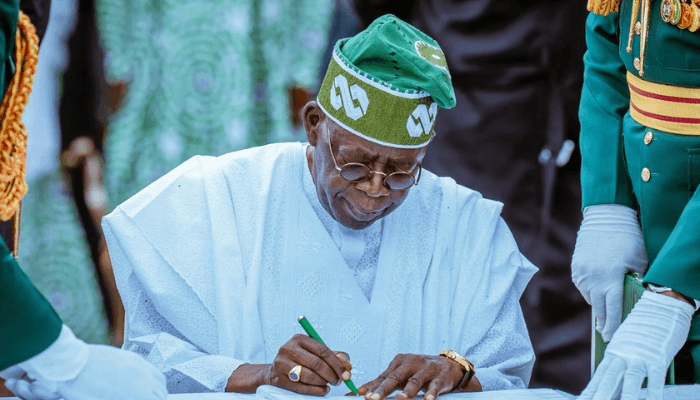
President Bola Tinubu has approved a N3.3 trillion settlement plan to clear power sector debts accumulated over more than ten years in what his administration is casting as the most decisive intervention yet in a grid that has long frustrated households and strangled economic growth.
- +Nigeria unlocks N3.3trn to rescue power sector from decade of debt
- +…15 power plants sign settlement deal
The payment framework, announced Sunday evening, targets legacy obligations that piled up between February 2015 and March 2025, a period spanning three administrations and marked by chronic underinvestment, disputed tariffs, and a web of unpaid obligations across generators, gas suppliers, and distribution networks.
…15 power plants sign settlement deal
The payment framework, announced Sunday evening, targets legacy obligations that piled up between February 2015 and March 2025, a period spanning three administrations and marked by chronic underinvestment, disputed tariffs, and a web of unpaid obligations across generators, gas suppliers, and distribution networks.
A statement from Bayo Onanuga, special adviser on information and strategy to the presidency, said 15 power plants have already signed settlement agreements totalling N2.3 trillion.
With the federal government having raised N501 billion toward funding those commitments, of that amount, N223 billion has been disbursed, with additional tranches underway.
Nigeria operates one of the world’s most underperforming power sectors relative to its economy.
Africa’s most populous country routinely generates less than 4,500 megawatts for a population exceeding 220 million people, forcing businesses to spend billions of dollars annually running diesel generators.
Unpaid debts cascading through the value chain, from distribution companies that could not collect revenues to generation companies that could not pay gas suppliers, have paralysed capital investment and kept plants running well below capacity.
The settlement announced on Sunday aims to break that cycle.
Olu Arowolo-Verheijen, special adviser on energy to President Tinubu, framed the disbursements as one component of a broader structural overhaul.
“This programme is not just about settling legacy debts,” she said in a statement. “It is about restoring confidence across the power sector, ensuring gas suppliers are paid, power plants can keep running, and the system begins to work more reliably.”
She pointed to parallel reforms, including expanded metering and service-reflective tariffs designed to link consumer billing directly to supply quality, a longstanding demand from both multilateral lenders and domestic investors who have argued that flat, subsidised tariffs make the sector commercially unviable.
The government said it is also prioritising electricity supply to industrial and commercial consumers, on the grounds that reliable power for businesses generates employment and broader economic returns more quickly than residential improvements alone.
According to Onanuga, Tinubu has confirmed that Series II of the Presidential Power Sector Financial Reforms Programme will launch this quarter, suggesting the administration intends to move beyond the initial fifteen signatories and extend the settlement framework to the remaining outstanding claims within the verified N3.3 trillion envelope.
The presidency described the N3.3 trillion figure as a “full and final settlement” arrived at following independent verification, a language intended to foreclose future disputes over the size of legacy obligations that have historically been contested between government agencies, generation companies, and the Nigerian Bulk Electricity Trading company.
Whether the intervention translates into measurable generation improvements will depend heavily on execution speed and the government’s ability to sustain disbursements through a fiscal environment already strained by subsidy reform costs and currency pressures.
Power sector analysts have noted that previous debt-relief announcements in Nigeria produced limited operational impact when funding fell short of committed amounts.