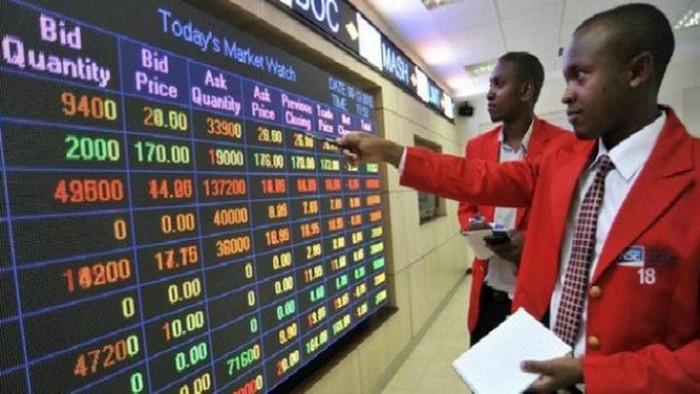
Nigeria’s stock market is delivering the strongest returns of any major equity market in the world this year, yet foreign investors are largely staying away, preferring the safety of high-yield government securities over local equities despite a record-breaking rally.
- +World’s best-performing stock market faces foreign investor boycott
The Nigerian Exchange (NGX) has surged about 66 percent year-to-date, outperforming every major global benchmark.
The Nigerian Exchange (NGX) has surged about 66 percent year-to-date, outperforming every major global benchmark. However, overseas portfolio managers accounted for only 12 percent of total trading activity in the first half of 2026, down sharply from 27 percent in the same period last year, according to NGX data. Domestic institutional and retail investors have filled the gap, powering the market to successive record highs.
Rather than increasing exposure to equities, foreign investors have channelled capital into Nigeria’s short-term sovereign debt, where yields remain close to 20 percent, offering attractive returns with lower perceived risk.
“Foreign investors instead favored Nigeria’s short-term debt, where average yields offer a relatively risk-free return,” said Arnold Dublin-Green, chief investment officer at BGL Asset Management.
Analysts say the reluctance to return to Nigerian equities reflects lingering structural and operational concerns rather than doubts about corporate earnings.
A key hurdle is the country’s transition to a T+1 settlement cycle, announced in March and implemented in June 2026. While designed to improve market efficiency, the shorter settlement window requires foreign investors to pre-fund equity trades in naira, increasing operational complexity and exposing them to additional foreign-exchange risk.
Investor sentiment was further dampened after FTSE Russell decided against upgrading Nigeria’s market classification, citing unresolved concerns around settlement processes and market accessibility.
Despite the absence of foreign capital, local investors have sustained the market’s remarkable rally. Domestic participants accounted for 88 percent of trading activity in the first half of the year, compared with 73 percent a year earlier.
The rally has been driven by strong demand for tier-one banking stocks ahead of the Central Bank of Nigeria’s recapitalisation deadline, resilient earnings from banking and telecommunications companies, and a naira that has appreciated by about 4 percent against the U.S. dollar this year. Nigeria’s market has also been relatively insulated from the global technology selloff that has weighed on semiconductor and artificial intelligence stocks across Asia and other major markets.
While domestic investors have proved capable of sustaining the rally, market analysts warn that the long-term depth, liquidity and resilience of the Nigerian capital market will depend on attracting foreign portfolio flows back into equities. They argue that further improvements in settlement infrastructure, market accessibility and regulatory certainty will be critical if Nigeria is to convert its world-leading returns into sustained international investor confidence.