Good public policy is measured not only by the nobility of its intentions but also by the wisdom of its design and the optics of its implementation. In a country as ethnically and religiously diverse as Nigeria, where public trust in institutions remains fragile, policymakers have a duty to ensure that legislation commands confidence as much as it pursues legitimate objectives.
- +FRSC’s Amendment Bill: Good Intentions, Poor Optics
It is against this backdrop that the Federal Road Safety Corps (FRSC) Amendment Bill, 2026, deserves a second look before it receives presidential assent.
It is against this backdrop that the Federal Road Safety Corps (FRSC) Amendment Bill, 2026, deserves a second look before it receives presidential assent.
No one disputes the need for safer highways. The proposed stiffer sanctions for speeding, drunk driving, reckless driving and other traffic violations are largely commendable. Nigeria loses thousands of lives annually to avoidable road crashes, and stronger deterrence is long overdue.
However, two provisions of the bill threaten to overshadow its noble objectives: the criminalisation of preaching in commercial vehicles and the proposal to arm the FRSC.
Evidence-based public policy should rest on demonstrable facts rather than assumptions. While there is abundant empirical evidence that driver distraction contributes to road crashes, there is no comparable body of evidence establishing religious preaching in commercial buses as a distinct or measurable cause of accidents. Unless such evidence exists, expressly criminalising “preaching” raises an important question: is the law addressing a proven road safety risk or merely legislating perception?
If distraction is indeed the concern, then the law should prohibit every activity capable of distracting a driver—religious, political, commercial or social—without singling out any particular form of expression. Such an approach would not only achieve the same safety objective but would also be constitutionally safer and socially less divisive.
Whether the provision was intended to target Christians is almost secondary. Leadership is judged less by the purity of its intentions than by its appreciation of context. Nigeria remains a nation navigating delicate religious fault-lines. The lingering controversy over the Muslim-Muslim presidential ticket, recurring allegations of religious marginalisation, reports of sectarian violence, and the prevailing trust deficit have all combined to heighten public sensitivity around issues of faith.
Against this backdrop, expressly criminalising “preaching” in commercial vehicles was always going to provoke suspicion, particularly because organised bus evangelism is more commonly associated with Christian denominations. The optics, therefore, are poor, regardless of legislative intent.
It is unsurprising that organisations such as the Northern States Christian Elders Forum, the Christian Council of Nigeria and the Organisation of African Instituted Churches have urged President Bola Tinubu to withhold assent to the bill in its current form. Their contention is straightforward: road safety can be enhanced without creating the impression that constitutionally protected religious expression is under legislative assault.
The concern extends beyond religious freedom. It is also about legislative precision. How, for instance, will enforcement distinguish between organised evangelism, two passengers discussing religion, someone sharing a personal testimony, or an imam offering a brief exhortation? Such ambiguities create fertile grounds for arbitrary interpretation, selective enforcement and avoidable confrontation.
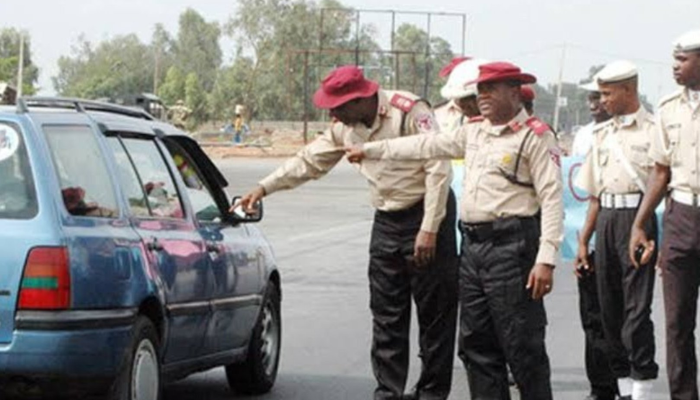
The proposal to arm the FRSC is even more troubling. Nigeria is already awash with armed security and law enforcement agencies. While the safety of FRSC personnel is a legitimate concern, creating yet another armed institution may amount to an unnecessary expansion of the country’s coercive architecture. Every additional armed agency introduces new risks of jurisdictional conflicts, abuse of power and greater militarisation of civilian spaces.
More importantly, the proposal appears premature at a time when the national conversation is increasingly gravitating towards state policing. Should Nigeria eventually embrace state police, security presence and response capacity at the subnational level would be significantly strengthened, including along highways where violent crimes occur. Against that emerging reality, transforming the FRSC into another armed agency would merely duplicate responsibilities better handled by institutions constitutionally established for that purpose.
The FRSC was conceived as a road safety and traffic management agency, not as a conventional security outfit. Institutional effectiveness is better achieved through specialisation and stronger collaboration with the Nigeria Police Force and other security agencies than through an ever-expanding mandate.
Good governance requires more than good intentions. It demands sensitivity, restraint and an appreciation of context. A policy that appears technically sound but ignores constitutional realities, institutional boundaries and Nigeria’s fragile ethno-religious equilibrium is bound to encounter resistance, irrespective of its value proposition.
President Tinubu has an opportunity to preserve the commendable aspects of this legislation while returning the contentious provisions for further legislative refinement. The objective of safer roads is too important to be undermined by avoidable controversies.
Sometimes, the difference between a good law and a great one lies not in what it seeks to achieve, but in how wisely it is crafted. On that score, the FRSC Amendment Bill still requires a careful rethink.