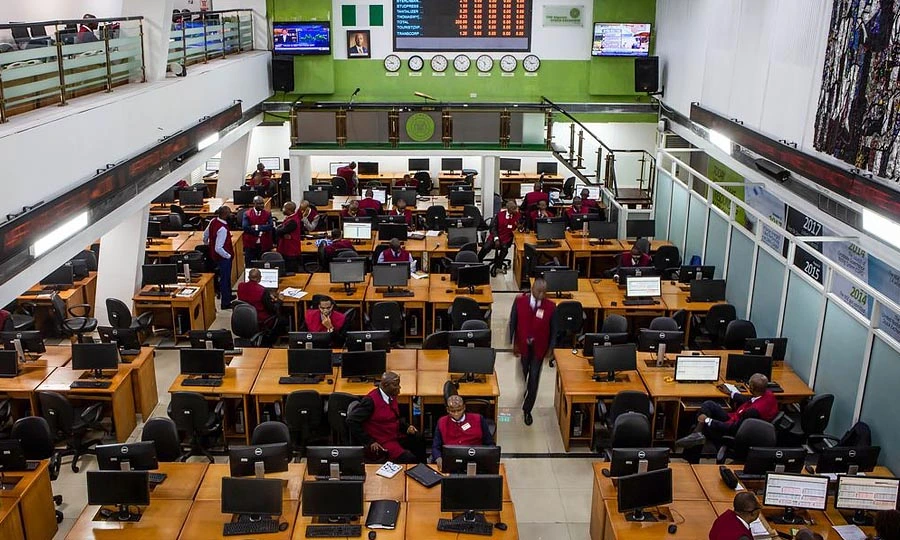
NGX introduces volume-based trading thresholds, requiring minimum share quantities before prices move, aiming to improve liquidity and stability.
- +NGX Overhauls Share Price Movement Rules With New Volume Thresholds
The Nigerian Exchange (NGX) has introduced a revised pricing framework that will require specific volumes of shares to be traded before the market price of a stock can change, in a move aimed at strengthening price discovery and market stability.
The Nigerian Exchange (NGX) has introduced a revised pricing framework that will require specific volumes of shares to be traded before the market price of a stock can change, in a move aimed at strengthening price discovery and market stability.
Details contained in the Exchange’s updated Rulebook indicate that equities will now be grouped into three categories based on their share prices, with each category assigned a minimum trading quantity needed to trigger a price adjustment.
Under the new structure, stocks priced at N1,000 or higher will require at least 10,000 units to be traded before their quoted price can move. Equities valued between N500 and N999.99 will need a minimum volume of 50,000 units, while stocks trading below N500 will require transactions involving at least 100,000 units.
The implementation date has not yet been announced, although market participants expect the Exchange to provide further guidance in the coming weeks.
The revised methodology represents a notable change to the NGX’s existing pricing mechanism and is expected to influence trading behaviour across different segments of the market. Analysts say the framework could limit the impact of small-volume transactions on stock prices and encourage more reliable valuation patterns.
Some traders, however, have expressed concerns that the higher thresholds may slow price adjustments in less actively traded equities, potentially affecting liquidity in certain market segments.
The policy forms part of broader efforts by regulators to enhance transparency, improve market efficiency and strengthen confidence in price formation as participation by both retail and institutional investors continues to grow.
Reacting to the development, Head of Research at GTI Capital Limited, Abiodun Ogunniyi, described the measure as a welcome reform that addresses long-standing concerns among market operators.
According to him, highly priced stocks have often struggled with liquidity challenges, making it difficult for their market prices to accurately reflect investor demand.
He said the revised thresholds could improve trading activity in premium equities by lowering the volume required for price movements, allowing market sentiment to be reflected more efficiently in stock valuations.
Ogunniyi also noted that the changes may encourage greater participation by retail investors in higher-priced stocks, while urging regulators to continue addressing liquidity constraints and free-float issues within the market.
Offering a different perspective, Managing Director of Globalview Capital Limited, Aruna Kebira, said the framework largely mirrors a pricing system previously used by the Exchange.
He explained that earlier market structures applied varying volume thresholds to different classes of stocks, making the latest adjustment more of a return to a familiar model than a completely new approach.
Kebira argued that the growth of the Nigerian capital market and the emergence of companies with significantly larger valuations have made a uniform volume threshold less practical.
He added that regulatory reviews are a normal part of market development, stressing that rules must evolve alongside changing market conditions to remain effective and relevant.
The amendments are contained in proposed changes to Part XI of the NGX Trading License Holders’ Rules and introduce a three-category classification system linking share prices to minimum trading volumes.
As investors await formal implementation details, attention will focus on whether the revised framework succeeds in boosting liquidity and improving market efficiency while maintaining confidence in the Nigerian stock market.