World’s largest money manager eyes deeper South Africa infrastructure investments amid reforms
- +South Africa pushes reform agenda
- +Competition for global capital intensifies
BlackRock Inc., the world’s largest money manager, says South Africa is approaching a critical infrastructure turning point that could unlock faster economic growth, create jobs and strengthen competitiveness if supported by large-scale private investment, according to African Economy.
BlackRock Inc., the world’s largest money manager, says South Africa is approaching a critical infrastructure turning point that could unlock faster economic growth, create jobs and strengthen competitiveness if supported by large-scale private investment, according to African Economy.
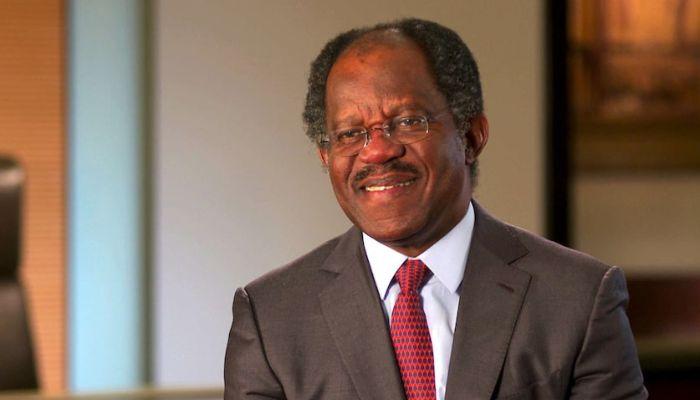
Speaking alongside Cyril Ramaphosa at the BlackRock South Africa Infrastructure Investment Summit on Wednesday, Adebayo Ogunlesi, chairman and chief executive of Global Infrastructure Partners—now part of BlackRock—said years of underinvestment in energy, transport and logistics had constrained Africa’s most industrialised economy.
“In the 21st century there simply is no excuse for unreliable electricity supply,” Ogunlesi said. “Reliable and affordable energy is a foundation requirement for growth.”
He identified electricity transmission, renewable energy, rail, ports, airports and digital infrastructure as key sectors capable of lifting productivity and reinforcing South Africa’s position as a regional trade gateway.
Ogunlesi also pointed to artificial intelligence as a major future driver of infrastructure demand, particularly for power systems and data centres.
BlackRock, which manages roughly $14 trillion to $15 trillion in assets globally, currently oversees about R500 billion ($27 billion) in South African assets, according to Ogunlesi. He said the firm expects that exposure to double over the next five years, prompting Ramaphosa to joke that it should quadruple instead.
The group’s growing interest signals renewed global investor confidence in Africa’s biggest economy’s reform agenda after years of infrastructure bottlenecks weighed on growth.
More broadly, the summit highlights a wider shift across Africa: governments are increasingly turning to private capital to fund energy, transport and digital infrastructure as fiscal pressures limit public spending capacity.
South Africa pushes reform agenda
Ramaphosa used the summit to pitch South Africa’s reform programme and infrastructure pipeline to international investors, highlighting ongoing changes in electricity, logistics, telecommunications and infrastructure financing.
“Infrastructure development in Africa represents one of the largest untapped investment opportunities of our time,” he said said.
The president said South Africa plans to spend more than R1 trillion (about $54 billion) on infrastructure over the next three years while expanding private-sector participation across strategic industries.
He said the government is opening rail infrastructure to greater private involvement while rebuilding operational capacity at Transnet and the Passenger Rail Agency of South Africa.
Ramaphosa also referenced ambitions for future high-speed rail projects, noting that BlackRock-backed infrastructure businesses already operate similar systems globally.
Competition for global capital intensifies
Ogunlesi stressed that governments can no longer rely solely on public funding to close infrastructure gaps, warning that countries are increasingly competing for scarce global capital.
“The good news is that private capital is eager to engage,” he said. “But South Africa is competing with the United States, Germany, GCC countries, Asian and Latin American countries.”
He added that attracting long-term investment would require policy certainty, transparent procurement systems, stable regulation and strong legal institutions.
Khumbudzo Ntshavheni also acknowledged that public resources alone would be insufficient to meet the country’s infrastructure ambitions.
“Private sector funding is a component that is too critical for South Africa’s infrastructure development trajectory,” she said.