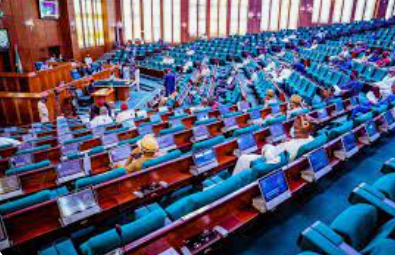
The House of Representatives on Tuesday passed legislation seeking a major overhaul of the National Assembly’s internal security structure by professionalising the office of the Sergeant-at-Arms and placing its leadership firmly within the parliamentary service system.
- +Reps pass bill to professionalise N’Assembly security architecture
The bill provides that the head of the National Assembly Security Directorate, known as the Sergeant-at-Arms, will henceforth be appointed by the National Assembly Service Commission from among serving personnel of the legislature rather than from retired military or external security officers, as has often been the case.
The bill provides that the head of the National Assembly Security Directorate, known as the Sergeant-at-Arms, will henceforth be appointed by the National Assembly Service Commission from among serving personnel of the legislature rather than from retired military or external security officers, as has often been the case.
For decades, concerns have persisted over the reliance on external appointees—particularly retired military officers to head parliamentary security, with critics arguing that such appointments weaken institutional independence, limit career progression for legislative staff and undermine the development of a specialised security framework tailored to the unique operational demands of the legislature.
The push for reform gained momentum in the wake of repeated security breaches within the National Assembly complex, including the 2018 invasion of the Senate chamber and the seizure of the mace, as well as broader concerns about the vulnerability of Nigeria’s foremost legislative institution.
Supporters of the reform say the move is designed to strengthen institutional memory, improve operational efficiency, and align Nigeria’s parliamentary security architecture with global best practices, where legislative institutions maintain professional internal security systems.
Under the proposed law, only officers who have served in the National Assembly for at least 15 years, attained a minimum rank of Assistant Director, and have no record of indiscipline or incompetence will be eligible for appointment as Sergeant-at-Arms.
The legislation also elevates the office of the Sergeant-at-Arms into a full directorate within the National Assembly bureaucracy.
This means the directorate will now enjoy full institutional privileges comparable to other directorates, while its head will serve a renewable tenure of four years, subject to a maximum of two terms.
The bill states that staff of the directorate are to enjoy “the same conditions of service with other staff members of the National Assembly, and in situations where the conditions of service are silent, they are to enjoy the same conditions applicable to the Nigeria Police.”
In a significant shift, the proposed law further “allows the Sergeant-at-Arms to carry arms and ammunition within the National Assembly complex and its precincts, subject to the approval of the President, but such firearms shall not be used within the Assembly Complex except in self-defence or defence against imminent threat of death or serious injury.”
It also authorises the use of arms under strictly defined circumstances, including preventing serious crimes that pose grave threats to life, arresting dangerous individuals who resist lawful authority, or preventing their escape when no lesser means are sufficient.
Sponsored by the Ekiti lawmaker and Chairman of the House Committee on Media and Public Affairs, Akintunde Rotimi, the bill is aimed at creating a career-driven, institutionally grounded security system for the legislature.
Proponents say the reform will not only improve professionalism but also give officers within the parliamentary security system a clear path to leadership positions.
Following its passage in the House, the bill will be transmitted to the Senate for concurrence before being forwarded to President Bola Tinubu for assent.
If eventually signed into law, the legislation is expected to mark a significant turning point in the institutional strengthening of Nigeria’s National Assembly and reinforce its operational autonomy.