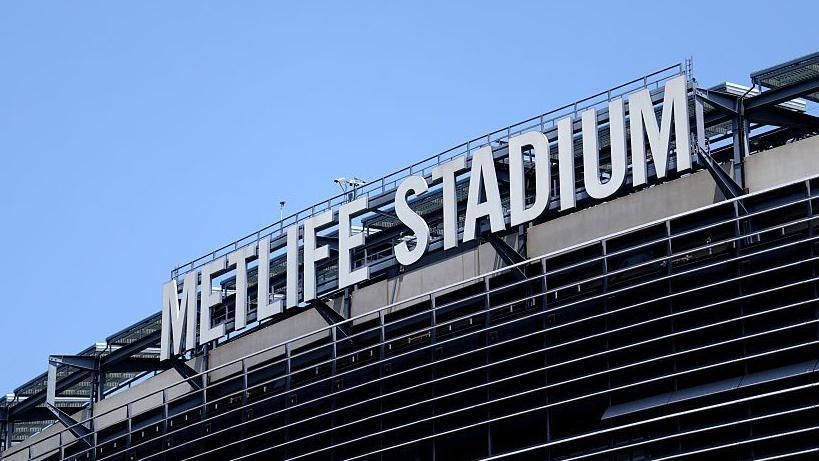
World football governing body FIFA has responded to criticism from New Jersey Governor Mikie Sherrill, warning that increased transport fares for the 2026 World Cup could create logistical challenges for fans.
- +FIFA, New Jersey Governor clash over $150 World Cup train fares
Sherrill had blamed FIFA for supporters potentially paying up to $150 (£111) for a 30-minute train journey from New York to MetLife Stadium, which will host eight matches, including the final on July 19.
Sherrill had blamed FIFA for supporters potentially paying up to $150 (£111) for a 30-minute train journey from New York to MetLife Stadium, which will host eight matches, including the final on July 19.
The proposed pricing structure includes no concessions, meaning children and seniors would also pay the full fare, while shuttle bus tickets are expected to cost around $80 (£59).
Responding to the criticism, FIFA’s chief operating officer for the 2026 World Cup, Heimo Schirgi, said the organisation’s priority is to ensure smooth mobility and a positive fan experience.
“Our goal is to minimise congestion, reduce reliance on private vehicles, and ensure the fan experience is defined by the action on the pitch, not delays on the roads,” Schirgi said.
He warned that high transport costs could discourage fans from using public transit, leading to increased traffic congestion and late arrivals.
“The current pricing model will have a chilling effect. Elevated fares push fans toward alternative transport, raising concerns about congestion and reducing the overall economic and legacy benefits of hosting the tournament,” he added.
Transport costs have also risen elsewhere, with fares to matches at Gillette Stadium reportedly reaching $80 for rail and $95 for coach services.
Sherrill had argued that FIFA should subsidise transport, noting that NJ Transit faces a $48 million bill while the tournament is projected to generate around $11 billion in revenue.
However, FIFA rejected the claim, stating that its revenues are reinvested into global football development.
“To arbitrarily demand FIFA absorb these costs is unprecedented,” Schirgi said. “No other major sporting event or promoter has faced such a requirement.”
FIFA also noted that host city agreements signed in 2018 included transport planning provisions, with systems designed to provide efficient and accessible travel for fans attending matches in New Jersey.