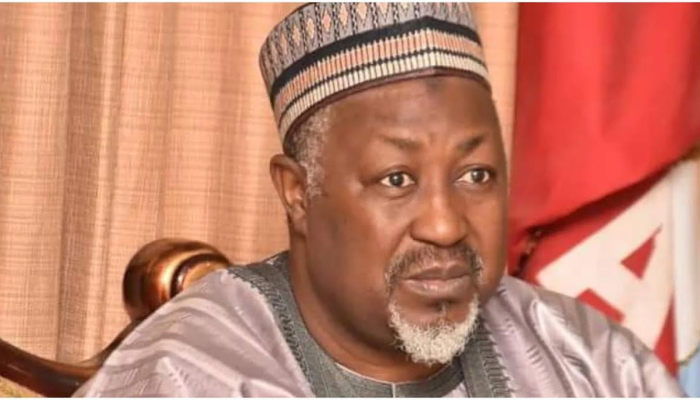
Jigawa Assembly probes ex-gov, Badaru, council chairmen, over financial impropriety
- +…as defection rumours grow after Tinubu cabinet exit
Political tensions are mounting in Jigawa State following the launch of a sweeping investigation into the administration of former Governor Mohammed Badaru Abubakar, a development now intersecting with fresh speculation about his national political future.
Political tensions are mounting in Jigawa State following the launch of a sweeping investigation into the administration of former Governor Mohammed Badaru Abubakar, a development now intersecting with fresh speculation about his national political future.
The Jigawa State House of Assembly, through its Public Accounts Committee, has opened a far-reaching probe into financial activities spanning 2019 to 2024, covering Badaru’s tenure and the conduct of 27 Local Government Council chairmen.
A lawmaker, in the House confided in BusinessDay on Thursday and said that early findings suggested a troubling pattern of fiscal irregularities, including questionable procurement procedures, unverifiable expenditures, missing financial records, and notable budget overrun.
The Assembly, however, vowed to pursue full accountability, with some members calling for the recovery of public funds and sanctions where infractions are confirmed.
The Committee members insisted the exercise is part of routine legislative oversight, though the scale and timing have drawn political attention.
The investigation came amid heightened uncertainty surrounding Badaru’s political trajectory.
The former governor, who recently exited the Federal Executive Council following his removal as Minister of Defence by President Bola Ahmed Tinubu, is now at the centre of growing rumours of a planned defection to the African Democratic Congress (ADC).
While neither Badaru nor his close associates have publicly confirmed the move, sources within political circles say consultations are ongoing.
The convergence of these developments has intensified speculation about possible political undercurrents behind the probe. Analysts point to evolving alliances within Jigawa and at the national level, suggesting the investigation could have implications beyond financial accountability.
Supporters of the former governor have questioned the motive behind the Assembly’s action, arguing that the probe risks being perceived as politically driven, especially in light of the defection rumours. However, others maintain that the allegations—if substantiated—underscore the need for stronger fiscal transparency and institutional checks.
Within Jigawa, relations between the current administration and figures linked to the previous government have reportedly grown strained in recent months. The probe is therefore seen by some observers as a potential flashpoint that could redefine power dynamics in the state.
As proceedings continue, attention is focused not only on the outcome of the investigation but also on how it may influence Badaru’s next political move. With the ADC increasingly positioning itself as an alternative platform ahead of future elections, any defection by a figure of his stature could carry significant weight.
For now, the Assembly insists its work will proceed without bias. Yet, as political calculations evolve alongside the inquiry, the situation in Jigawa remains fluid—combining questions of governance, accountability, and shifting loyalties in Nigeria’s complex political landscape.