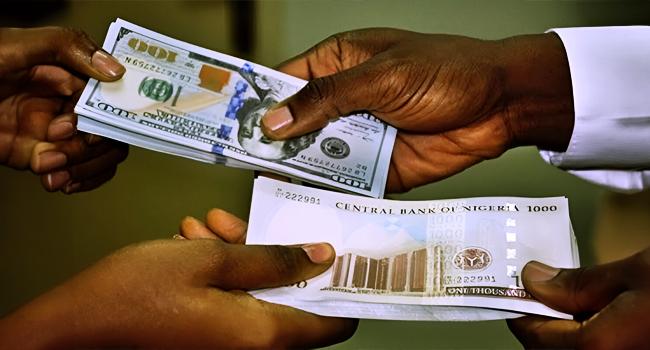
Nigeria’s foreign exchange reform began on June 14, 2023, when the Central Bank of Nigeria adopted a willing-buyer, willing-seller model and unified the foreign exchange market by collapsing the old, segmented windows into the Nigerian Foreign Exchange Market.
- +Naira reform at three: The winners, losers and verdict
Three years later, the questions that matter are no longer about the mechanics of the reform but about its consequences.
Three years later, the questions that matter are no longer about the mechanics of the reform but about its consequences.
Has it mainly exposed Nigerians to a weaker currency and higher costs? Did the millions of Nigerians in the diaspora finally get a fair deal for the money they send home?
How has it reshaped the balance sheets of the companies that employ and feed millions of Nigerians?
What has it done to government tax revenues and who, when all the numbers are counted, actually won?
The answer to all those questions begins with the rate itself and what happened to it.
The naira was trading at N465.50 to the dollar on June 14, 2023; the last day of the old regime. The following morning, markets opened under the new framework and by June 16, the rate stood at N656.50; a 41% devaluation in a single trading day.
By June 23, it had reached N823; a 77% collapse in nine days. No corporate treasurer, no importer, no manufacturer had time to hedge. The damage was instant and, for many balance sheets, irreversible.
A fragile calm followed as the rate held between N750 and N800 through the second half of 2023. Then on December 28, year-end dollar demand broke the N900 barrier in a single session, the rate jumping from N764.50 to N897.50 overnight. Nigeria entered 2024 with its currency accelerating.
What followed was the most damaging phase. The naira collapsed through N1,000, N1,200, N1,400, and hit N1,660 in the first week of December 2024; a 257% total depreciation from pre-reform levels.
This was the period that destroyed corporate balance sheets, eliminated dividends, and wiped-out government tax revenues from the manufacturing sector.
The CBN’s tightening measures- MPR at 27.5%, CRR at 50%, and the introduction of the Electronic Foreign Exchange Matching System in December 2024; finally turned the tide.
From mid-2025, the naira began its first sustained appreciation since the reform. It closed 2025 at N1,429 and trades at N1,360 as of June 9, 2026; an 18% recovery from the peak. The worst, it appears, is over. But the scars on household budgets, corporate balance sheets, and government revenues remain.
Initially, the biggest casualties of this reform were not households; they were corporate financial health.
Between 2023 and 2024, twelve companies absorbed a combined N3.97 trillion in FX losses. This is the accounting cost of holding dollar-denominated obligations; trade payables, letters of credit, intercompany loans; on balance sheets that were built when the naira was worth more than twice what it became.
MTN Nigeria bore the heaviest burden, recording N740.4 billion in FX losses in 2023 and N925.4 billion in 2024.
The rest; Nestlé Nigeria, Dangote Cement, Dangote Sugar, BUA Foods, Nigerian Breweries, BUA Cement, Cadbury Nigeria, WAPCO-Lafarge, Aradel, Unilever Nigeria, and International Breweries, absorbed the remainder.
Across every company in this cohort, the pattern is identical: operations largely functional, naira revenues growing, but dollar-linked obligations had become weapons of balance sheet destruction.
Every single company received a tax credit rather than paying tax in 2024. These businesses, which would have contributed hundreds of billions in corporate tax annually before liberalization, paid almost nothing to government and thus government became another major loser.
Beyond lost taxes, the naira’s depreciation inflated the naira value of Nigeria’s dollar-denominated external debt, increasing the cost of servicing obligations that had been contracted at far stronger exchange rates.
Shareholders in MTN Nigeria, Nestlé, Nigerian Breweries and others watched companies that had been consistent dividend payers go silent. Some of them returned to dividend payment in 2026, while some have not recovered fully
The substantial increase in exchange rate coupled with volatility consequently had inflation running wild above 30% in 2024.
For years, Nigerians sending money home from outside watched the official rate absorb 40–60% of the value of their remittances before it reached their families.
Most routed money through informal channels; bureau de change operators, ajo networks, trusted middlemen; because the official system was simply not competitive.
Liberalisation changed that, with formal remittance volumes surging as the official and parallel rates converged.
Tier-1 banks holding net long foreign currency positions posted enormous FX revaluation gains as the naira weakened; the mirror image of what destroyed manufacturer balance sheets.
Not every bank followed the same trajectory. UBA’s net trading and FX gains fell sharply from N659,257 million in 2023 to N181,762 million in 2024.
For shareholders of the bigger winners, however, this meant record dividends and strong equity returns — the direct inverse of the experience at MTN and Nestlé.
Partial naira recovery since mid-2025 offers genuine grounds for cautious optimism. But the tax revenues lost during the most damaging phase have not been recovered.
Manufacturers have not rebuilt their equity. The millions of Nigerians whose real wages fell sharply are still waiting for the reform’s promised dividends to reach them.
Nigeria has done the hard part. The question the next three years must answer is whether the gains from a more honest exchange rate will be broadly shared — or remain concentrated in the balance sheets of those already strong enough to benefit.