A meeting between Pope Leo XIV and Sarah Mullally, the first woman to lead the Church of England, will highlight the differences in the treatment of women in the two institutions.
- +Role Of Women In The Anglican, Catholic Churches
Mullally on Saturday begins a four-day visit to Rome and the Vatican — her first abroad since being enthroned last month.
Mullally on Saturday begins a four-day visit to Rome and the Vatican — her first abroad since being enthroned last month.
Here are some key distinctions:
Only men can serve as clergy, whether cardinals, priests or deacons, and of course, the pope has only ever been male.
The late pope Francis appointed women to key administrative positions, including naming the first female prefects of Curia departments.
Sister Simona Brambilla is a prefect of the Vatican office that oversees the world’s Catholic religious orders and congregations.
Sister Raffaella Petrini took over as president of the governorate of the Vatican City state in March 2025.
Under Francis, in 2023, women were allowed to vote for the first time in the Synod — a Catholic discussion body.
But in December 2025 a Vatican commission set up under Francis five years earlier rejected — for now — the idea of allowing women to become deacons to the disappointment of campaigners.
Deacons can officiate baptisms, weddings and funerals but not mass.
In his first interview after taking over from Francis, new Pope Leo XIV indicated he would not change key doctrine on deacons or other key issue such as gay marriage.
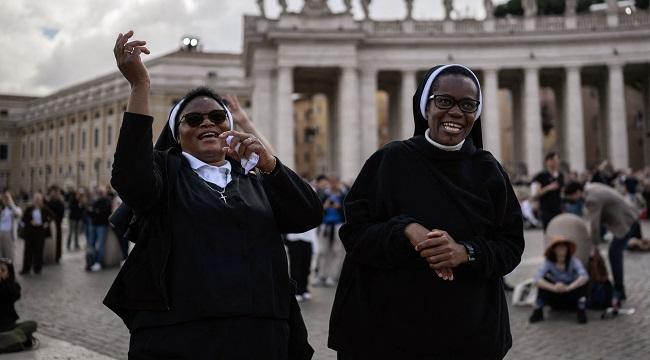
Despite their lack of leadership roles, the Catholic Church remains full of women.
The latest Vatican figures from 2025 show there were 589,000 nuns and lay sisters across the global church, down more than 9,000 on the year before.
There were 5,430 bishops — up 77 on the previous year — around 407,000 priests (down around 700), and 51,400 deacons (up 1,200).
The Church of England reported having 1.02 million regular worshippers in 2024, a rise of 1.2 percent, but globally, it estimates there are around 85 million Anglican followers in over 165 countries.
The Church of England’s governing body, the General Synod, voted to allow women to become priests in 1992 and the first women were ordained as priests in 1994.
The decision prompted hundreds of male Anglican priests to join the Catholic Church, creating tensions between the two churches.
After years of bitter wrangling, the Church of England also agreed in 2014 to allow female priests to become bishops.
Around 37 percent of the approximately 18,000 active clergy in the Church of England are women, according to Church figures.
There are also 36 female bishops currently in post, 12 of them in the most senior roles, heading dioceses.
The majority of those in training for ordained ministry in the Church of England are also women, it said.