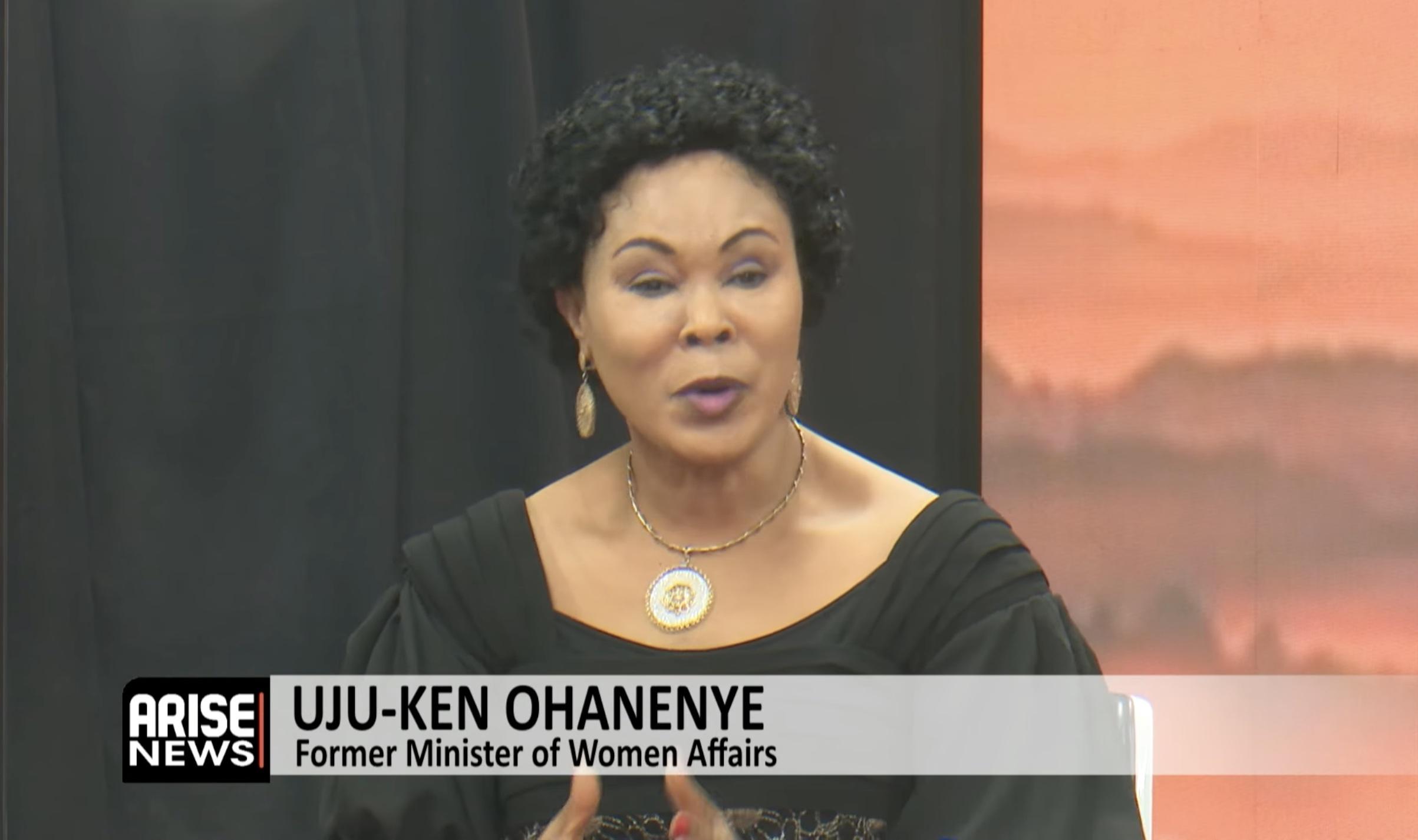
Ohanenye says government officials and institutions beyond the presidency should share responsibility for Nigeria’s policy outcomes.
- +Uju-Ken Ohanenye: Nigerians Should Stop Focusing Only On The President
Former Minister of Women Affairs, Uju-Ken Ohanenye, has urged Nigerians to stop focusing solely on the president when assessing the country’s challenges, saying many government officials and institutions also play significant roles in governance and policy implementation.
Former Minister of Women Affairs, Uju-Ken Ohanenye, has urged Nigerians to stop focusing solely on the president when assessing the country’s challenges, saying many government officials and institutions also play significant roles in governance and policy implementation.
Speaking during an interview with ARISE News on Thursday, Ohanenye said public attention is often directed at the president while the actions of other actors within government receive less scrutiny. She made the remarks while discussing the Tinubu Torch Bearers Initiative, grassroots mobilisation and the administration’s Renewed Hope Agenda.
“The problems we have is not even mainly presidents,” she said. Ohanenye argued that civil servants, government agencies and other public institutions contribute to policy decisions and implementation, and should also be held accountable when programmes fail to achieve their objectives.
“We should stop focusing on just the presidents,” she said. She maintained that many of the challenges blamed on presidents involve decisions taken across different levels of government.
“At the end of the day, the presidents are always blamed,” she said. The former minister also called on Nigerians to take a greater interest in how public institutions function, saying citizens have a role to play in demanding accountability beyond the presidency.
“We ourselves are supposed to help ourselves,” she said. Addressing the role of women in grassroots mobilisation, Ohanenye said efforts to build support for government programmes must be matched by measures that improve the lives of women at the community level.
“The women in the grassroots, they equally need to feel the government,” she said. According to her, empowerment programmes should focus on helping women improve their livelihoods through access to equipment and other forms of support that can boost productivity and income.
She said economic hardship remains a major obstacle to mobilisation efforts. “You can’t mobilise them if they are that hungry,” she said.
Ohanenye also rejected suggestions that such interventions would duplicate the work of the Ministry of Humanitarian Affairs, arguing that women’s empowerment programmes serve a different purpose.
“In our own, we empower the women. We support them, and we equally organise them in cooperatives so that government hands will be stretched towards them,” she said.
She further expressed concern about the welfare of children, saying their wellbeing remains one of the issues that deserves greater attention. “My biggest concern is the children,” she said.
The interview followed the launch of the Tinubu Torch Bearers Initiative, a grassroots mobilisation platform aimed at promoting support for government policies and programmes across communities.