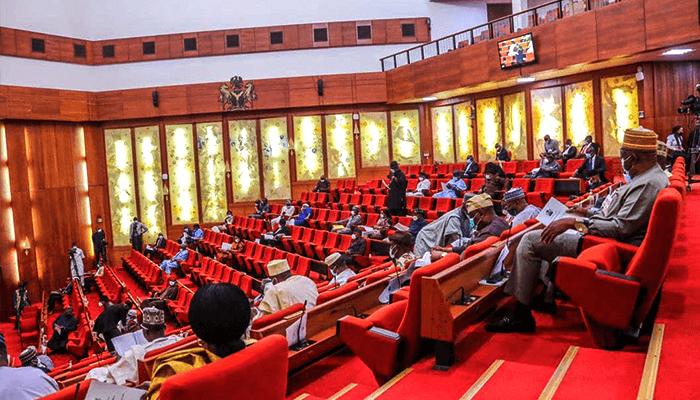
11th Nass: Senate tightens rules, restricts leadership positions to ranking, returning members
The Senate has amended its Standing Orders, significantly narrowing eligibility for presiding and principal offices ahead of the 11th National Assembly in June 2027, in a move that favours ranking and returning lawmakers.
The Senate has amended its Standing Orders, significantly narrowing eligibility for presiding and principal offices ahead of the 11th National Assembly in June 2027, in a move that favours ranking and returning lawmakers.
The revised rules, adopted after a closed-door session lasting about three hours and presided over by Godswill Akpabio, President of the Senate, limit the contest for top leadership positions largely to members of the current 10th Senate and those with continuous legislative experience.
Under the new provisions, only senators who have served at least one term of four years are eligible to contest for the positions of President of the Senate and Deputy President of the Senate.
In addition, nominations for these presiding offices must strictly follow an established hierarchy based on ranking.
The amended Order 4 states: “Nomination of Senators to serve as Presiding Officers shall be in accordance with the ranking of Senators and shall be strictly adhered to.
“The order of ranking are (i) Former President of the Senate, (ii) Former Deputy President of the Senate, (iii) Former Principal Officers of the Senate, (iv) Senators who had served at least one term of four years, (v) Senators who had been members of the House of Representatives, (vi) In the absence of i to v, Senators elected into the Senate for the first time.”
This ranking framework effectively prioritises experienced lawmakers, leaving first-time senators as a last resort in the nomination process.
The Senate further tightened eligibility through an amendment to Order 5, which sets stricter conditions for those seeking principal offices such as Senate Leader, Deputy Leader, Chief Whip, Deputy Whip, Minority Leader and other leadership roles.
The provision states, “Any Senator shall not be eligible to contest for any Principal Office of the Senate unless he has served as a Senator for at least two consecutive terms immediately proceeding nomination.”
By implication, only senators who are part of the current 10th Senate and who served in the immediate past Assembly qualify to contest for principal offices in the 11th Senate.
This excludes first-time entrants and returning politicians who were not members of the 9th and 10th Senates.
The amendments also reinforce that a senator seeking to emerge as a principal officer must have completed two uninterrupted terms, with the most recent term directly preceding the inauguration of the next Assembly.
The changes mark a significant shift in the Senate’s internal rules, effectively shrinking the pool of eligible contenders and placing a premium on continuity and institutional experience.
With these revisions, the race for leadership in the 11th Senate is expected to be limited to a smaller circle of ranking lawmakers, reducing the influence of new entrants and external political considerations in the emergence of presiding and principal officers.