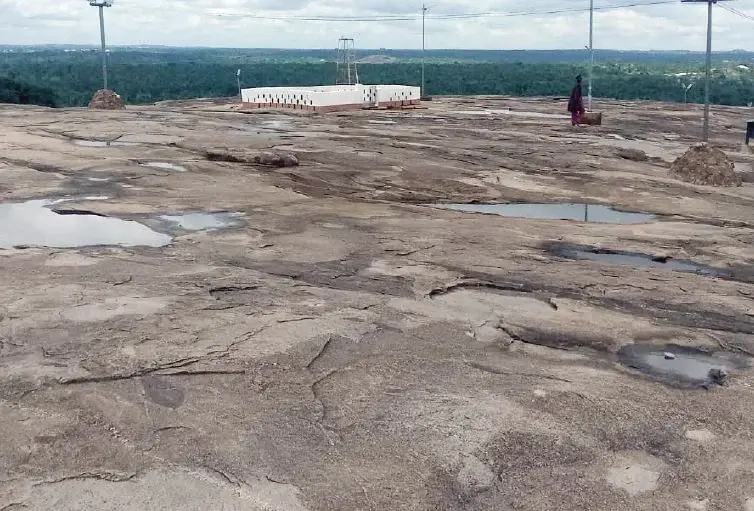
For decades, prayer mountains drew thousands of worshippers seeking healing, miracles, deliverance, divine encounters and spiritual renewal in serene, secluded environments. Today, however, many of these once-crowded spiritual retreats are being abandoned as kidnappings, bandit attacks, and rising insecurity across the country make worshippers increasingly wary of visiting locations that were once sacred sanctuaries, DANIEL AYANTOYE writes
- +Haunted mountains: How insecurity is emptying once-busy prayer sanctuaries
Fourteen-year-old Kola Aina left home excited about church.
Fourteen-year-old Kola Aina left home excited about church. The junior secondary school student had spent days looking forward to his church’s children’s anniversary celebration.
On Saturday, May 24, 2026, he was expected to join dozens of other children and worshippers at the Ori-Oke Ajaiye Prayer Ground in Ikerin-Opin, Ekiti Local Government Area of Kwara State, for an overnight vigil ahead of the event.
His guardian, Bukola Daramola, was too tired to accompany him.
The 63-year-old trader pleaded with him to stay home that night.
But Kola would not budge. He didn’t want to miss any of the activities lined up.
His friends had already arrived to call him for the programme, and he told his guardian not to worry, assuring her that they would see each other again the following day at church.
Neither of them knew it would be their final conversation.
As darkness enveloped the prayer mountain that night, worshippers settled into what was supposed to be a peaceful evening of worship and spiritual preparation.
Hymns echoed across the hilltop. Prayers rose into the night air. Children rehearsed for the anniversary celebration while adults engaged in fellowship in the tranquil surroundings of the retreat.
The calm was shattered as armed bandits stormed the prayer ground, firing sporadically and sending terrified worshippers scrambling into nearby bushes and the surrounding darkness in search of safety.
Panic spread across the mountain.
When the attack ended, three worshippers lay dead.
18 others, including women and children, had been abducted.
Among those who never returned home was Kola. He was among those gunned down.
“My mum didn’t go to church that day because she was tired. She told Kola not to go too, but his friends came to call him.
“He begged her to allow him to go and told her they would see the next day at church. Later that night, some people who escaped from the attack came to tell her what had happened. Then we heard that Kola was among the people they killed,” Kola’s cousin, Gbolahan Jatto, told Saturday PUNCH.
To his family, Kola was far more than another victim of Nigeria’s worsening insecurity crisis.
His death left a deep emotional scar on the 63-year-old woman who had relied heavily on the teenager’s companionship since the death of her husband in November 2024.
“He was a gentle soul, a happy boy. He loved school. He loved serving God. He was focused and eager to learn,” Jatto said sorrowfully.
From Kwara to Kogi, Oyo and other parts of the country, reports of kidnappings, abductions and violent attacks on remote prayer grounds and worship centres are fueling anxiety among worshippers and religious leaders.
Places once regarded as sanctuaries for spiritual renewal are increasingly being viewed as vulnerable targets for criminal gangs.
The consequences are becoming evident.
Attendance is shrinking. Worshippers are staying away. Night vigils are being cancelled, shortened or subjected to tighter security measures.
In June, Mountain of Fire and Miracles Ministries, one of Nigeria’s largest Pentecostal churches with more than 300 branches nationwide, suspended all overnight vigils and directed that church programmes across the country should end by 8 pm.
At Oluwawamiri Prayer Mountain in Adekanbi Community, Egbeda Local Government Area of Oyo State, the impact of the fear is impossible to miss.
A narrow road snakes through the quiet community before opening onto the hilltop prayer ground hidden among thick bushes and towering trees.
The atmosphere is calm but unsettling.
When our correspondent visited on a Wednesday afternoon, the silence was striking.
Leaves rustled gently in the breeze. Empty prayer spots stretched across the mountain. Structures that once hosted crowds of worshippers now sat largely deserted.
Only three workers, including a minister, were present.
“This mountain has had a lot of positive impact on the lives of people. But the issue of kidnapping and killing is the reason people no longer come as they used to. Before, there used to be a lot of crowd,” the cleric, who introduced himself as Apostle David Obakorede, said as he gazed across the largely empty grounds.
The fear is shared by Prophetess Regina Ademola, who has overseen the prayer mountain for more than two decades.
For years, she said, the mountain was known for testimonies and stories of answered prayers.
According to her, a woman previously diagnosed with infertility later conceived twins, while many who came seeking healing, employment, travel opportunities and other breakthroughs returned with testimonies.
Today, however, fear appears to have replaced faith for many worshippers.
The founder said, “People are scared, so they stopped coming. Even those who still come, and the staff members, we don’t allow them to stay for long because of the insecurity, and we also get security for special programmes.”
A similar visit to Ori-Oke Babalola, a prominent prayer mountain in Odo-Owa, Oke-Ero Local Government Area of Kwara State, revealed a stark contrast to what the sacred site once represented.
The various sections of the mountain, which ordinarily hosted hundreds of worshippers daily, now lay eerily deserted.
The familiar sounds of prayers, worship songs, and spiritual retreats had given way to an unsettling silence.
Only a handful of workers moved around the premises carrying out routine maintenance.
The stillness across the hilltop reflected what residents described as a growing climate of fear.
One of the resident pastors at the mountain, Joseph Olaleye, said insecurity had severely affected activities there, resulting in a drastic decline in attendance.
He said, “The insecurity challenge is glaring and has affected this place negatively. Where we were seeing 100 people before, we now see less than 10. The situation has really made many people afraid. Fear can kill faster than anything.”
The continued appeal of prayer mountains is largely rooted in testimonies from worshippers who attribute life-changing experiences, divine encounters and answered prayers to their visits.
From miraculous healings and childbirth to employment opportunities and visa approvals, such accounts have continued to attract believers seeking solutions to life’s challenges.