Nestlé’s N6bn skills bet pays off as 98% job rate exposes gap in Nigeria’s broken vocational pipeline
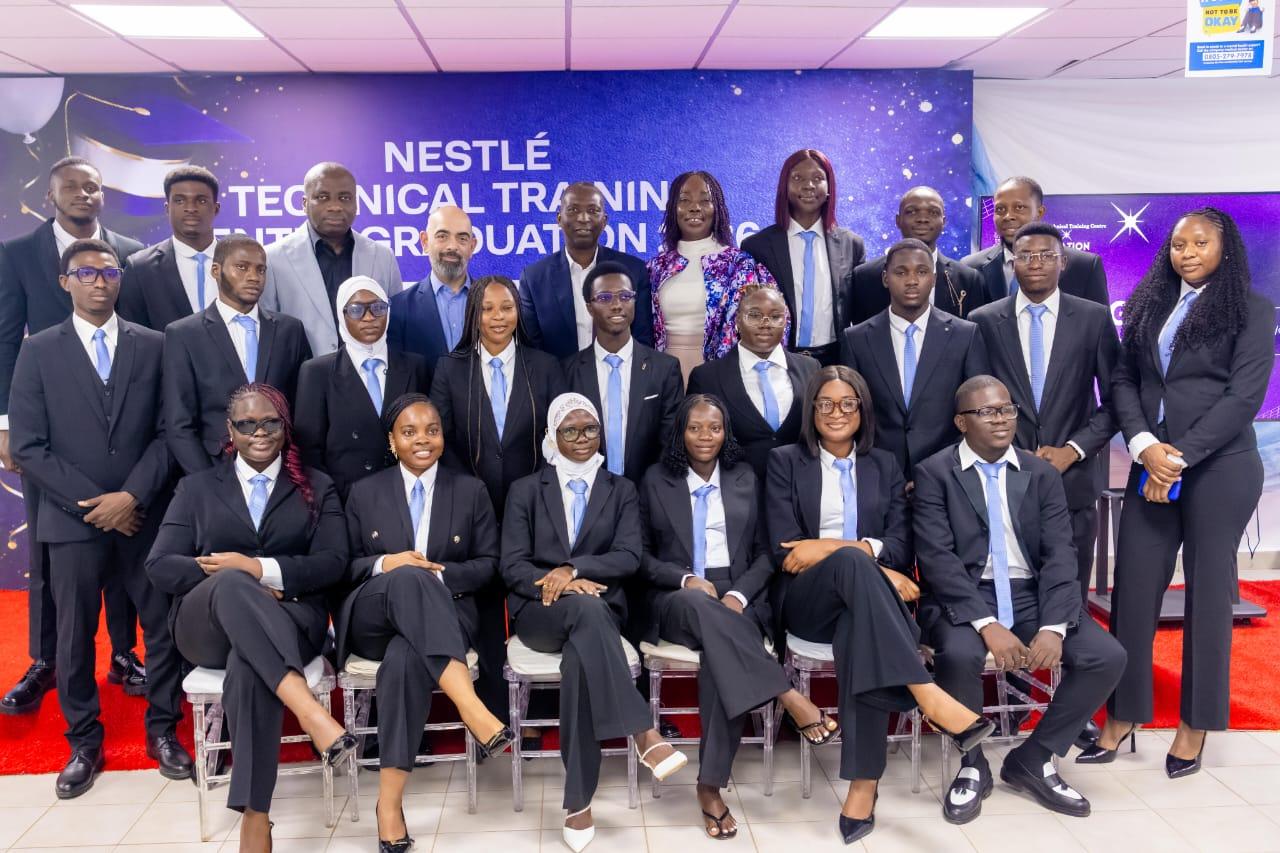
When Nestlé Nigeria graduated 20 trainees from its Flowergate Technical Training Centre this week, it was more than a ceremonial milestone.
When Nestlé Nigeria graduated 20 trainees from its Flowergate Technical Training Centre this week, it was more than a ceremonial milestone.
Beneath the applause marking 15 years of the programme lies a deeper economic signal. In a country battling youth unemployment and a widening skills gap, corporate-led vocational training is quietly succeeding where public systems continue to struggle.
Since its launch in 2011, the Nestlé Technical Training Centre has trained 309 young Nigerians across its facilities in Agbara, Flowergate and Abaji, backed by an investment exceeding N6 billion.
The model is simple but effective: an 18-month intensive programme combining classroom instruction with hands-on industrial training. Yet its outcomes are what stand out, as about 98 percent of graduates reportedly transition into employment, many within Nestlé itself.
That figure is striking in Nigeria’s current labour market, when considering the State of the Nigerian Youth Report 2025, which revealed that nearly 80 million Nigerian youth are unemployed, underscoring the alarming crisis of wasted potential in Africa’s most populous country.
The findings of the youth report are consistent with recent data released by the National Bureau of Statistics (NBS), which highlights the persistent challenge of youth unemployment and underemployment. The data show that millions of young Nigerians remain trapped in informal and unstable jobs that offer little income security or long-term prospects.
In all indications, youth unemployment and underemployment remain persistently high, driven not just by lack of jobs, but by a mismatch between available roles and the skills young people possess. In sectors like manufacturing, companies often struggle to find technically competent workers, even as millions remain jobless.
Nestlé’s intervention highlights a structural truth: Nigeria’s education system is still heavily tilted toward theory, producing graduates who are often unprepared for the demands of modern industry.
By contrast, the Nestlé model is demand-driven. Its curriculum covers food technology, engineering and manufacturing operations, areas directly tied to its business and the broader industrial ecosystem. The inclusion of the internationally recognised City and Guilds certification adds another layer of value, making graduates competitive not just locally, but globally.
For Nestlé, this is not philanthropy alone; it is strategy.
Speaking at the graduation ceremony, Wassim Elhusseini, the managing director and chief executive officer of Nestlé Nigeria, emphasized the alignment of the initiative with Nestlé’s core purpose, stating, “At Nestlé, our purpose is to unlock the power of food to enhance quality of life for everyone today and for generations to come. It is this purpose that drives initiatives such as this.
“Through the Nestlé Technical Training Centre, we are investing in the future of our industry, our communities, and the thousands of talented young Nigerians ready to grow and excel.
“Over the past 15 years, we have seen firsthand how this pipeline of talent has strengthened our operations, built critical capabilities within the industry, and created meaningful pathways for young people to thrive. We remain firmly committed to continuing this journey, expanding opportunities, deepening impact, and empowering the next generation of skilled professionals who will shape the future of our industry and our nation.’’
Nestlé’s programme also sits within a broader global framework. Its “Nestlé Needs YOUth” initiative, launched in 2013, aims to equip 10 million young people worldwide with employable skills by 2030. Nigeria, with its large and youthful population, is a critical part of that ambition.
Shakiru Lawal, the country human resource manager, highlighted Nestle’s broader impact of the Nestlé Needs YOUth initiative, stating, “Our youth development work across Central and West Africa is guided by a simple belief: unlocking potential through skills, opportunity, and real pathways to work. Through structured training, apprenticeships, and strong industry partnerships, we are helping young people build the skills they need to succeed in today’s workforce while also strengthening the future of our industry.
“In Nigeria, this commitment comes to life through the Nestlé Technical Training Centres. With an impressive 98 percent of graduates moving into employment within Nestlé, the programme has become a key talent pipeline for the business. Most importantly, it reflects our purpose of creating shared value through industry knowledge, practical skills, and meaningful job opportunities.”
This approach reflects a growing trend among multinational firms operating in Nigeria: building internal ecosystems to compensate for external deficiencies. From telecoms to banking and manufacturing, large corporations are increasingly taking on roles traditionally expected of public institutions, training workers, supporting infrastructure, and even shaping policy conversations.
The implications are significant. While such initiatives deliver real impact, they also expose the limits of government-led skills development frameworks. Nigeria has, over the years, launched multiple vocational and youth empowerment programmes, but many have struggled with scale, funding, or alignment with industry needs.
The presence of Ogun State officials, including the Commissioner for Education, at the graduation event underscores the importance of public-private collaboration.
Abayomi Adelaja Arigbabu, commissioner for Education, Science and Technology, Ogun State, commended Nestlé Nigeria for its continued support of government efforts in youth empowerment and skills development.
Other distinguished guests present at the ceremony included Antoinette Arkoh, regional human resource manager, Nestlé Nigeria; Wasiu Isiaka, honourable commissioner for Youth and Sports, Ogun State; Conny Camenzind, consul general of Switzerland as well as representatives from the Ministry of Trade, Industry and Investment, the Nigerian Employers’ Consultative Association (NECA), and the Alliance for Youth initiative.
Oba Babatunde Adewale Ajayi, His Royal Majesty, the Akarigbo and Paramount Ruler of Remo Land, who was ably represented at the event commended the initiative for its positive impact on local communities and reaffirmed the support of the community in sustaining such developmental programmes.
For many participants, the training represents a direct pathway out of unemployment or low-skilled work.