What happens when geopolitics gets in the way of doing business? China just answered that question with a single line.
- +👨🏿🚀TechCabal Daily – CAR blocks Starlink roaming
China’s National Development and Reform Commission (NDRC) on Monday gave the coldest response to the Meta and Manus deal announced in December.
China’s National Development and Reform Commission (NDRC) on Monday gave the coldest response to the Meta and Manus deal announced in December.
Meta was set to acquire Manus, a Chinese-founded ‘hands-on AI’ workspace that helps businesses generate and manage things like slides, websites, apps, and research, for $2 billion, but that now looks to be off after the NDRC gave a one-line notice that it has decided to prohibit foreign investment in the startup in accordance with laws and regulations.
If you think this has to do with last year’s TikTok saga, you’re not wrong. If you also think this signals deeper geopolitical tensions between the two countries, you’re also not wrong.
But for Meta, which planned to acquire Manus to build AI agents that can deeply research and perform analysis with minimal human prompting, it will either have to look elsewhere or lock in with its many tech bro hires and just develop the thing in-house.
In more news, Zikoko Citizen’s report contains interesting nuggets on elections in Nigeria and how the country is set to vote in another general election next year. If you’d like to know more, download the report.
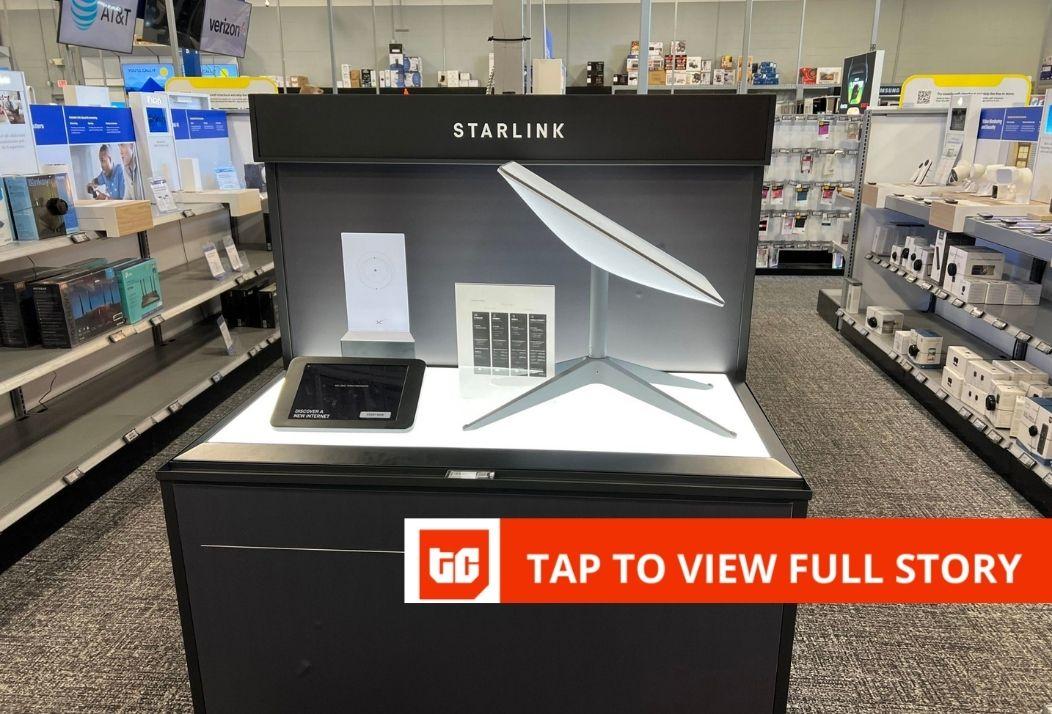
Bought your Starlink kit abroad to save some cash, only to find it suddenly stopped working at home? That workaround just hit a wall in the Central African Republic (CAR).
Authorities have suspended the use of Starlink kits operating in “roaming” mode—devices bought in other countries and used locally without going through national approval. The government says these kits fall outside its regulatory framework and raise concerns around security, traceability, and compliance.
If you suspect a similar pattern has played out in Africa, you’re not wrong. The same happened in South Africa, where enforcement actions from regulators forced Starlink to halt roaming.
For CAR, the timing is awkward but telling. Starlink only launched commercially in the country in March 2026, stepping into a market where Internet penetration stands at 15.5%. For many, importing cheaper kits or activating roaming was the fastest way online.
The government is not rejecting Starlink. It is tightening control over how it is used. All telecom equipment must now be approved locally, and roaming kits have not met those requirements.
Between the lines: This is about visibility. Authorities want to know who is connected, from where, and through which devices. Roaming kits, by design, blur those lines.
What is really happening? A familiar pattern is playing out. New tech arrives, users find shortcuts around cost and access barriers, and regulators step in to draw firmer boundaries.
There is also a pricing reality. A standard Starlink kit costs CFA240,000 ($400), with a monthly subscription of CFA33,000 ($59), before taxes. For many users, sourcing hardware from cheaper markets was not just clever, it was necessary.
However, CAR is now closing off the easy access routes, and users either have to legally buy a Starlink kit or forgo fast satellite Internet speed.
Fincra connects your business to Africa’s payment rails without building market by market. For collection, payout, FX, and settlement through a single integration. See what this means for your business.
Remember Nokia? The mobile phone manufacturer turned telecom infrastructure operator is expanding its operations and deepening its footprint in North America, India, and emerging markets across Africa.
It has selected Egypt as its regional support hub, establishing a centralised operations centre to manage customer networks and services across the Middle East and Africa. The facility will support all its business lines, including mobile and network infrastructure and global services, as operators deal with rising data traffic and increasingly complex systems.
Telecom networks are getting harder to run. More users, more devices, and the shift to cloud-based systems mean operators need faster response times and round-the-clock support. Centralising those functions in one location helps cut delays and standardise how issues are handled.
Egypt fits into Nokia’s long-term plan. Its location allows coverage across multiple time zones, while a deep pool of engineers and established telecom infrastructure make it easier to scale operations without starting from scratch.
The move builds on a 2024 agreement with the Information Technology Industry Development Agency (ITIDA), a government agency focused on talent development, and Telecom Egypt, pointing to a longer-term effort to anchor more high-value tech work in the country.
The timing also lines up with a broader shift. On April 22, Alshaya Group, the Kuwait-based retail franchise operator of brands like Starbucks and H&M, opened a global talent centre in Cairo, Egypt, to run technology and customer operations across the Middle East and North Africa (MENA), adding to a growing list of companies routing regional functions through Egypt, including Huawei, Microsoft, and Oracle.
Kenya’s mobile money wars are heating up again, and Airtel Money has partnered with Absa Bank Kenya, the country’s fifth-biggest bank, to let businesses move money directly between mobile wallets and bank accounts.
How it would work: This integration would connect Airtel Money wallets directly to Absa bank accounts. Instead of a merchant receiving money in their wallet and then manually transferring it to a bank account, the funds can settle directly into their bank. That means fewer steps and faster access to cash.
A new move in Airtel Money’s strategy: In Kenya, M-PESA dominates the mobile money ecosystem, holding an 89% market share. Its scale is massive, and its partnerships with other Kenyan banks like NCBA and KCB Group, through products like M-Shwari and KCB M-PESA, have embedded it into how businesses save and transact.
However, Airtel Money has been chipping away at M-PESA’s dominance in recent times as its market share crossed the 10% mark in 2025. That growth could be attributed to sustained pricing and cashback campaigns run by Airtel. The new partnership is another route the mobile money player is taking to chip at its dominance.
Why this matters: Mobile money in Kenya is huge. Transaction value through mobile money agents totalled KES 633.35 billion ($4.9 billion) in February 2026. By reducing friction between wallets and bank accounts, Airtel is making a play for relevance in everyday business operations, and for banks like Absa, staying plugged into mobile money means access to its massive market.
In March 2013, TechCabal published its first article. Thousands of stories later, the work continues, and today, it goes deeper.
TechCabal has always been free. That’s not changing.