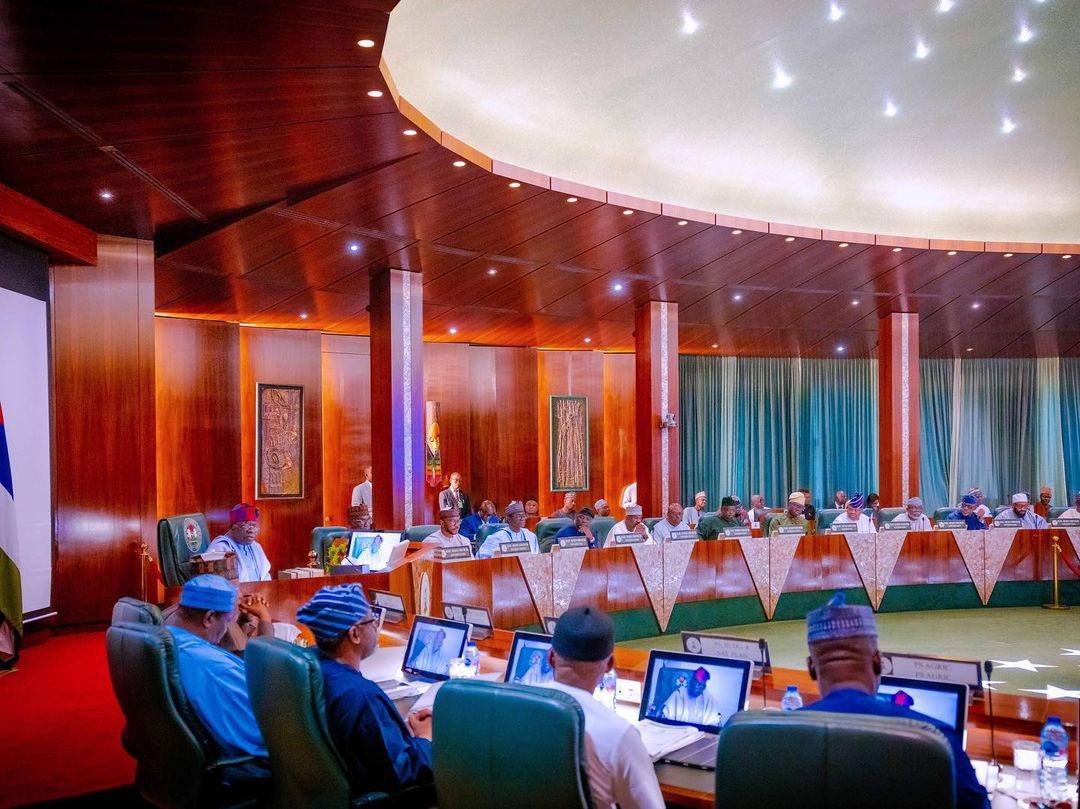
The National Economic Council (NEC) on Thursday approved N83.2 billion to mitigate the impact of anticipated flooding and other climate-related emergencies across the country.
- +NEC approves N83.2 billion to tackle flood emergencies across Nigeria
The council, chaired by Vice President Kashim Shettima, approved the fund as part of its Anticipatory Action Task Force (AATF) interventions, according to a statement by Stanley Nkwocha, Senior Special Assistant to the President on Media and Communications (Office of the Vice President).
The council, chaired by Vice President Kashim Shettima, approved the fund as part of its Anticipatory Action Task Force (AATF) interventions, according to a statement by Stanley Nkwocha, Senior Special Assistant to the President on Media and Communications (Office of the Vice President).
The approval comes amid a report released by the Coalition for Disaster Resilient Infrastructure (CDRI), which states that Nigeria and other African countries lose an estimated $12.7 billion annually due to disaster-related damage to infrastructure and buildings.
According to the statement, Vice President Shettima and NEC members, comprising state governors, noted the presentation by the Minister of Budget and Economic Planning, Senator Atiku Bagudu, on the AATF interventions during the council’s 158th meeting.
The council noted the importance of the AATF in addressing disasters and emergencies across the country.
It also underscored the fact that NEC cannot continue to be seen as merely taking reactive measures regarding emergency and disaster management.
The Vice President used the opportunity to urge states to work with the Federal Government in resolving the logistical and compliance barriers preventing farm produce from reaching international markets.
He said the President Bola Ahmed Tinubu administration’s reform agenda must now produce visible results across the federation by leveraging collaboration with sub-national governments.
On exports and production, VP Shettima said the country’s economic transformation depends on a complete value chain linking farms to factories, factories to standards, standards to ports, and ports to markets.
The council therefore resolved to confront bottlenecks weakening Nigeria’s agricultural exports, especially challenges affecting the movement of goods through ports and compliance with standards required by international markets.
The Vice President further stated that a nation that cannot move its goods has imprisoned its own farmers.
In 2025, President Bola Tinubu approved the release of N16.7 billion for the immediate reconstruction of the Mokwa Bridge in Niger State, which was destroyed by flooding in May last year.
Also, in June last year, President Tinubu approved the release of N2 billion for the immediate reconstruction of homes belonging to people affected by the flood disaster in Mokwa, Niger State.
Reports indicated at the time that over 2,000 houses were affected, forcing many victims to seek shelter with relatives and neighbours as a result of the flooding.
In July 2025, the Nigeria Hydrological Services Agency (NIHSA) warned that more than 100 major roads, including the Okene–Lokoja–Abuja and Birnin Kebbi–Bunza corridors, could face severe flood disruptions across 28 states and the FCT.
In Nigeria, recurrent flooding has caused billions of naira in damages.
The findings of the Coalition for Disaster Resilient Infrastructure (CDRI) reinforce the need for stronger urban planning, flood control measures, and disaster preparedness systems.
With several Nigerian coastal cities facing rising sea levels, the risks to economic hubs and millions of households are intensifying.
Beyond physical damage, disasters also have ripple effects, disrupting supply chains, reducing agricultural output, and straining public finances.