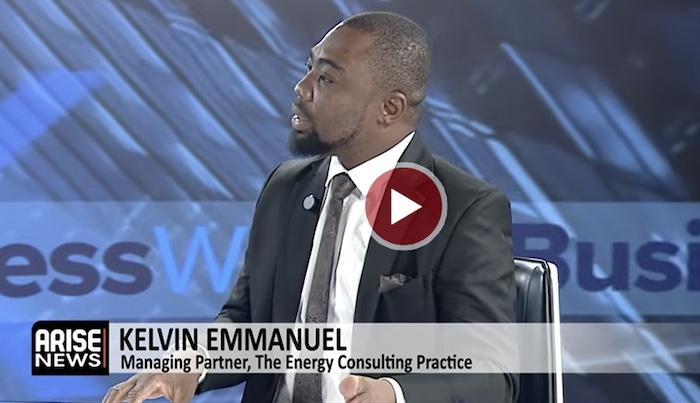
Kelvin Emmanuel says OPEC is losing global influence as shifting alliances and divisions weaken control over oil markets.
- +Kelvin Emmanuel : OPEC Losing Relevance As Global Power Dynamics Shift
Energy Consulting Practice, Kelvin Emmanuel, has said that the OPEC is steadily losing its relevance as a global price-setting body, citing internal divisions, geopolitical tensions, and shifting production alliances.
Energy Consulting Practice, Kelvin Emmanuel, has said that the OPEC is steadily losing its relevance as a global price-setting body, citing internal divisions, geopolitical tensions, and shifting production alliances.
Speaking during an interview with ARISE NEWS on Saturday, Emmanuel explained that while OPEC was originally established to give oil-producing countries leverage and stabilise prices, changing market realities have eroded its influence.
“OPEC was created to provide leverage for producers and manage price, but the dynamics have changed significantly,” he said.
He noted that disruptions in global supply, including millions of barrels going offline in the Middle East, alongside widening gaps between spot and futures prices, reflect a market no longer firmly controlled by the cartel.
Emmanuel pointed to recent exits by member states, including Angola and the United Arab Emirates, as evidence of growing dissatisfaction within the group.
“Angola pointed to unfair quota allocations, while the UAE argued that its production capacity is being constrained in favour of larger producers like Saudi Arabia,” he highlighted
According to him, there is a growing perception that OPEC primarily serves the interests of Saudi Arabia undermining trust among other members.
He further explained that geopolitical tensions involving the United State, Israel and Iran have intensified instability, making cooperation within OPEC increasingly difficult.
“It no longer makes sense for countries to remain in an organisation where member states are effectively in conflict with one another,” Emmanuel said.
On the exit of the UAE from both OPEC and OPEC, Emmanuel described it as a strategic move toward independence, particularly as alliances with countries like Russia become less predictable due to sanctions and shifting global policies.
“The UAE wants to control its own supply strategy and reduce geopolitical risks by diversifying its export routes and partnerships,” he stated.
Emmanuel also highlighted an emerging global realignment, noting that increased production from the United States, Russia, and Saudi Arabia could surpass OPEC’s output, further weakening its influence.
“Combined production from these countries could exceed OPEC’s total, which raises serious questions about the cartel’s relevance,” he maintained
Turning to Africa, Emmanuel urged countries like Nigeria to reassess their position within OPEC, particularly as domestic refining capacity expands.
He noted that Nigeria’s shift toward refining crude locally, driven by projects such as the Dangote Refinery requires a steady and reliable supply of crude that current OPEC quotas may restrict.
“Restricting production under OPEC quotas may no longer align with Nigeria’s economic interests,” he said
Emmanuel said that Nigeria should prioritise domestic energy security, including building strategic petroleum reserves and ensuring adequate crude supply for local refineries.
“It makes perfect sense for Nigeria to reconsider its membership of OPEC, especially given its refining strategy,” he added.
Looking ahead, Emmanuel maintained that OPEC can no longer single-handedly determine global oil prices and must now contend with major producers outside the group.
“OPEC cannot control prices alone anymore. It has to negotiate with the United States and Russia,” he emphasised
He concluded by questioning the organisation’s continued relevance in the evolving energy landscape.
“What is the use of OPEC today?” Emmanuel asked.