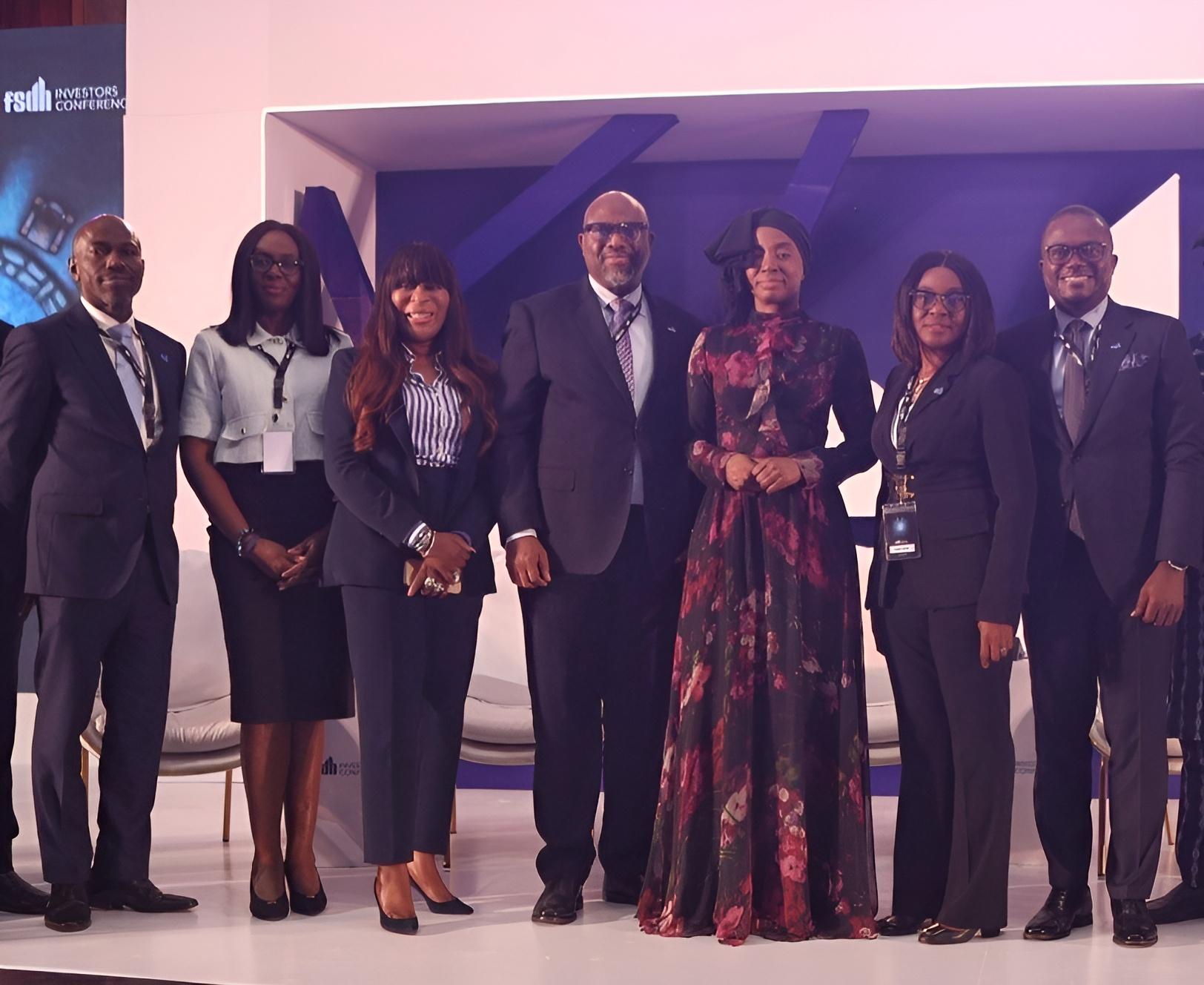
FSDH Merchant Bank has taken a deliberate step to shape the direction of capital formation in Nigeria, convening its inaugural Investors’ Conference. It brought together a cross-section of investors, policymakers, regulators, and market operators to interrogate the country’s investment outlook.
- +FSDH convenes investors, sets agenda for Nigeria’s investable future
- +From Capital Access to Institutional Confidence
- +Regulation as Market Architecture
- +Unlocking Institutional Capital
- +Bridging Structural Gaps in the Market
Held at the Lagos Continental Hotel, the one-day hybrid gathering – anchored on the theme “Co-creating the Future of Intelligent Investing” – positioned collaboration, institutional trust, and regulatory coherence as central to unlocking sustainable economic growth.
Held at the Lagos Continental Hotel, the one-day hybrid gathering – anchored on the theme “Co-creating the Future of Intelligent Investing” – positioned collaboration, institutional trust, and regulatory coherence as central to unlocking sustainable economic growth.
At a time when Nigeria’s macroeconomic environment remains defined by volatility and structural reform, the conference framed a more fundamental question: What does it take to build an investable nation?
From Capital Access to Institutional Confidence
In her opening remarks, Bukola Smith, MD/CEO, FSDH Merchant Bank shifted the conversation beyond capital availability to the deeper architecture of trust and coordination required for markets to function efficiently. “Sustainable economic growth requires more than access to capital. It requires confidence, trust, and strong institutions,” she said.
“An investable nation is built on sound policy, regulatory consistency, market transparency, and confidence that long-term capital can be deployed safely and productively,” Smith added Her framing reflects a growing consensus among market participants: that capital is increasingly mobile, but confidence remains scarce – and must be deliberately built.
Regulation as Market Architecture
Delivering the keynote virtually, Emomotimi Agama positioned regulation not as a constraint, but as a forward-looking instrument for market design.
With Nigeria’s capital market now exceeding a market capitalisation of ₦130 trillion, he argued that the next phase of growth will depend on whether regulators anticipate disruption rather than react to it. “We should not regulate the market of yesterday; we are building the regulatory scaffolding for the market of tomorrow,” he said. “Regulation must run ahead of disruption, not behind it… Our posture is neither prohibition nor permissiveness – it is intelligent governance.”
Agama’s remarks underscored a shift toward co-creation between regulators and market participants, framing “intelligent investing” as a shared responsibility embedded within the system itself.
Unlocking Institutional Capital
A central theme of the conference was the mobilisation of long-term domestic capital -particularly pension funds.
In a fireside discussion, Omolola Oloworaran highlighted the scale and strategic importance of pension assets in financing infrastructure and real-sector growth. “Institutional capital has the scale and patience required to finance infrastructure, but it must be supported by the right frameworks, de-risking mechanisms, and partnerships,” she said.
Projecting forward, she noted the potential for Nigeria’s pension assets to approach ₦100 trillion within five years, contingent on policy support and market development.
Her remarks also pointed to a critical balancing act: safeguarding contributors’ funds while enabling more productive deployment into the economy.
Bridging Structural Gaps in the Market
Panel sessions extended the conversation into execution, focusing on how to translate capital availability into real economic impact.
Speakers including Hakeem Muhammed, executive director, Global Markets and Institutional Banking Division; Jude Chiemeka, CEO Nigerian Exchange Ltd (NGX); Yanmo Omorogbe, co-founder & chief operating officer at Bamboo and representatives from the International Finance Corporation and InfraCredit examined persistent structural gaps – ranging from liquidity constraints to limited investor participation and weak linkages between capital markets and the real economy.
The consensus: Nigeria’s investment challenge is less about capital scarcity and more about coordination, risk structuring, and market depth.
Closing the conference, Toyin Owolabi, non-executive director of FSDH Asset Management emphasised the need to translate dialogue into sustained action.
“The future will be defined by what we build together,” he said, calling for continued collaboration across the ecosystem.
Beyond formal sessions, the event facilitated high-level engagement between capital providers, businesses, and policymakers, reinforcing the role of networks and trust in shaping investment outcomes.
The inaugural conference marks a strategic positioning move for FSDH as it deepens its role within Nigeria’s financial ecosystem – not just as a market participant, but as a convener of ideas and capital.
More broadly, it signals an emerging recognition: building an investable nation is not the function of any single institution, but of a coordinated system where policy, capital, and market infrastructure evolve in alignment.
If sustained, platforms such as this could play a catalytic role in deepening market confidence, expanding participation, and ultimately shaping the trajectory of Nigeria’s economic development.